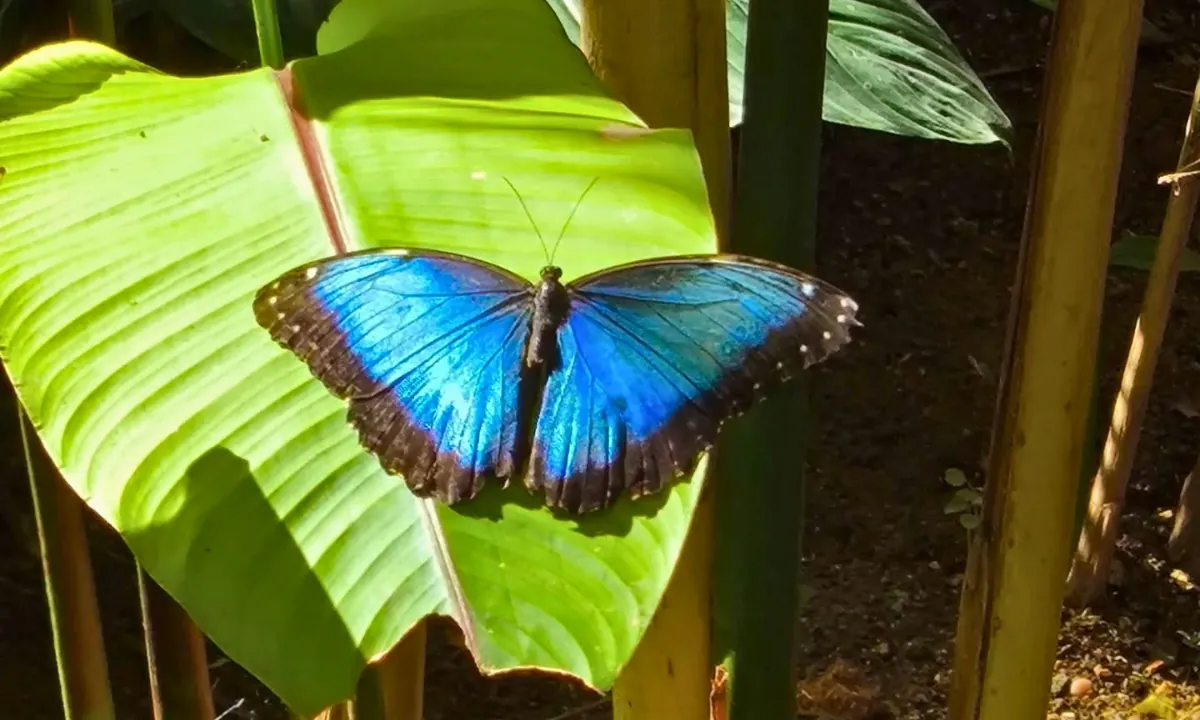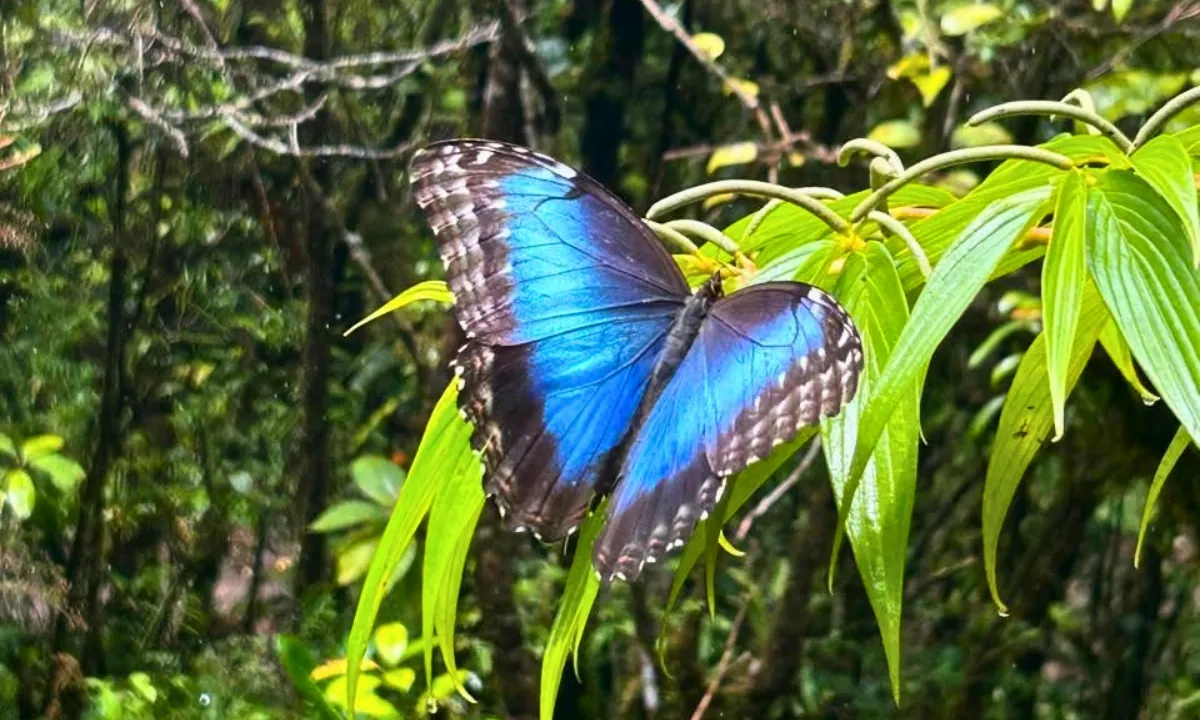
In some European countries, fairies from myths emitted a slight glow as they moved. In the Peruvian Amazon, we do not have fairies, but we do have an iconic butterfly that has a metallic glow: the blue morpho butterfly.
The blue morpho butterfly is considered one of the most spectacular butterflies in the world, characterized by a metallic blue color on its wings. This insect flies near rivers and prefers the lowland rainforest. If you are planning a trip to the Amazon and want to see this butterfly, at Peru Jungle Trips we tell you where to look for it, what species exist, and how you can increase your chances of seeing it.
What is the blue morpho butterfly?
The blue morpho butterfly is a tropical insect characterized by bright blue wings. This color is produced by the reflection of light on microscopic scales that form part of its wings. Here are more details about its characteristics:
- Scientific name: genus Morpho
- Size: 7.5 to 20 cm.
- Habitat: humid tropical forests, along riverbanks.
- Diet: Adult butterflies feed on fermented or rotten fruit, tree sap, and fungi.
- Lifespan: approximately 137 days
Why is the blue morpho butterfly metallic blue?
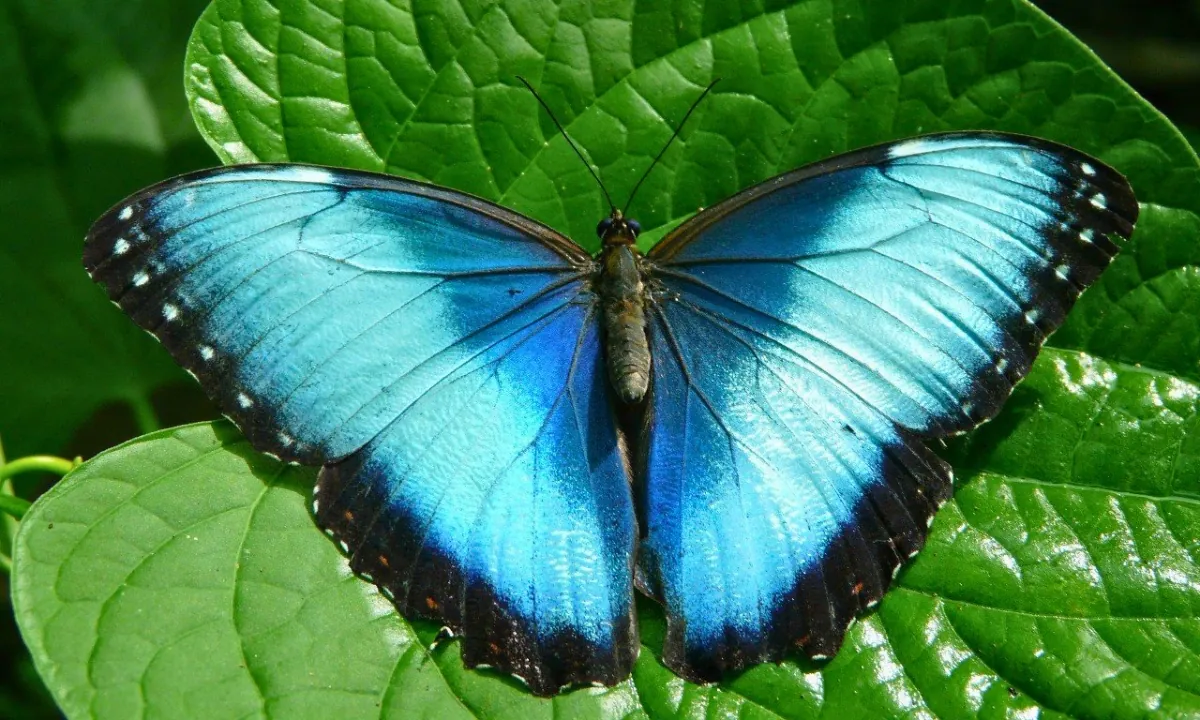
Contrary to what is commonly believed, its wings do not contain any blue pigment. The color, as we mentioned earlier, is due to microscopic scales on its wings that reflect blue light.
Therefore, do not be surprised to find blue morpho butterflies whose wings may have different colors, for example, more turquoise, since the color depends on the angle from which you see them and the light.
Why does it seem to disappear when it flies?
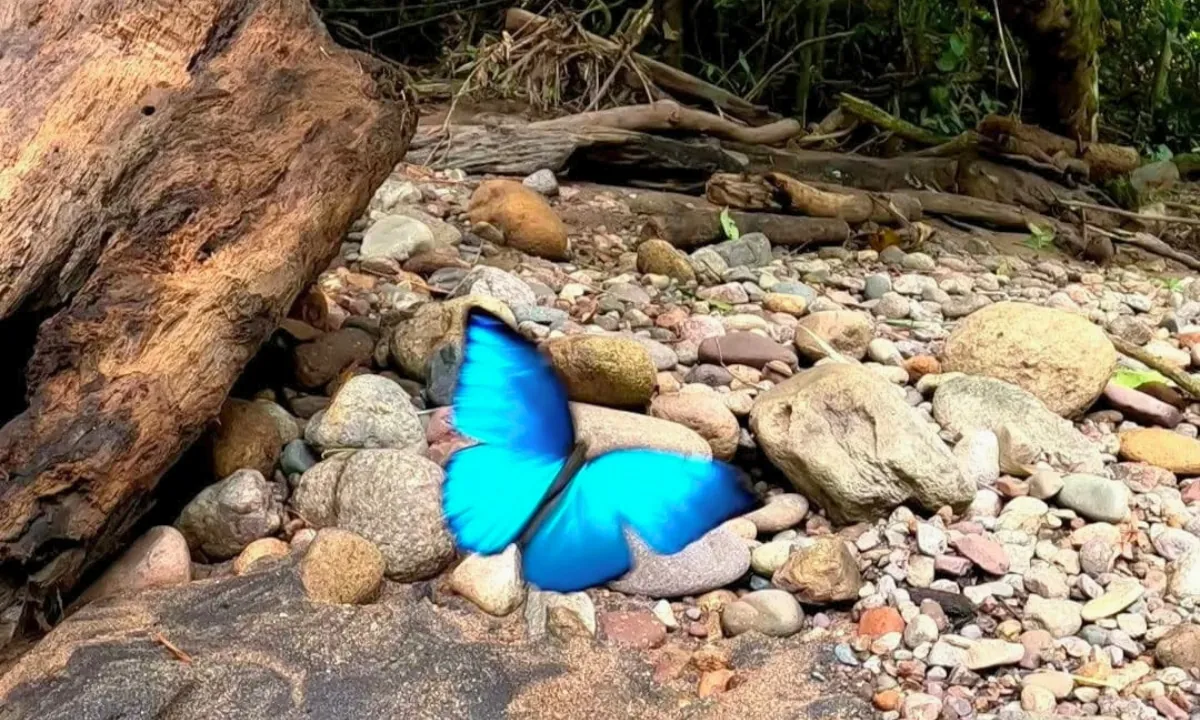
This is because the underside of its body can be dark brown, chestnut, black, gray, or even red. Therefore, when it flies, the butterfly seems to briefly disappear among the trees.
What are the best places to see blue morpho butterflies in Peru?
Within the Peruvian rainforest, the Tambopata National Reserve, Tingo María National Park, and Manu National Park stand out.
Tambopata (Puerto Maldonado)
Located in the department of Madre de Dios, Tambopata stands out for impressive places such as Sandoval Lake, the macaw clay lick, and the Tambopata Butterfly House, near Puerto Maldonado Airport.
- Tambopata also has 112 species of diurnal butterflies.
Tingo María National Park (Leoncio Prado)
Located 12 hours from Lima, Tingo María National Park stands out for its mountain range called “The Sleeping Beauty” and its complex system of underground caves.
- It is home to 320 species of butterflies.
Manu National Park (Cusco and Puerto Maldonado)
Recognized as a UNESCO World Heritage Site, Manu is considered one of the places with the greatest diversity on the planet.
- Manu is home to 1,307 species of butterflies, making it an essential place to visit if you want to observe this species.
In the Peruvian rainforest, you can also see this butterfly along riverbanks and in forest clearings, especially open areas where sunlight enters. If you want to increase your chances of seeing a blue morpho butterfly, book a tour to Tambopata or Manu.
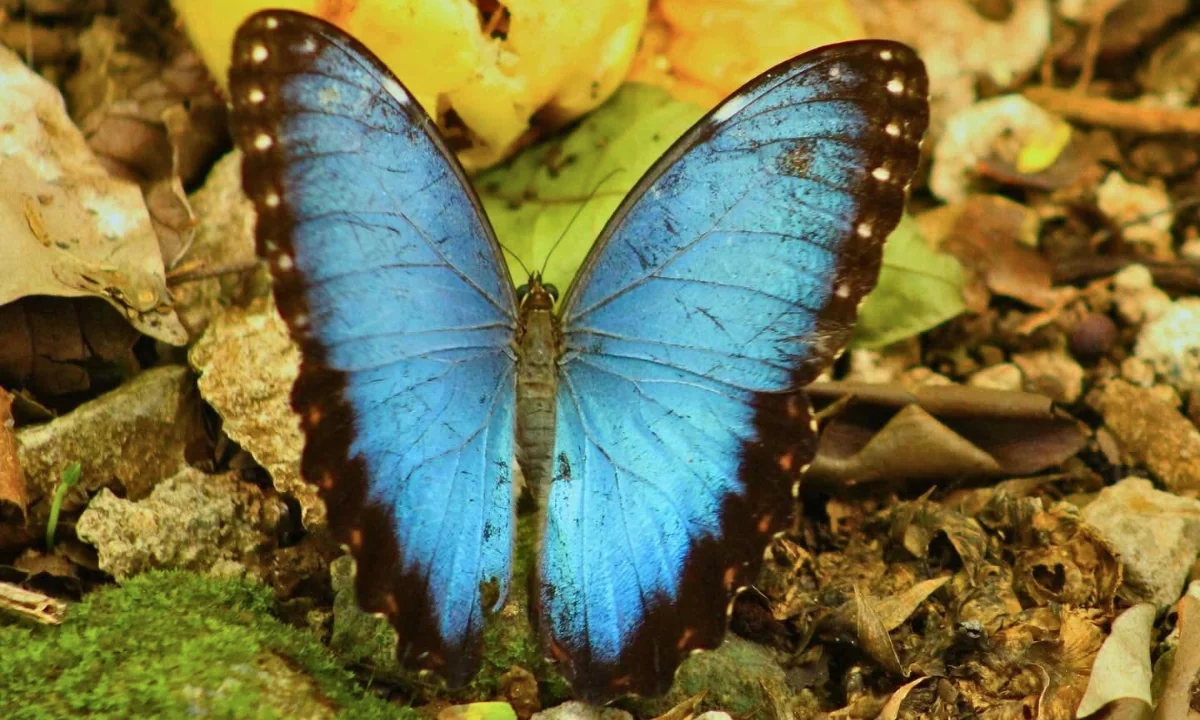
Morpho butterflies in the Peruvian rainforest
- Morpho deidamia diomedes Weber, 1944: inhabits river and stream basins and sub-basins. It is the “only one of its species that has lines that give the appearance of rays on the ventral part of the wings” (p. 28).
- Morpho achilles phokylides Fruhstorfer, 1912: usually flies on sunny days.
- Morpho aurora aureola Fruhstorfer, 1913: they have an average wingspan of 8 cm. Their wings reflect a metallic sky-blue color.
- Morpho menelaus argentiferus Fruhstorfer, 1913: females are usually slightly larger than males and have cream-colored circles with yellow rings.
- Morpho rhetenor helena Staudinger, 1890: considered one of the most beautiful species among morphos due to its dark sky-blue and silver color.
- Morpho helenor theodorus Fruhstorfer, 1907: inhabits shady and humid regions of the rainforest.
- Morpho marcus intermedia Kaye, 1917: has a light sky-blue coloration with two small white spots.
- Morpho cisseis gahua blandin, 1988: has characteristic lead-colored shading in the central part of its body.
- Morpho telemachus iphiclus C. Felder & R. Felder, 1862: has dark brown wings with artistic orange-colored shading.
Tips for observing and photographing it
- Go with a certified local guide because they know where they perch and which areas they follow.
- Look for clearings and riverbanks with light during the day, not the darkest interior of the forest.
- Move slowly, in small groups, and wait. When it perches, it usually closes its wings and looks brown.
- Use a telephoto lens or your camera’s zoom so you do not get too close.
- Do not touch them. Remember that it is a delicate butterfly; its wings are especially delicate and the scales are easily damaged.
- Wear neutral-colored, quick-drying clothing. Do not forget to bring insect repellent and sunscreen.
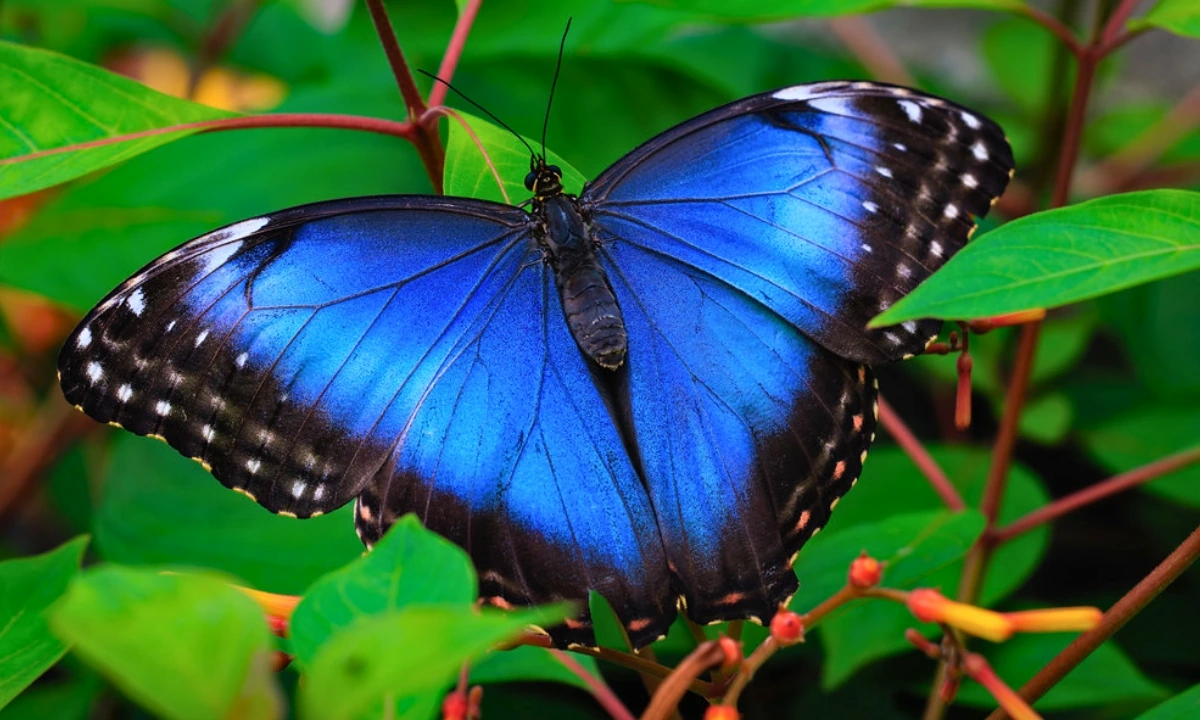
Risks faced by the blue morpho butterfly
Unfortunately, it is one of the species most affected by forest loss. In turn:
- It is in a vulnerable and endangered situation; this is because it has become a target for many collectors.
- It faces the loss of its natural habitat; due to illegal deforestation, informal mining, forest fires, and the uncontrolled expansion of agriculture, this species has progressively lost its habitat.
- The excessive impact of climate change.
Include the blue morpho butterfly in your next trip to the Amazon
If you want to increase your chances of seeing this iconic butterfly, we have travel options for you:
- 3-day Tambopata jungle tour
- 4-day Chuncho Macaw Clay Lick
- 4-day Manu Jungle Tour
- 6-day Manu Reserved Zone
Don’t know which one to choose? Write to us on WhatsApp or request a personalized itinerary here.
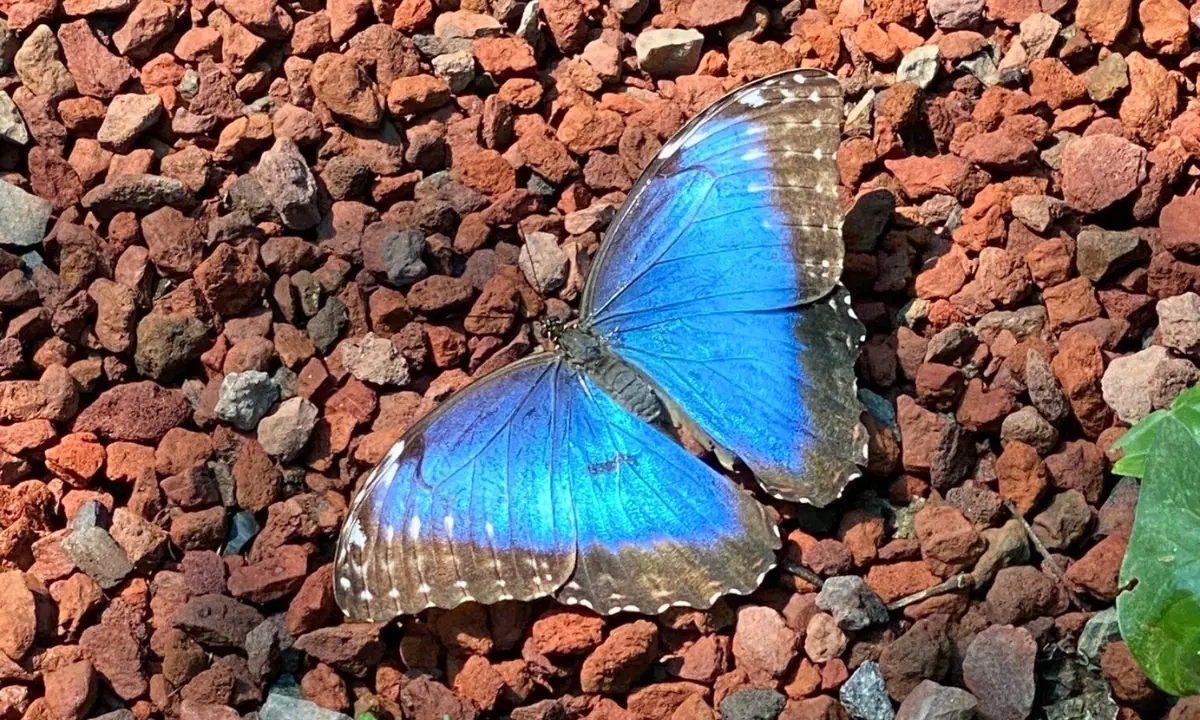
Frequently asked questions
Why is the blue morpho butterfly blue?
Because the microscopic structure of its wings reflects blue light. It has no blue pigment, which is why the color changes with the angle of the light.
Where does the blue morpho butterfly live?
It lives in tropical forests of Central and South America. In Peru, it is found in the lowland Amazon rainforest, especially near rivers and clearings. You can see it in the Tambopata National Reserve, Manu National Park, or Tingo María Reserve.
How big is a blue morpho butterfly?
Its wingspan is usually between 12 and 20 cm (5 to 8 inches), depending on the species and whether it is female or male.
What does the blue morpho butterfly eat?
Adults eat fermented fruit, sap, and fungi. Caterpillars eat leaves.
Can blue morpho butterflies be seen in Peru?
Yes, it is possible to see them mainly in the Amazon, although no operator can guarantee sightings. The chances improve with a local guide, good light, and patience.
Are they dangerous to people?
No. They are completely harmless, but it is best not to touch them to avoid damaging their wings, as they are in a serious state of vulnerability due to habitat loss, climate change, and hunting.