The tourist places in the Peruvian jungle offer the opportunity to discover one of the regions with the greatest natural diversity in Peru. This vast region covers around 60% of the national territory and is home to more than 20,000 plant species, nearly 1,900 bird species, and hundreds of mammals, reptiles, and amphibians. It is also home to Indigenous communities that preserve their customs, languages, and traditional knowledge.
The Peruvian Amazon is an ideal destination for those who want to experience nature, observe wildlife, and discover different landscapes. Due to its geographical characteristics, this region is divided into two major areas:
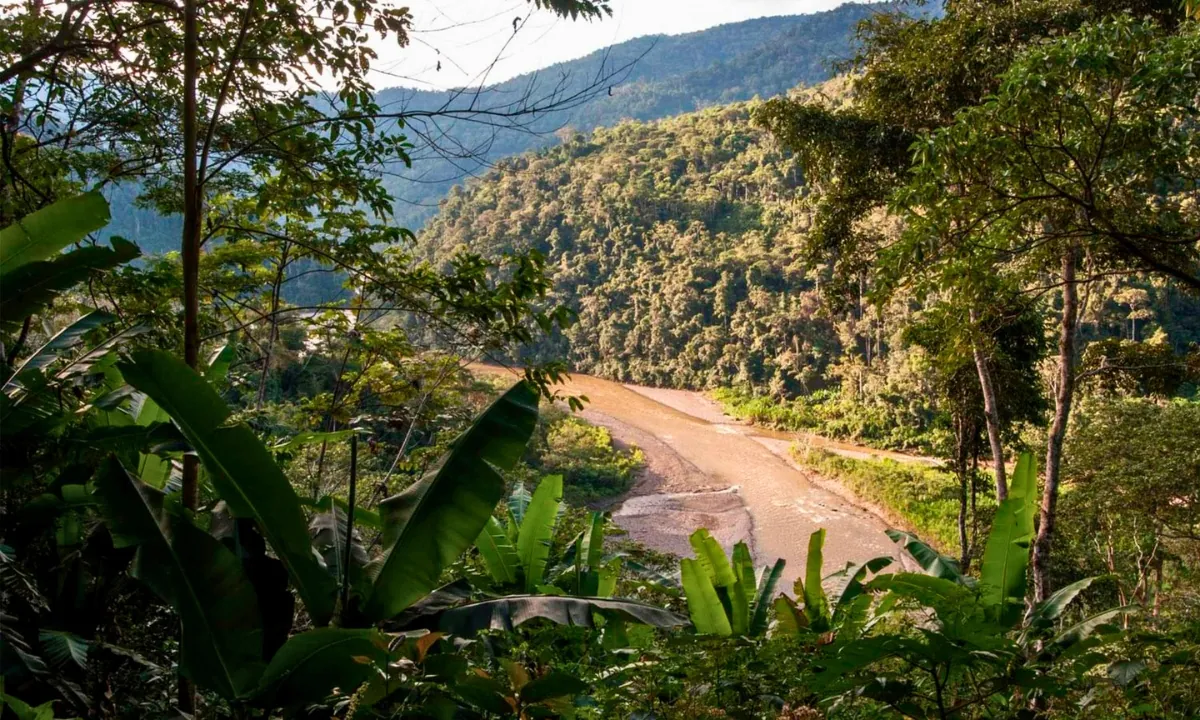
- High Jungle (Rupa Rupa): It is located where the Andes meet the Amazon. It stands out for its cloud forests, fertile valleys, orchids, and beautiful waterfalls.
- Low Jungle (Omagua): It is an extensive plain formed by the Amazon River and its tributaries. Here you can find flooded forests, known as tahuampas and restingas, as well as lakes called cochas and numerous eco-lodges surrounded by nature.
Here we present 10 tourist places in the Peruvian jungle that stand out for their natural landscapes, diversity of animals and plants, and the cultural richness of their communities. Each destination offers a different way to discover the Peruvian Amazon.
The 10 Must-Visit Destinations in the Peruvian Amazon
1. Tambopata National Reserve (Madre de Dios)
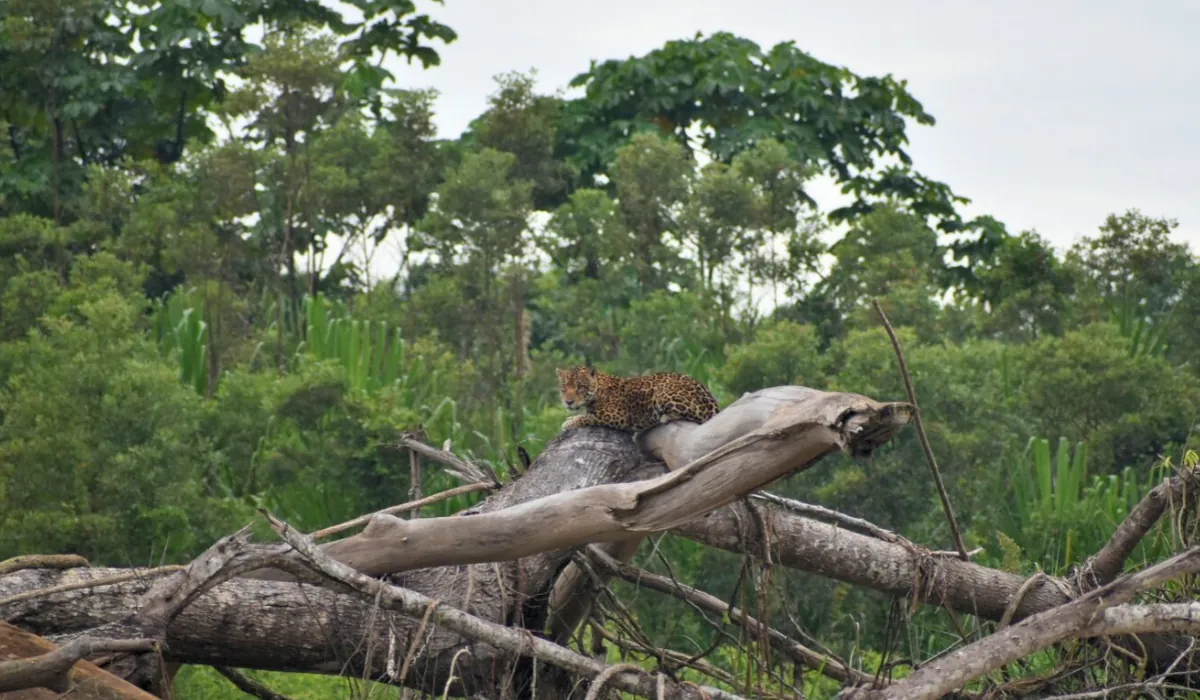
Located in the southern Peruvian jungle, Tambopata National Reserve is a favorite destination for global ecotourism thanks to its strategic accessibility through short flights from Lima and Cusco. It protects 274,690 hectares of tropical rainforest, making it one of the ecosystems with the greatest biological diversity on the planet. It is a protected refuge for 648 bird species, more than 1,200 varieties of butterflies, and hundreds of iconic mammals such as the jaguar and giant river otter.
What to See and Do in Tambopata
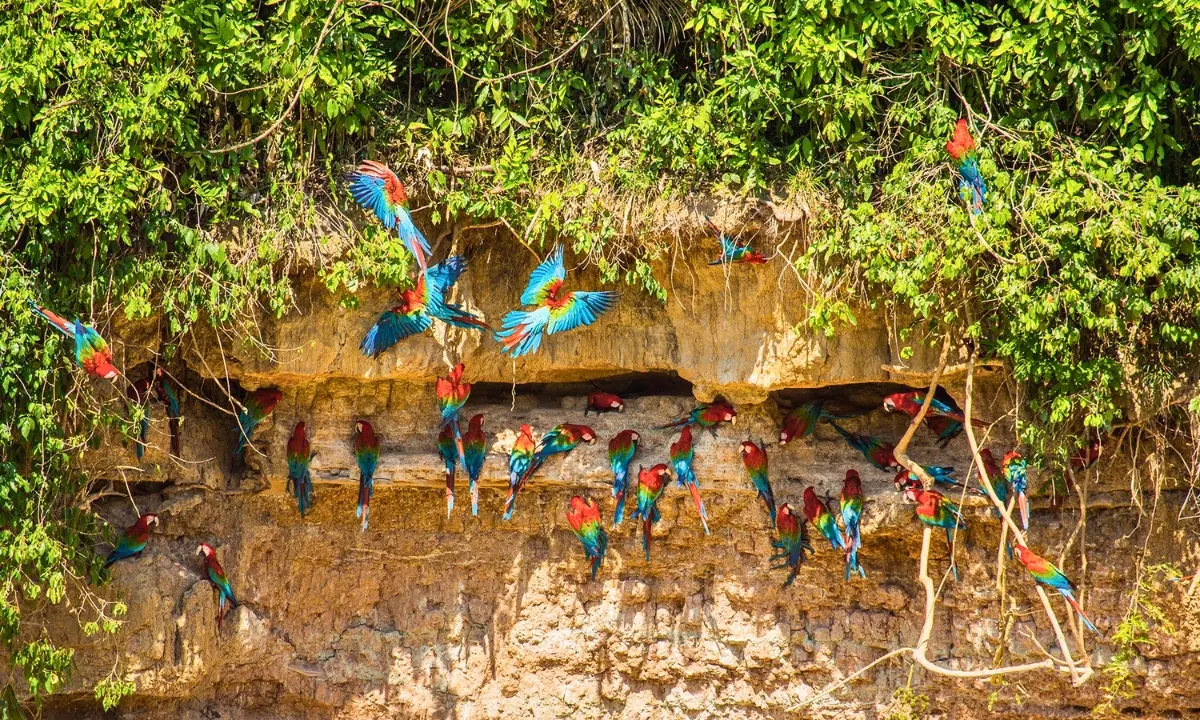
- The Macaw Clay Lick Spectacle: Observe the natural phenomenon of geophagy on clay cliffs such as El Chuncho or the enormous Collpa Colorado. At dawn, hundreds of colorful parrots and macaws (Ara macao, Ara chloropterus) gather noisily to consume mineral salts essential to their diet.
- Immersive Hiking and Ecotourism: Explore hidden trails on daytime and nighttime excursions guided by biologists or local naturalists. These routes allow you to spot caimans, monkeys, tapirs, and endemic wildlife.
- Accommodation in Sustainable Eco-lodges: Stay in eco-friendly lodges surrounded by nature and learn about conservation initiatives that work with local communities, such as the Ese Eja Indigenous community. To experience these activities, discover our Tambopata tours and find an option to explore the jungle, observe its wildlife, and enjoy a stay in the heart of the Peruvian Amazon.
2. Puerto Maldonado and Sandoval Lake (Madre de Dios)
Officially known as the «Capital of Biodiversity of Peru», the city of Puerto Maldonado is located at the confluence of the Madre de Dios and Tambopata rivers. It serves as the main urban and transportation hub from which river transfers to lodges and protected areas in the southern Peruvian jungle are organized.
What to See and Do in Puerto Maldonado and Sandoval Lake
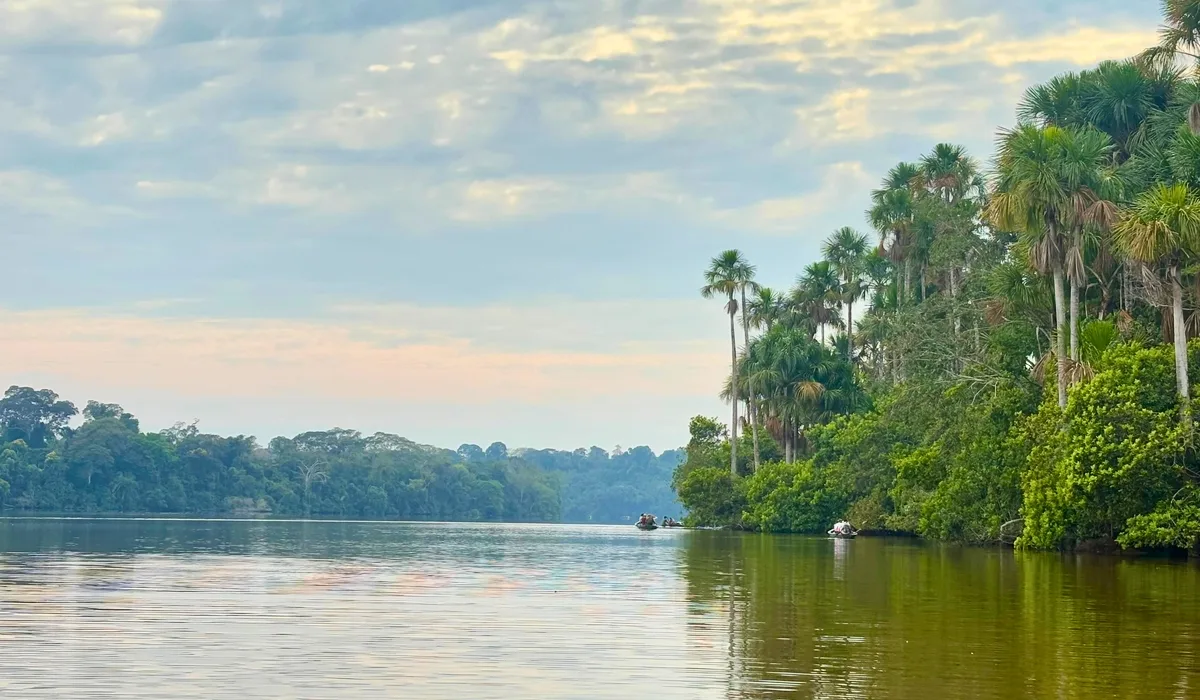
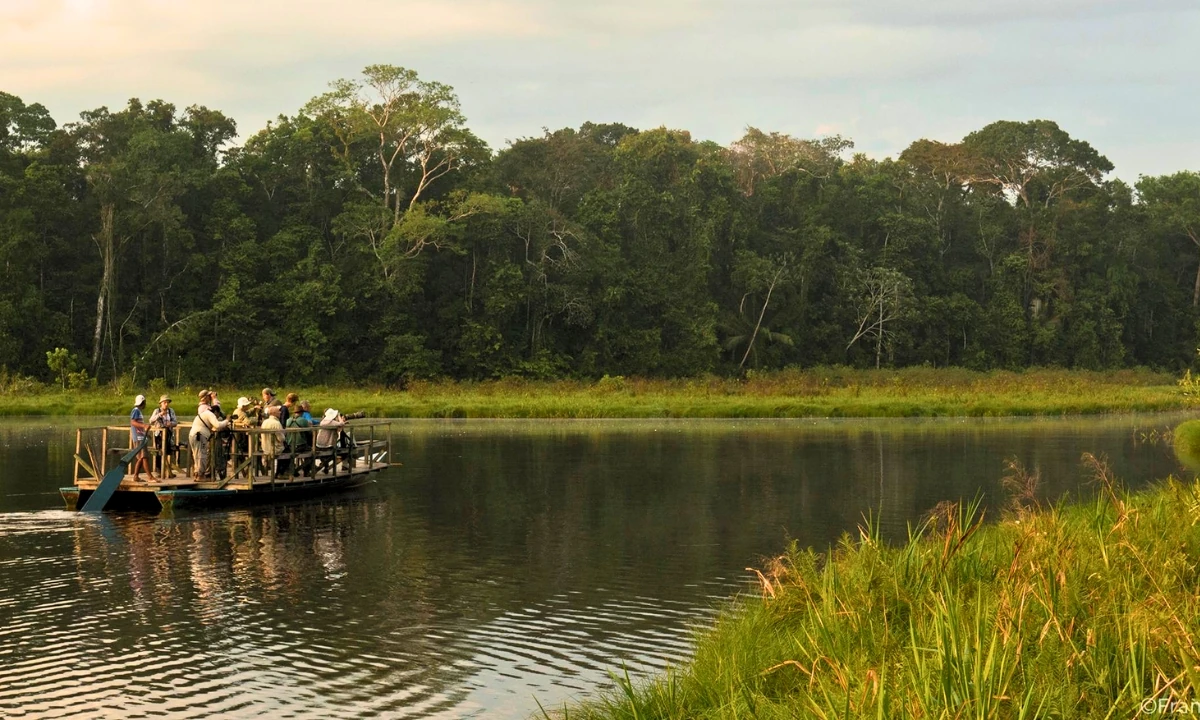
- Boating on Sandoval Lake: Located within Tambopata National Reserve, this impressive oxbow lake is surrounded by dense aguaje palm forests (Mauritia flexuosa). It is famous for being home to and protecting a resident family of giant otters or river wolves (Pteronura brasiliensis), an endangered species, as well as black caimans and the prehistoric hoatzin bird. Exploration here is carried out exclusively in silent rowboats to avoid disturbing the wildlife. With our Sandoval Lake tour from Puerto Maldonado, you can explore this beautiful lake and observe the wildlife of the Peruvian Amazon in its natural environment.
- Canopy Walks and Suspension Bridges: Walk along suspended walkways more than 30 meters above the ground in the treetops (canopy walkways). These circuits, offered by various lodges in the area, allow you to observe wildlife, insects, and birds from a privileged perspective in the forest canopy.
- River and Urban Exploration: Enjoy motorboat rides along the city’s rivers and admire Amazonian sunsets from the impressive Continental Bridge (popularly known as Billinghurst Bridge), the longest suspension bridge in all of Peru.
3. Iquitos and the Amazon River Corridor (Loreto)
Known as the capital of the Peruvian Amazon, Iquitos is the largest continental city in the world without a road connection to the outside world. This unique geographical condition gives it a distinctive sense of isolation and mystique. Surrounded by the Amazon, Nanay, and Itaya rivers, it can only be reached by air through Coronel FAP Francisco Secada Vignetta International Airport or by river.
What to See and Do in Iquitos
- Urban Culture and Riverside Life: Walk along the historic Tarapacá Boulevard to enjoy views of the Itaya River and explore the iconic Belén Floating Neighborhood, nicknamed the “Amazonian Venice,” where you can experience the vibrant local life among stilt houses and community rafts.
- Rubber Boom Architecture: Discover the architectural splendor of the 19th century in the historic buildings in the city center, decorated with tiles imported from Europe. A highlight is the famous Iron House, a prefabricated structure attributed to the workshop of the renowned designer Gustave Eiffel.
- Conservation and Protected Areas: Visit the Amazon Rescue Center (CREA), dedicated to rehabilitating and releasing manatees and wildlife rescued from illegal trafficking. You can also use the city as the ideal starting point for in-depth expeditions to the Pacaya Samiria National Reserve and the nearby Allpahuayo Mishana National Reserve, famous for its white-sand varillal forest ecosystems. If you want to discover these landscapes and the region’s wildlife, our Amazon tours from Iquitos are an option for enjoying an experience close to nature.
4. Pacaya Samiria National Reserve (Loreto)
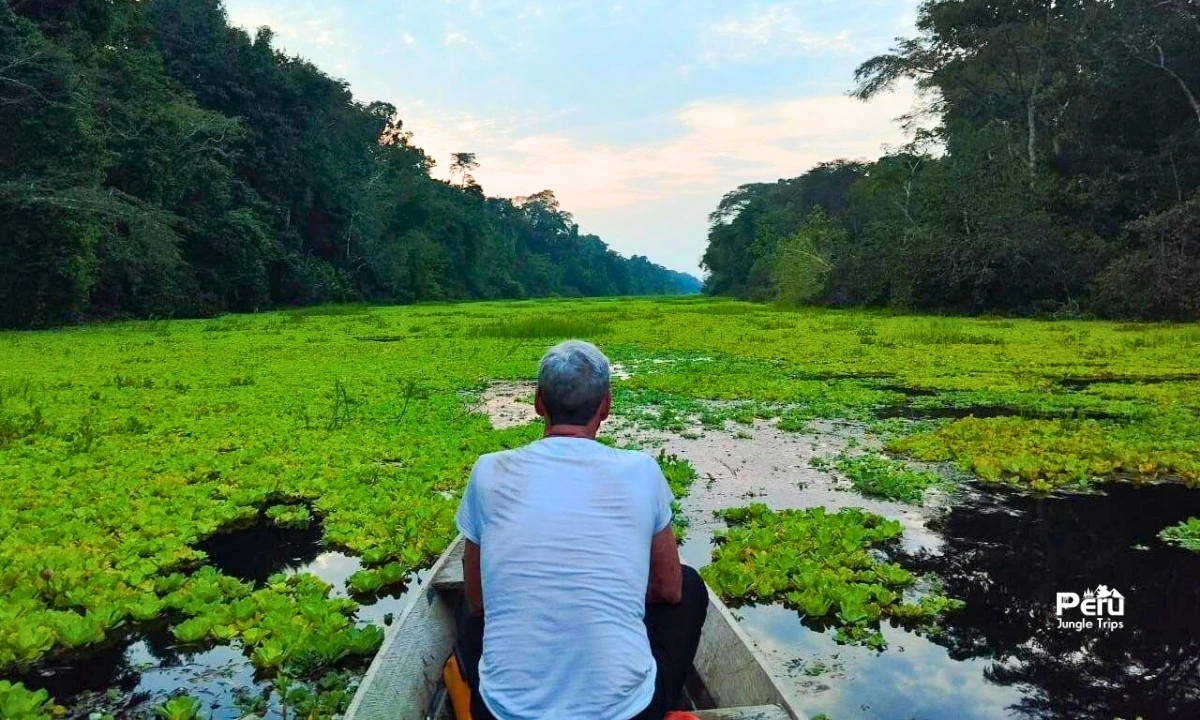
Covering an immense area of 2,080,000 hectares in the Ucamara Depression, where the Marañón and Ucayali rivers converge, Pacaya Samiria National Reserve is the largest national reserve in Peru. It is world-renowned as the “Jungle of Mirrors” because the dense vegetation and Amazonian sky are reflected with astonishing clarity on the dark waters, rich in tannins, of its rivers, streams, and oxbow lakes.
What to See and Do in Pacaya Samiria
- Boating Through the Jungle of Mirrors: Explore protected river basins such as the Yanayacu-Pucate River by boat or kayak. As you glide over its calm waters, you will have the amazing sensation of floating directly above the treetops and clouds.
- Wildlife Watching: Take excursions to observe large populations of the iconic pink river dolphin (Inia geoffrensis), gray river dolphins, the giant paiche fish, black caimans, giant river otters, and sloths in their natural habitat.
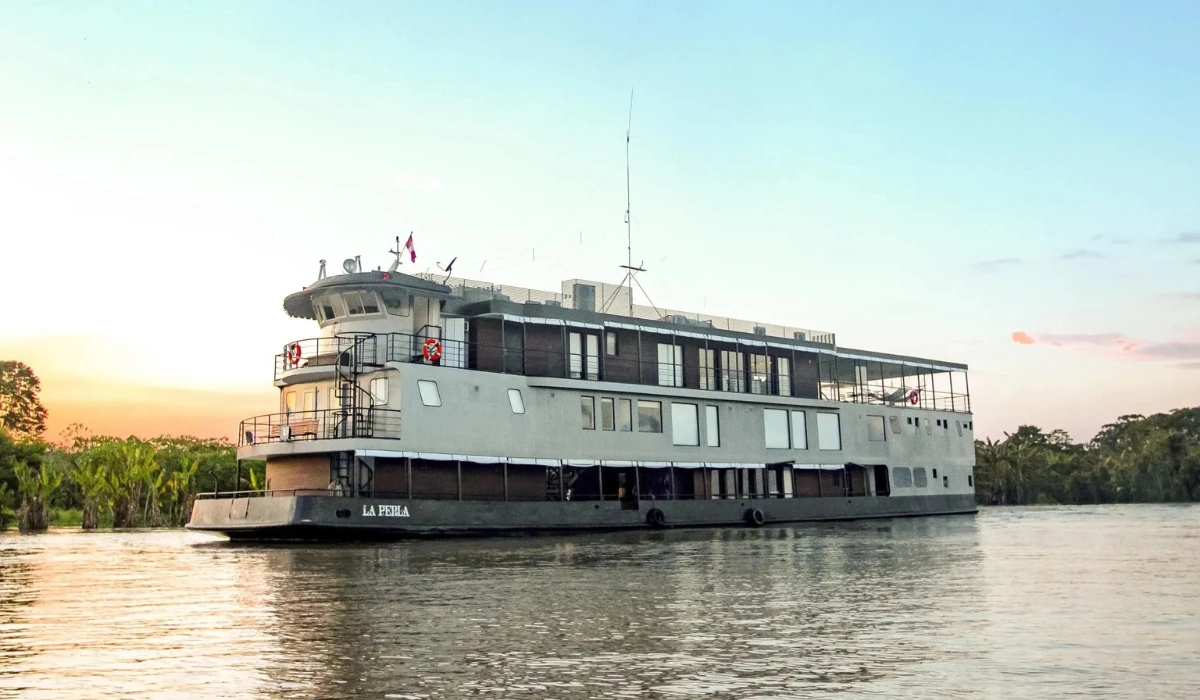
- Luxury Cruises and Immersive Expeditions: Choose your travel style according to your budget. You can explore the reserve aboard high-end boutique river cruises (with luxury suites and fine dining on board) or stay in community-run lodges and lowland jungle lodges focused on nature photography, recreational piranha fishing, and cultural exchanges with local communities dedicated to ecosystem conservation. To experience the Peruvian Amazon, discover our Pacaya Samiria tours and navigate its rivers surrounded by forests and wildlife.
5. Manu National Park (Madre de Dios and Cusco)
Declared a UNESCO Natural World Heritage Site, Manu National Park covers an enormous area of 1,716,295.22 hectares. Its territory protects a unique altitudinal gradient found nowhere else in the world, extending from the cold Andean highlands and cloud forests of the Cusco region to the vast Amazonian lowlands of Madre de Dios. It is considered one of the planet’s greatest biodiversity sanctuaries, officially home to 1,030 bird species and 228 mammal species.
What to See and Do in Manu National Park
- Geographical Descent from the Andes: Experience an unparalleled scenic route starting with an overland journey from the city of Cusco. You will descend through the Kosñipata Valley, crossing the mystical cloud forest, home to orchids and spectacled bears, before reaching the river basins that lead into the Amazonian lowlands.
- Birdwatching and the Andean Cock-of-the-Rock: Manu is a world mecca for birdwatching. One of its main attractions is visiting the leks (courtship sites) in the cloud forest, where you can photograph the Andean cock-of-the-rock, Peru’s national bird, in the wild.
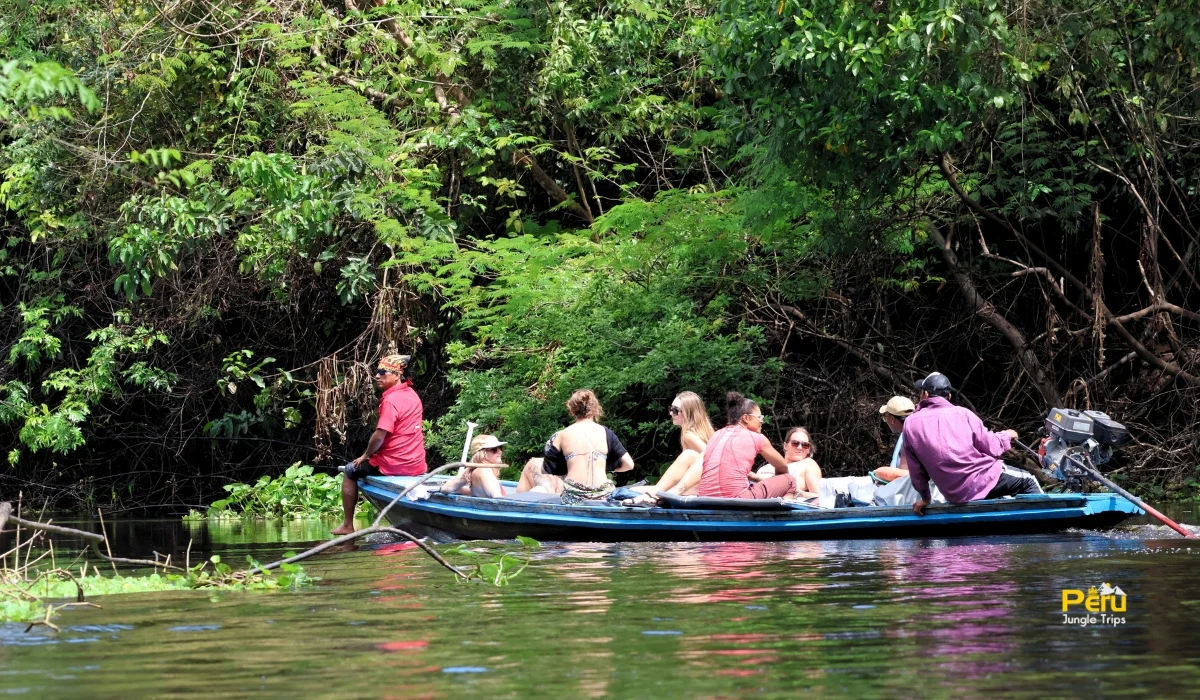
- Expeditions to the Reserved Zone: Travel along the Manu River on immersive expeditions, generally lasting 5 to 8 days, designed for scientists, photographers, and lovers of pristine nature. This strictly protected zone offers unique opportunities worldwide to spot large wildlife in its purest state, including the majestic jaguar, the South American tapir, the black caiman, and numerous troops of monkeys. Embark on this adventure with our tours to Manu National Park and observe the incredible biodiversity of the Peruvian Amazon up close.
6. Kuélap Monumental Archaeological Zone and Chachapoyas (Amazonas)
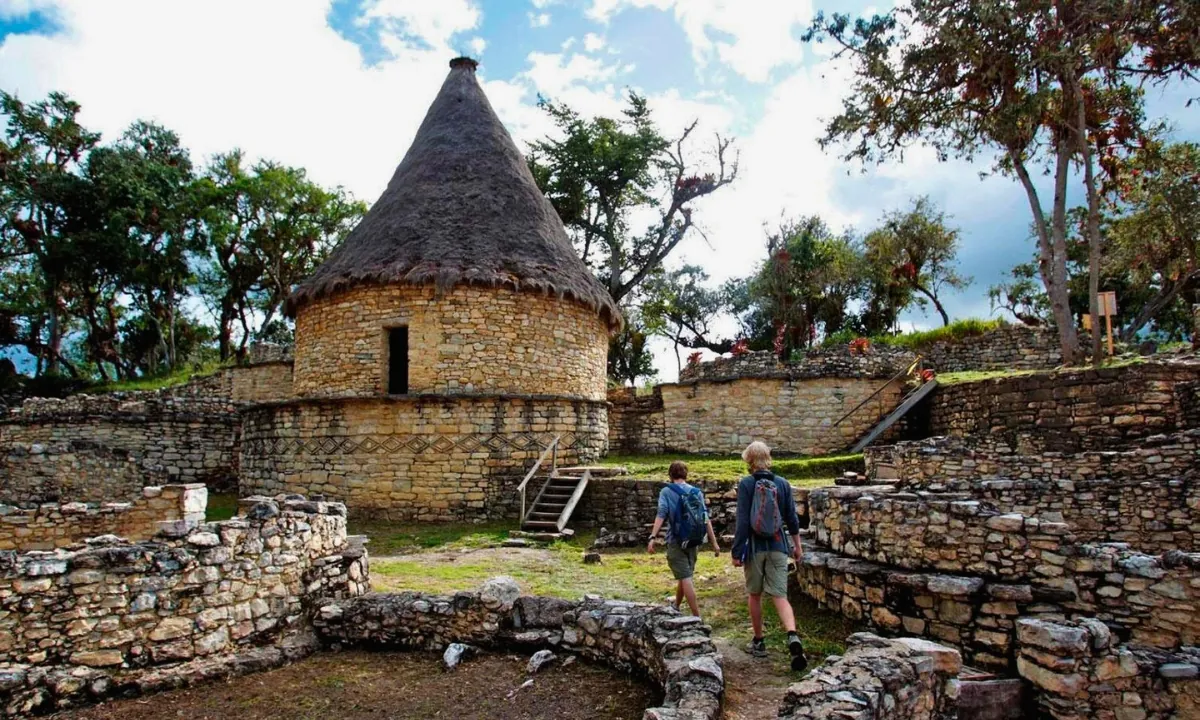
Located at 3,000 m above sea level on the crest of an imposing Andean-Amazonian mountain, the Kuélap Monumental Archaeological Complex is the greatest expression of the pre-Inca Chachapoyas civilization. This impressive fortified city rises mysteriously among the cloud forests of the mountain range, offering a fascinating contrast between pre-Columbian engineering and abundant nature.
What to See and Do in Kuélap and Chachapoyas
- The Cable Car System and the Kuélap Citadel: Enjoy a unique experience by taking Peru’s first cable car system in Nuevo Tingo, which travels above the cliffs of the Utcubamba River Canyon on a scenic 20-minute journey. Upon arrival, you will explore the colossal stone walls reaching up to 20 meters in height, which protect more than 400 circular dwellings. (Note: To ensure its preservation, entry to the citadel is limited to a strict capacity of 864 visitors per day, so reservations must be made in advance.)
- Trekking to Gocta Waterfall: Complete your regional itinerary by heading to the villages of Cocachimba or San Pablo to begin a moderately challenging hike. You will cross trails covered with orchids and giant ferns to admire Gocta, one of the highest waterfalls on the planet, with a height of 771 meters over two drops.
- Karajía Sarcophagi and Revash Mausoleums: Explore the mountain necropolises of the Chachapoyas culture. At Karajía, you will admire impressive 2.5-meter-tall anthropomorphic clay funerary capsules positioned vertically on inaccessible rocky cliffs, while at Revash, you will see painted collective tombs resembling small houses on the cliff faces.
7. Tarapoto and Ahuashiyacu Waterfall (San Martín)
The city of Tarapoto, nicknamed the “City of Palms,” is the main hub for ecotourism, adventure, and gastronomy in the High Jungle of northeastern Peru. It has excellent air connections and suitable hotel infrastructure for exploring waterfalls, lagoons, and the region’s diverse biodiversity.
What to See and Do in Tarapoto
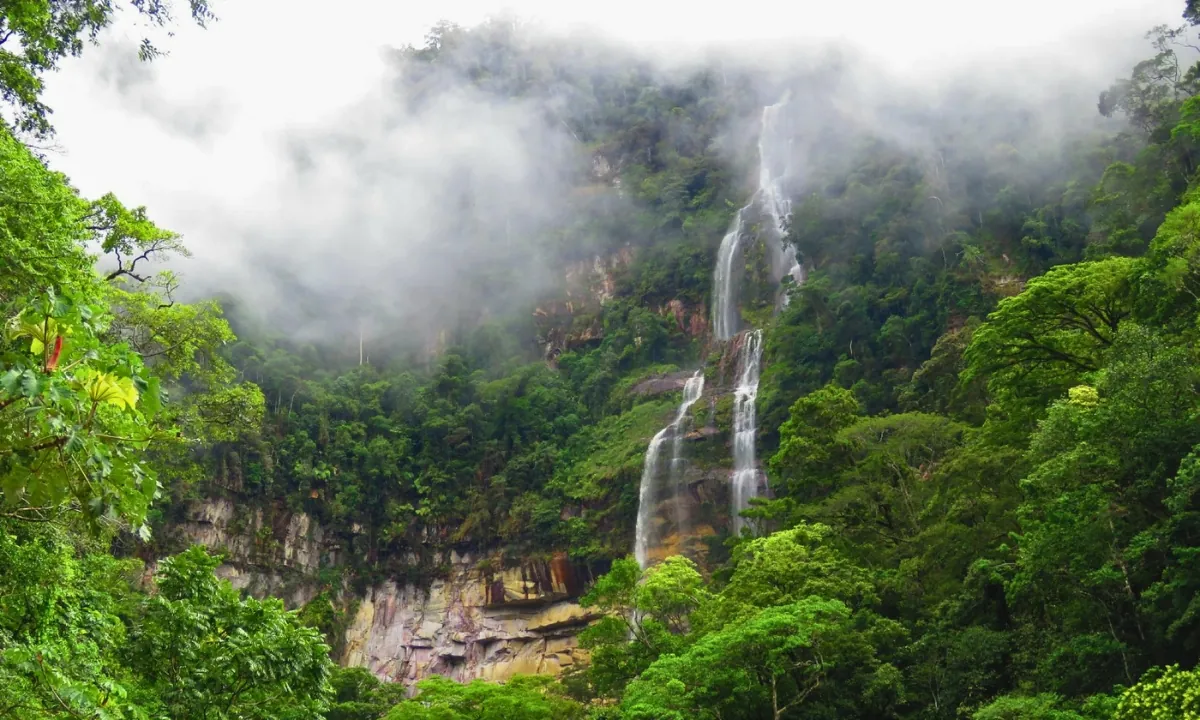
- Ahuashiyacu Waterfall: Located just 25 minutes from the city, within the Cordillera Escalera Regional Conservation Area, this impressive waterfall, standing 40 meters tall, takes its name from Quechua, meaning “singing water” (or popularly, “laughing water”). Its natural pool is an oasis surrounded by dense vegetation, ideal for a refreshing swim.
- Blue Lagoon (Sauce) and Historic Lamas: Take a boat ride across the waters of the beautiful Blue Lagoon in the district of Sauce, a perfect destination for relaxation and water sports. Complete your trip with a visit to Lamas, the “City of Folklore,” famous for its medieval-style castle and its native Wayku neighborhood, where ancestral Quechua customs are preserved.
- Agroecological Cocoa and Coffee Routes: Take part in interactive tours through local plots in the High Jungle. During these visits, you will learn about the entire production process and have the opportunity to taste some of Peru’s most award-winning fine-aroma coffees and cocoas.
8. Pucallpa and Yarinacocha Lagoon (Ucayali)
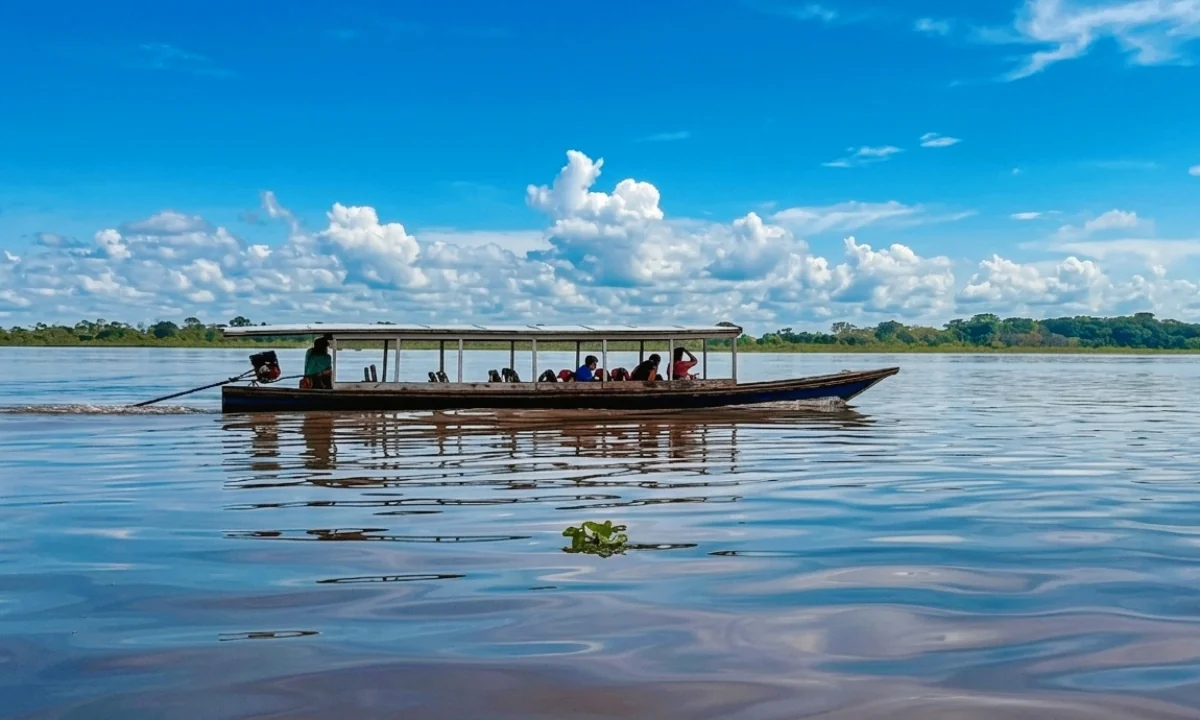
Located on the banks of the Ucayali River, Pucallpa is a vibrant and accessible Amazonian city that stands out as the center of the ancestral and artistic heritage of the Shipibo-Konibo Indigenous people. The city is the gateway to the majestic Yarinacocha Lagoon, an ancient meander or tipishca of the Ucayali River with calm waters that has become the region’s main tourist attraction.
What to See and Do in Pucallpa and Yarinacocha
- The New Yarinacocha Tourist Boardwalk: Explore the modern, renovated boardwalk inaugurated by MINCETUR, featuring decorative lighting, recreational areas, a viewpoint with interpretation rooms, and a renovated tourist pier for safe boarding. Here, you can sit back and enjoy impressive sunsets and sample the cuisine of Loreto and Ucayali (such as patarashca or juane) at its formal restaurant facilities.
- Traditional Navigation in “Peke-Peke” Boats: Board handcrafted motorized boats to explore the lagoon’s most remote areas, river channels, and impressive tributary waterways. Along the way, you can observe aquatic birds, spot sloths or river dolphins, and enjoy peaceful recreational piranha fishing trips.
- Community-Based Tourism and Ancestral Kené Art: Visit riverside Indigenous communities such as San Francisco or Santa Clara. There, you can participate in interactive workshops led by local women artists to learn about pottery, textile dyeing, and the ancient geometric iconography of Kené, a complex design system that reflects their worldview and spirituality and has been declared National Cultural Heritage.
9. Tingo María National Park (Huánuco)
Internationally recognized with the prestigious Gold Award in the Top 100 Green Destinations Stories for its exemplary sustainable tourism practices, Tingo María National Park protects 4,777 hectares of biodiversity in the High Jungle or Yungas ecoregion. Established in 1965, it is the second-oldest protected natural area in Peru’s history.
What to See and Do in Tingo María National Park
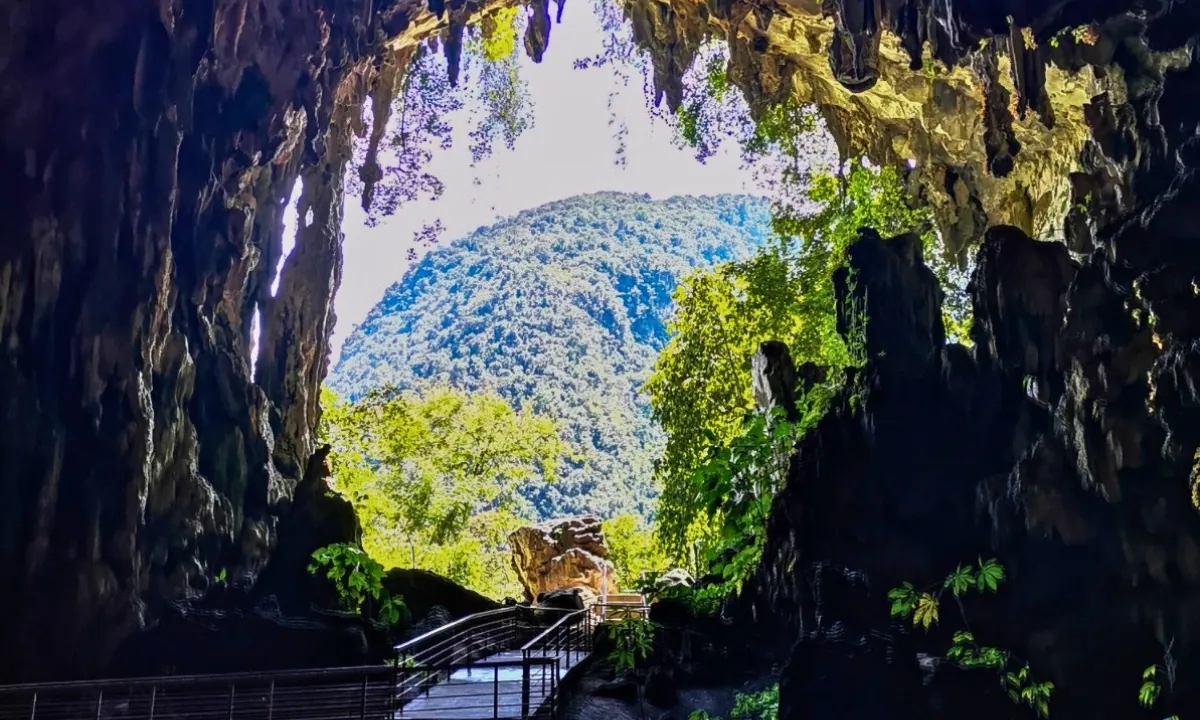
- Explore the Cave of Owls: Venture into this mysterious, enormous underground cavern filled with stalactites and stalagmites. Despite its popular name, the cave is not inhabited by owls but by a huge, noisy, protected colony of oilbirds (Steatornis caripensis)—nocturnal, fruit-eating birds—and several species of bats. (Note: To protect the wildlife, entering with high-powered flashlights or taking photographs with flash is strictly prohibited.)
- Admire the Sleeping Beauty Mountain: Enjoy the impressive panoramic view of this famous mountain range, whose peaks remarkably resemble the silhouette of a woman lying on her back and looking up at the sky. This silhouette is the geographical emblem of the city of Tingo María.
- Waterfall Trails and Sulfurous Waters: Follow the park’s authorized trails to fascinating waterfalls, such as Quinceañera Waterfall (with a 43-meter drop) and the Tres de Mayo area. You can also take advantage of your visit to bathe in the medicinal sulfurous pools of San Jacintillo, located near the reserve.
10. Bahuaja-Sonene National Park (Madre de Dios and Puno)
Covering a vast and remote area of 1,091,416 hectares, Bahuaja-Sonene National Park is one of the most strictly protected, pristine, and least crowded natural areas in the entire Amazon region. Its ecological importance lies in being the only place in Peru that protects the Palm Savanna ecosystem (an ecosystem originating in the Beni region of Bolivia and Brazil). The park’s name honors the ancestral Ese Eja names for the Tambopata (Bahuaja) and Heath (Sonene) rivers.
What to See and Do in Bahuaja-Sonene
- Explore the Palm Savanna: Join specialized adventure expeditions to explore this unique ecosystem in Peru, characterized by extensive floodplains dotted with aguaje palm trees. It is the only place in Peru where highly rare and protected mammals such as the maned wolf (the largest canid in South America) and the marsh deer can be found.
- Scientific Expedition Along the Heath River: Take extended river journeys through the waters of the Heath River, which forms the natural border between Peru and Bolivia. This remote route is a favorite worldwide among biologists, researchers, and photographers because of jaguar sightings along the riverbanks and its enormous bird populations (the park records more than 600 bird species).
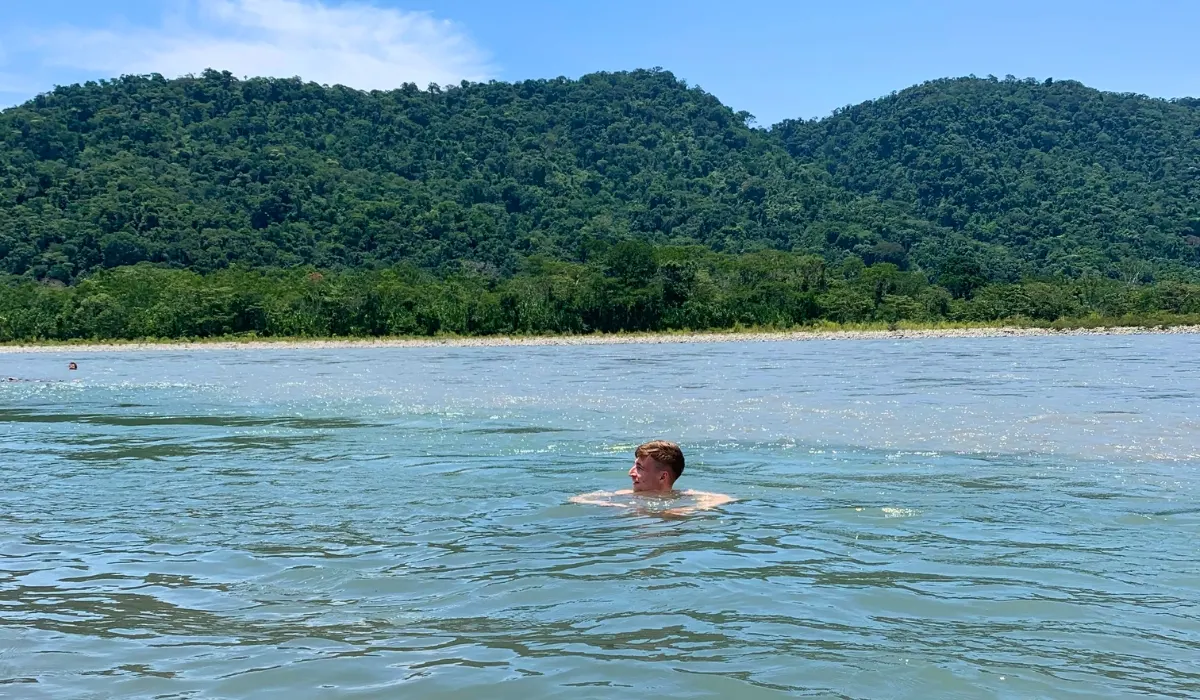
- Remote Camping on Pristine River Beaches: Enjoy one of the continent’s purest ecotourism experiences by camping on the extensive white-sand beaches that naturally form along riverbanks during the dry season (May to October). The area offers an environment free from light pollution, ideal for observing the Amazon’s starry skies and listening to the unspoiled sounds of the deep jungle.
Comparison Table: Choose Your Next Amazon Destination
| Destination | Geographical Region | Main Attraction | Main Experience |
| Tambopata National Reserve | Lowland Jungle (South) | Macaw clay licks (El Chuncho / Colorado) | Immersive ecotourism and large wildlife observation |
| Puerto Maldonado and Sandoval Lake | Lowland Jungle (South) | Giant river otters viewed from paddle canoes | Nature and wildlife photography, and canopy walkways |
| Iquitos and the Amazon River | Lowland Jungle (North) | Amazon River and rubber-boom-era architecture | River expeditions, urban mysticism, and conservation |
| Pacaya Samiria National Reserve | Lowland Jungle (North) | Pink river dolphins in the “Forest of Mirrors” | Luxury boutique cruises and local lodges |
| Manu National Park | Highland and Lowland Jungle (South) | One of the planet’s highest levels of biological diversity | World-class birdwatching and research |
| Kuélap and Chachapoyas | Eastern Andes / High Jungle | Pre-Inca walled citadel and Gocta Waterfall | Archaeological tourism, living culture, and mountain trekking |
| Tarapoto and Ahuashiyacu | High Jungle (North) | Ahuashiyacu Waterfall and Blue Lagoon (Sauce) | Mountain landscapes, waterfalls, and agroecological routes |
| Pucallpa and Yarinacocha | Lowland Jungle (Central) | New Tourist Boardwalk and ancestral Shipibo-Konibo art | Community identity, Kené patterns, and cuisine |
| Tingo María National Park | High Jungle (Central) | Cave of Owls (oilbirds) and Sleeping Beauty Mountain | Accessible caving, thermal waters, and sustainable tourism |
| Bahuaja-Sonene National Park | Lowland Jungle and Savanna (South) | Peru’s only Palm Savanna ecosystem | Extreme expeditions, remote adventures, and pristine camping |
Practical Tips for Traveling to the Peruvian Amazon
1. Health and Vaccinations
- Yellow fever vaccine: Consult a healthcare professional to find out whether you need the vaccine and, if recommended, get vaccinated at least 10 days before your trip.
- Entry requirements: Before visiting protected areas such as Manu, check whether you need to present a vaccination certificate and confirm the current entry requirements.
- Age and contraindications: The vaccine is not recommended for everyone. Seek medical advice, especially if you are over 60, pregnant, or have a medical condition.
2. Insect Repellent and Sunscreen
- Protect your skin: Bring insect repellent and sunscreen suitable for the activities you plan to do.
- Protect rivers and lakes: Whenever possible, choose products with a lower environmental impact. Avoid entering the water with products on your skin that could pollute aquatic ecosystems.
- Use insect repellent correctly: Follow the product label instructions and health recommendations to protect yourself from insect bites.
3. Clothing and Essential Gear
Pack the following items in your luggage:
- Lightweight, quick-drying clothing.
- Long pants and long-sleeved shirts.
- Neutral-colored clothing, such as beige, olive green, or khaki.
- Lightweight rain jacket.
- Headlamp with fully charged batteries.
- Long socks.
4. Choose a Licensed Tour Operator
- Check their authorizations: Choose licensed tour operators and make sure they have the required permits to offer the activities you book.
- Prioritize responsible tourism: Look for agencies that follow the rules of protected natural areas and conservation guidelines.
- Support local communities: Whenever possible, choose operators that hire local guides and work with communities in the area.
Frequently Asked Questions (FAQs)
What is the best time of year to travel to the Peruvian Amazon?
The best time to visit the Amazon is from May to October, known as the dry season or low-water season. During this period, there is less rainfall, land trails are more stable and easier to navigate, and extensive river beaches emerge, making it easier to spot caimans and birds.
Can you visit national parks and reserves independently?
No, independent visits are not permitted. Access to strictly protected areas, such as the Reserved Zone of Manu National Park or Pacaya Samiria National Reserve, requires the accompaniment of an official tour guide and the services of an operator authorized by SERNANP. This helps ensure both your safety and the conservation of the ecosystem.
How do you pay entrance fees for Protected Natural Areas (ANP)?
Official entrance tickets can be purchased online directly through the Peruvian government’s official Tu Ticket SERNANP platform. However, most licensed agencies and tour operators already include entrance fees in the final price of their travel packages and handle the reservation in your name.
What is the main difference between planning a trip to Manu and Tambopata?
The main difference is the time available and accessibility. Tambopata is much easier to reach: you can take a short flight from Cusco or Lima to Puerto Maldonado and arrive at your lodge by river on the same day, making it ideal for itineraries of 3 to 5 days. Manu, on the other hand, requires an overland journey descending from the Andes, followed by an extended river journey. It offers a deeper wilderness experience suited to travelers who have at least 6 to 8 days to explore its Reserved Zone.