
The Amazon rainforest, the largest in the world, contains the greatest biodiversity on the planet. One in ten known species on Earth lives in this unique destination. Its forests, rivers, and other ecosystems are home to thousands of species of forest animals of the Amazon, including mammals such as jaguars, pink river dolphins, harpy eagles, monkeys, sloths, and a wide variety of fascinating birds and reptiles. Seeing them in their natural habitat is an unforgettable experience. The wildlife of the Amazon is some of the most impressive and diverse on the planet, with fascinating, dangerous, and little-known animals that inhabit Peru, Brazil, Colombia, and other countries in the Amazon.
Amazon Forest Animals: Place with the Greatest Biodiversity in the World
The Amazon is one of the places with the greatest biological diversity on the planet. It covers approximately 40% of South America and spans eight countries (including Brazil, Peru, and Colombia). It is home to thousands of bird species, hundreds of species of mammals and reptiles, at least 40,000 plant species, 2,200 fish species, and millions of unique insects. One in five bird species in the world lives in the tropical rainforests of the Amazon, and one in five fish species lives in Amazonian rivers and streams.
In total, the Amazon contains one in ten species in the world. The richness of Amazon wildlife is astonishing, from colorful parrots and toucans to large predators. Unfortunately, deforestation threatens many Amazon animals, so responsible wildlife observation and conservation tours are key.
Amazon Rainforest Mammals
The Amazon is home to a great variety of mammals, from dangerous predators to gentle primates. Manatees and river dolphins live in its rivers, while cats, giant rodents, and curious monkeys inhabit the dense rainforest. Many of these forest animals are difficult to see, but national parks such as Tambopata and Manu (in Peru) offer the opportunity to see them with expert guides. Some of the notable mammals of the Amazon rainforest are:
1. Jaguar (Panthera onca)
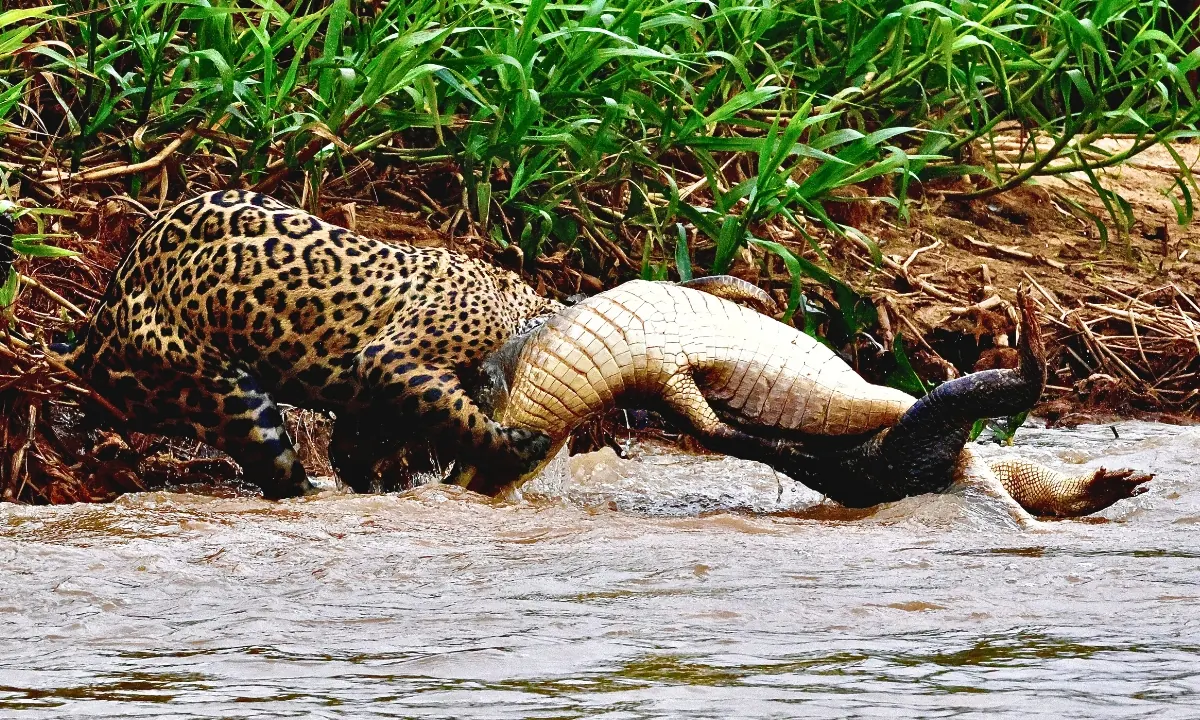
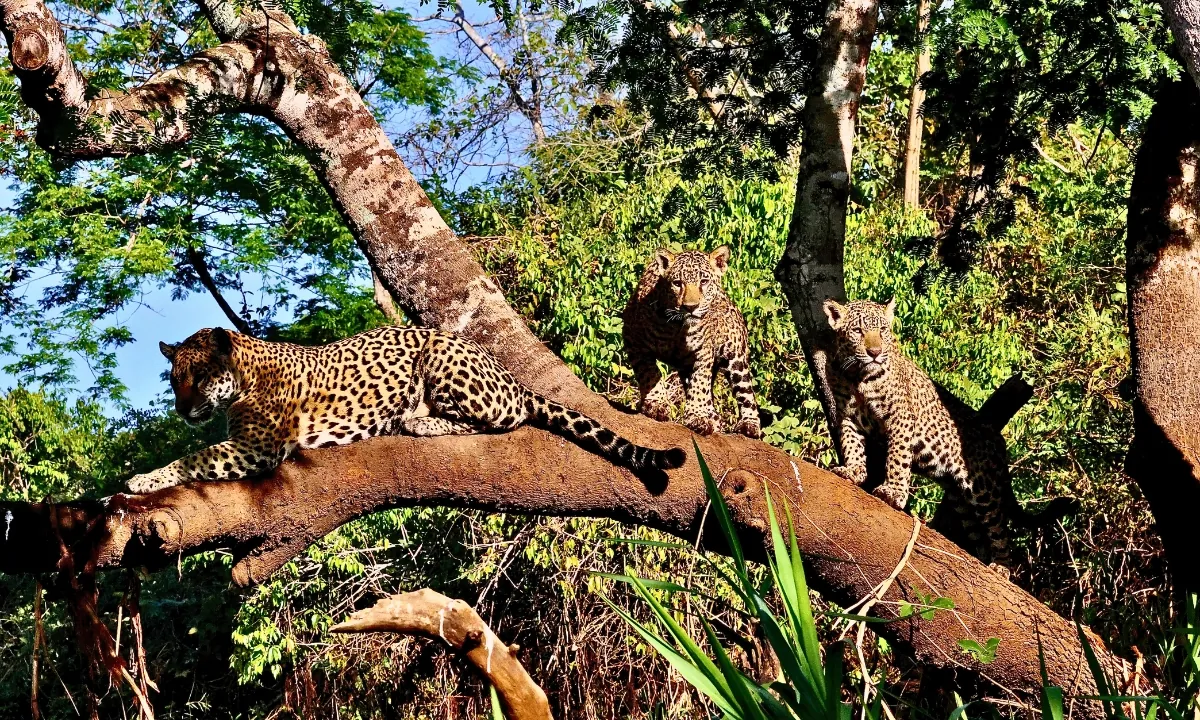
The jaguar is one of the most iconic forest animals in the Amazon and the largest cat in the Americas and a key superpredator in the Amazon. It inhabits dense rainforests, flooded forests, and swampy areas, and it is an excellent swimmer. It feeds on a wide variety of prey, including caimans, capybaras, deer, peccaries, and other reptiles and mammals.
Spotting jaguars in the wild is the South American equivalent of seeing cheetahs on the plains of Africa. Many travelers dream of this moment their entire lives, and to spot one, it is necessary to venture deep into the jungle. The Peruvian Amazon preserves some of these important refuges, especially in protected areas and wildlife observation destinations.
In the Tambopata Reserve, there is a 35% chance of observing one in its natural habitat. Exclusive jaguar safari tours in the Pantanal are also available. In the Manu National Park and the Pacaya Samiria National Reserve, it is also possible to spot one during multi-day tours. If you are lucky, you may be able to see one during the first few days.
2. Amazon Pink River Dolphin (Inia geoffrensis)
The pink river dolphin, or boto, is a fascinating freshwater cetacean. It lives in rivers and lagoons of the Amazon (especially near Iquitos in Peru) and has a grayish-pink color that intensifies with age or when it becomes excited. It is an intelligent and curious creature that usually swims alone or in small groups. It feeds on fish, crustaceans, and even small turtles. Although these dolphins are friendly toward tourist boats, they are vulnerable to pollution and indiscriminate fishing.

3. Giant River Otter (Pteronura brasiliensis)
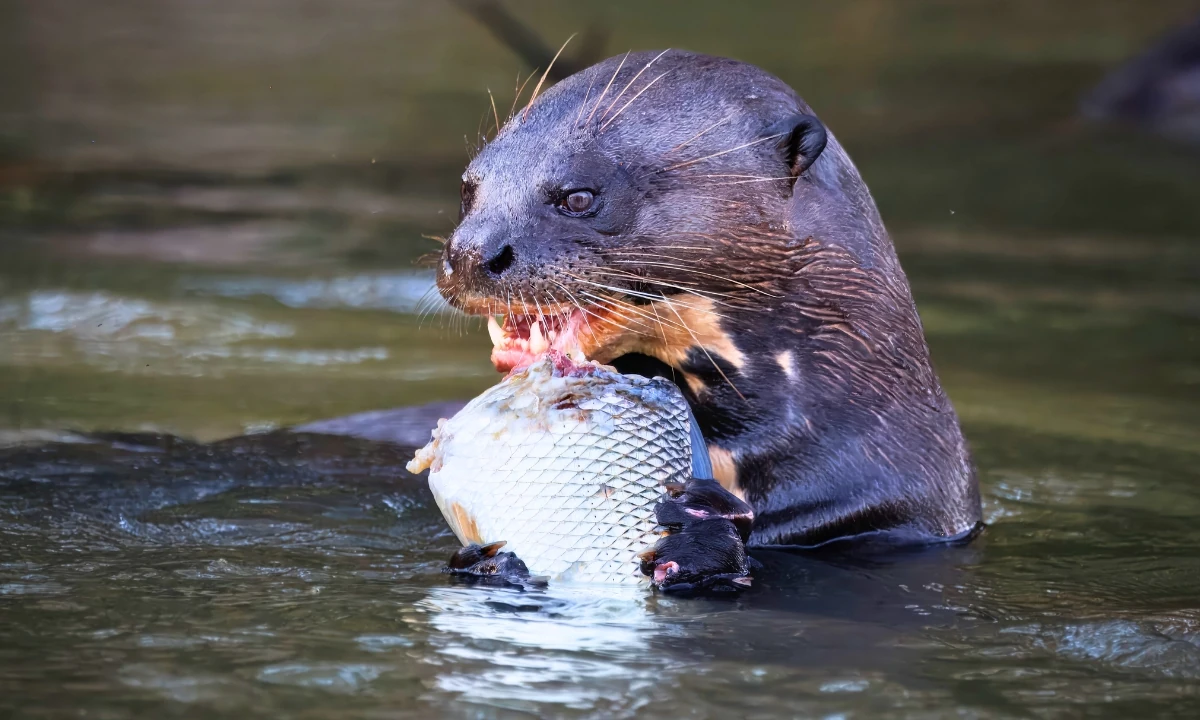
The giant river otter is a spectacular aquatic mustelid. It can measure more than 1.5 meters and lives in family groups along rivers and lakes in the Amazon. It feeds on fish, crabs, and mollusks, and is a true predator of river ecosystems. It is highly sociable and is characterized by its brown fur and small ears. Today, the giant river otter is endangered due to past hunting and habitat degradation, making sightings in the wild increasingly rare.
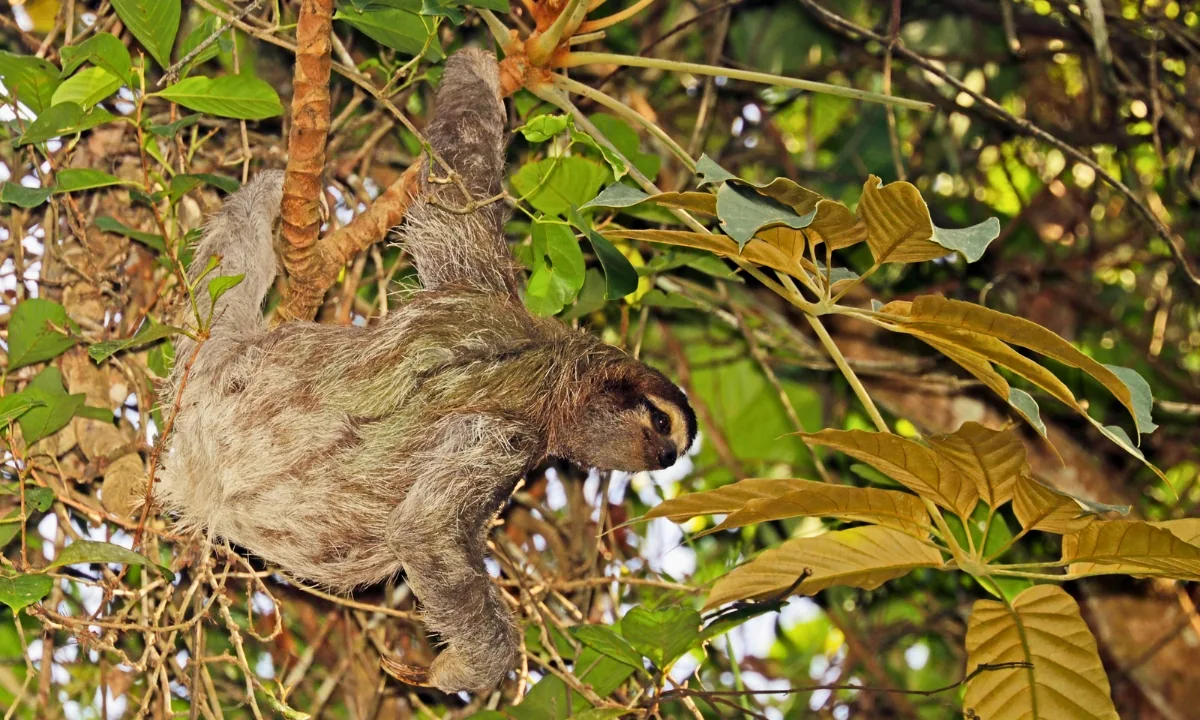
4. Brown-throated Sloth (Bradypus variegatus)
The three-toed sloth is famous for its slowness and for living in the treetops. Its fur forms a kind of habitat for green algae, which camouflages it among the leaves. It descends once a week to relieve itself and moves very calmly while searching for tender leaves to eat. It is not dangerous to humans, but its population is affected by deforestation. Spotting a sloth in the Amazon is a unique privilege due to its rare daytime appearance.
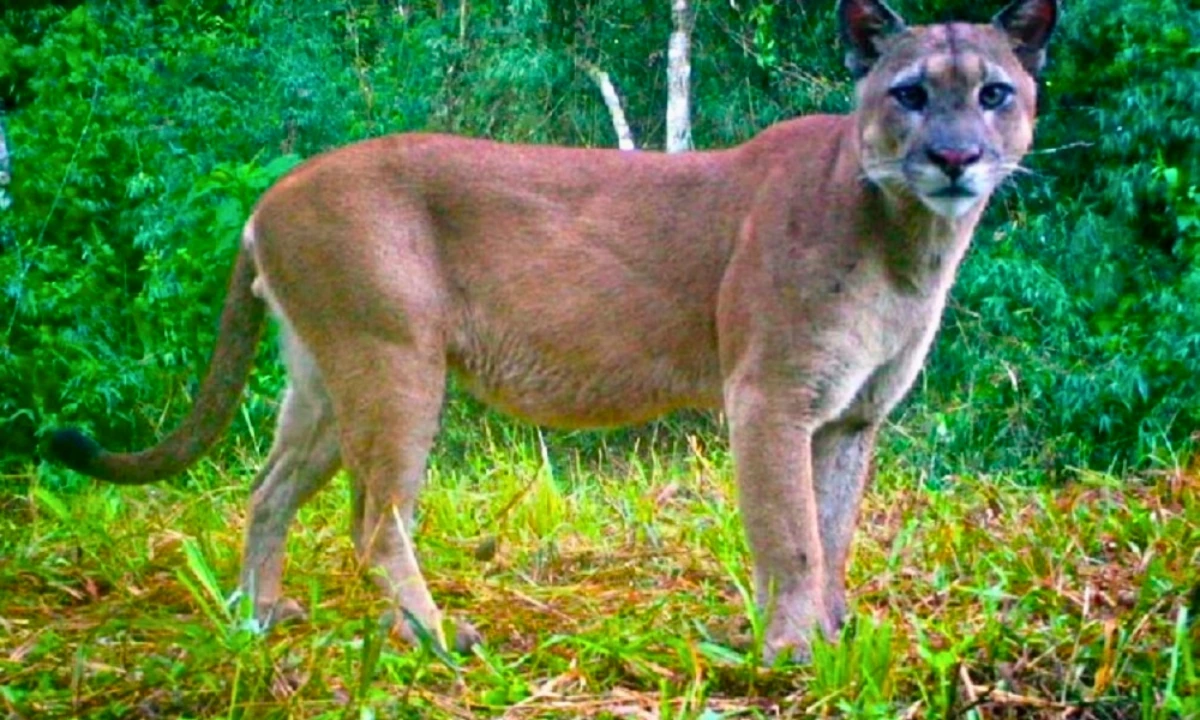
5. Puma (Puma concolor)
The puma is another large cat found in parts of the Amazon, especially in areas of more open rainforest or yungas. It is smaller and slimmer than the jaguar but very agile. It feeds on deer, monkeys, and other medium-sized mammals. Although it usually avoids people, it can be spotted by guides on nighttime excursions. Its presence demonstrates the health of Amazonian ecosystems, as it maintains the balance among the species it hunts.
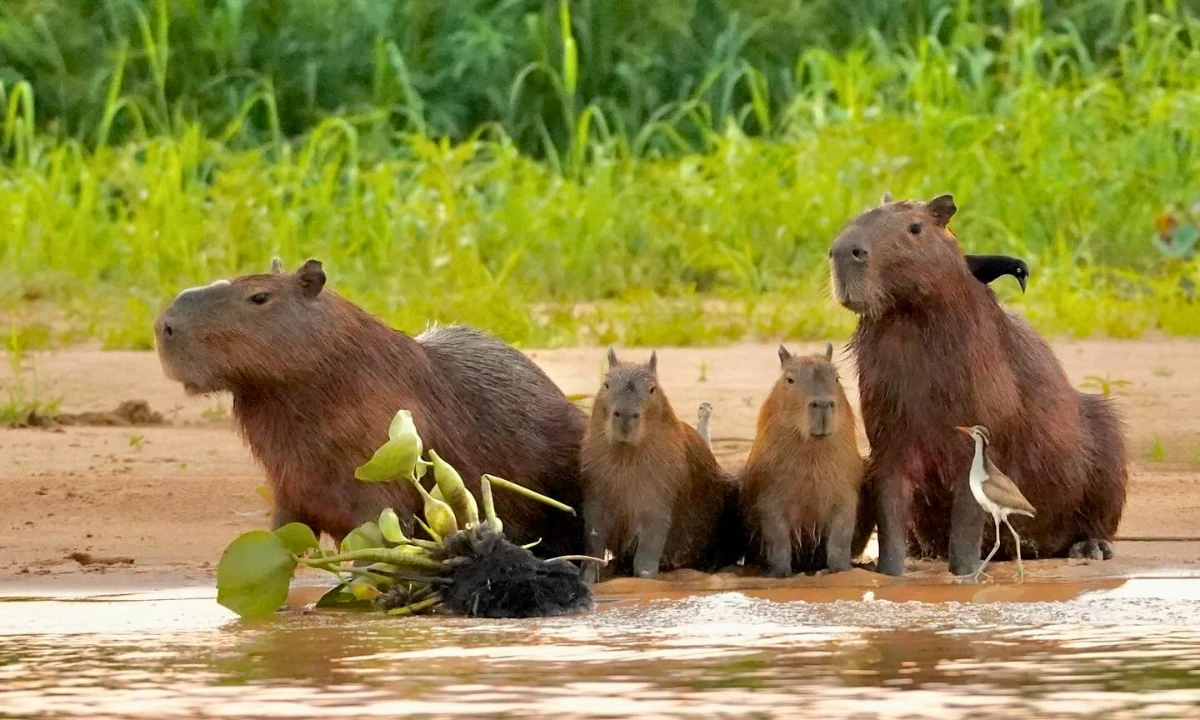
6. Capybara / Capybara (Hydrochoerus hydrochaeris)
The capybara is the largest rodent in the world and is common along riverbanks and around lagoons. With a stocky body and almost no tail, it lives in social herds that include several males and females. It is herbivorous (it eats grasses and aquatic plants) and often swims or dives to escape predators. It is not threatened and is usually easy to observe, especially at dawn or dusk when it comes out to graze. It is a spectacular sight to see an entire group of capybaras sunbathing beside the water.
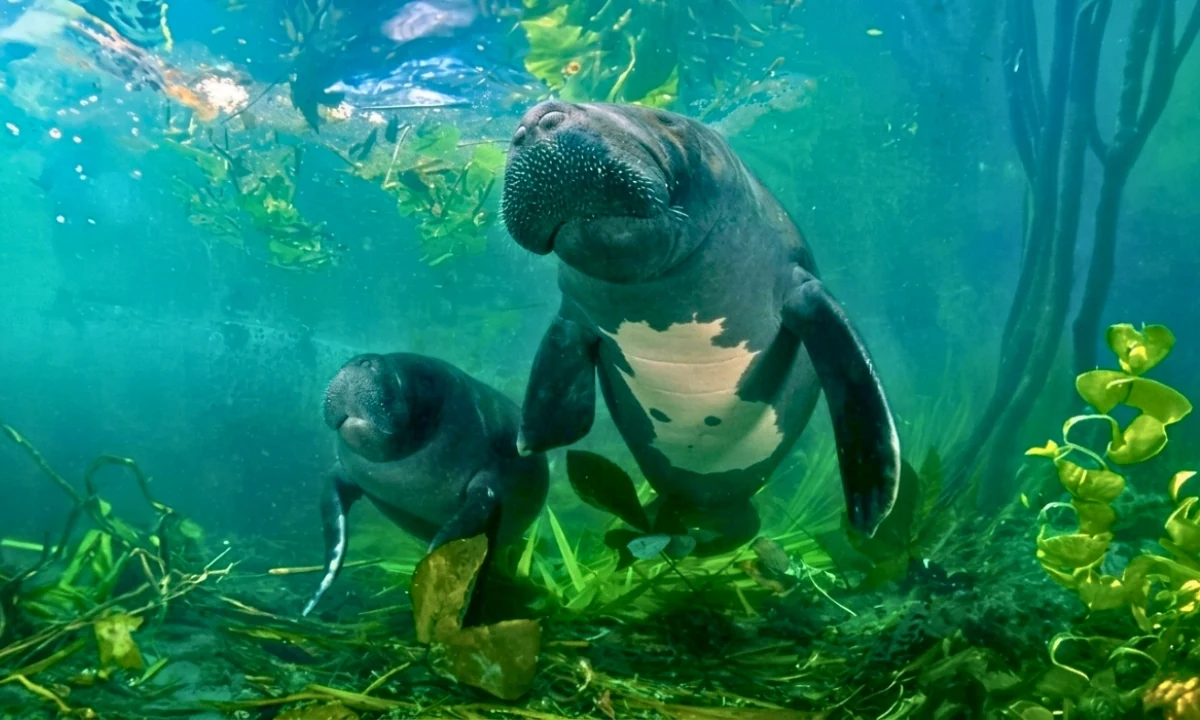
7. Amazonian Manatee (Trichechus inunguis)
The Amazonian manatee is a gentle and herbivorous aquatic mammal. It lives in lagoons, slow-moving rivers, and flooded areas of the Amazon. It feeds on aquatic plants, cleaning wet areas. Its body is robust and rounded, with flippers instead of limbs. It usually moves slowly and periodically surfaces to breathe. This species is endangered due to hunting and the loss of wetlands, so it is usually observed in protected areas.
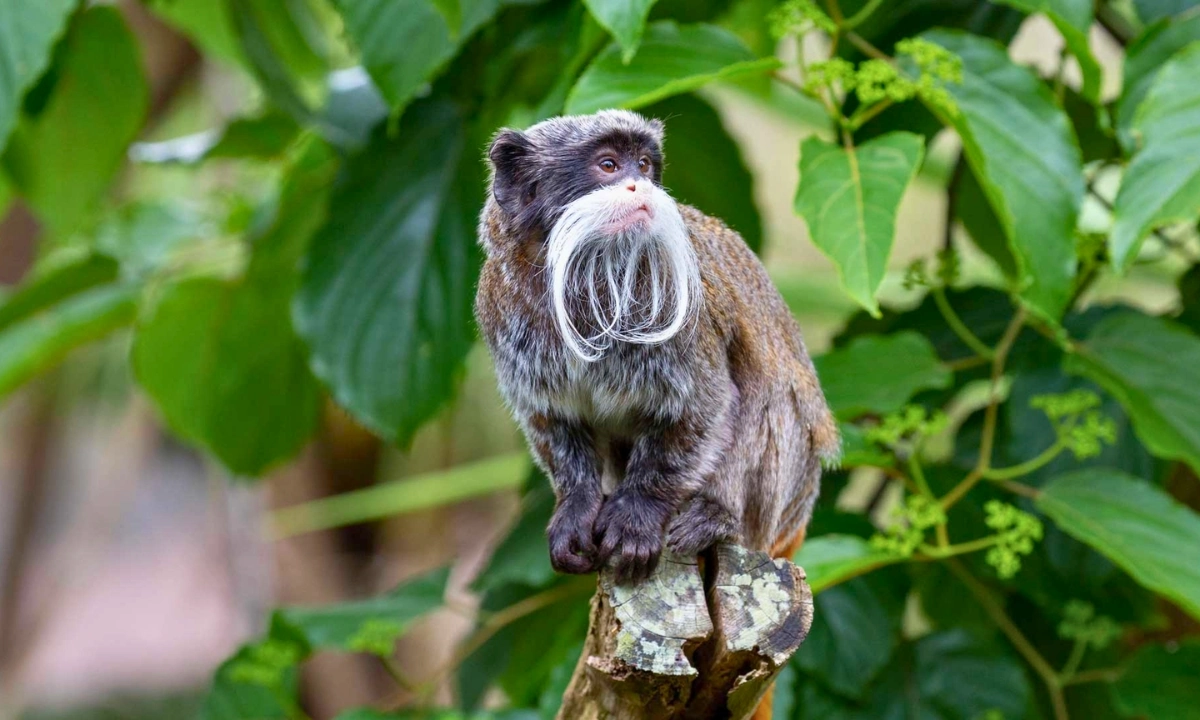
8. Emperor Tamarin (Saguinus imperator)
This small tamarin stands out for its black face and long white beard that surrounds its face, making it look like a wise old man! It measures around 25 cm and lives in the rainforest canopy. It feeds on insects, tree sap, fruits, and nectar. It is very agile when climbing among thin branches. It lives in social families and rarely comes down to the ground. Although it is shy, it can be seen on some primate-watching tours with luck.
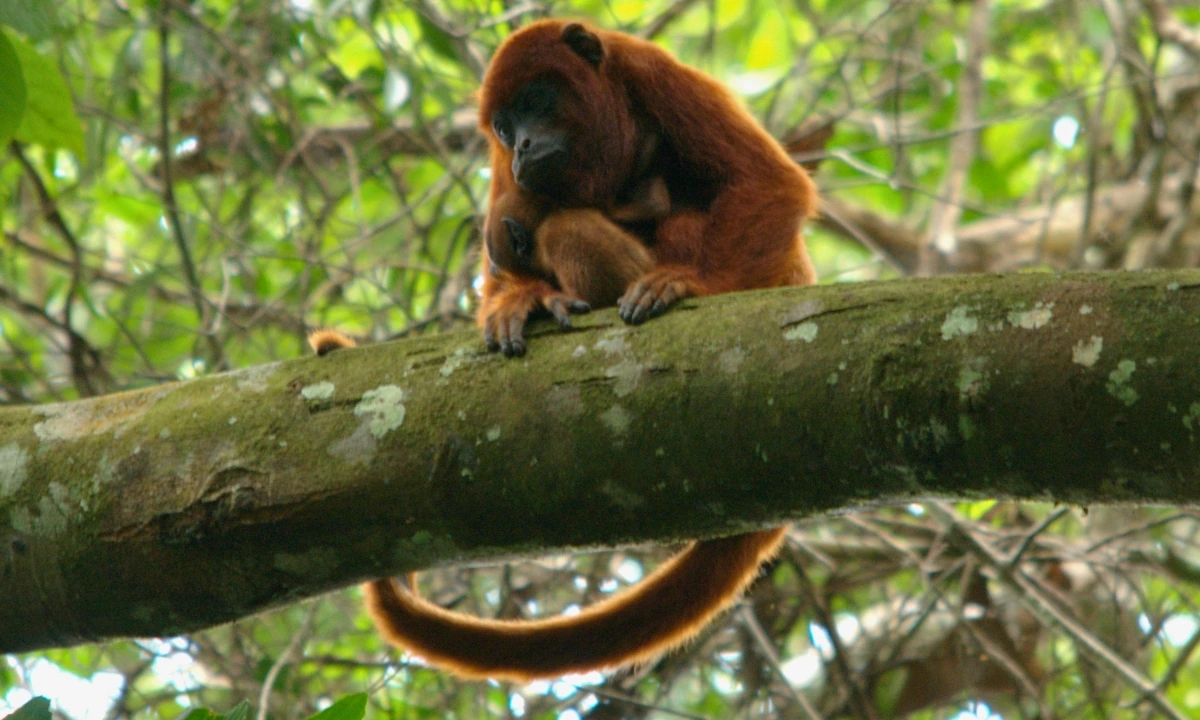
9. Red Howler Monkey (Alouatta seniculus)
Howler monkeys are famous for their loud calls that can be heard for miles at dawn. The red howler monkey, with reddish-brown fur, lives in the highest treetops of the rainforest. It feeds mainly on leaves and fruits. Its guttural howls are used to mark territory. Although they move slowly through the trees, they can be identified from a distance by their unmistakable call. They are relatively common in the Amazon and an essential part of the rainforest soundscape.
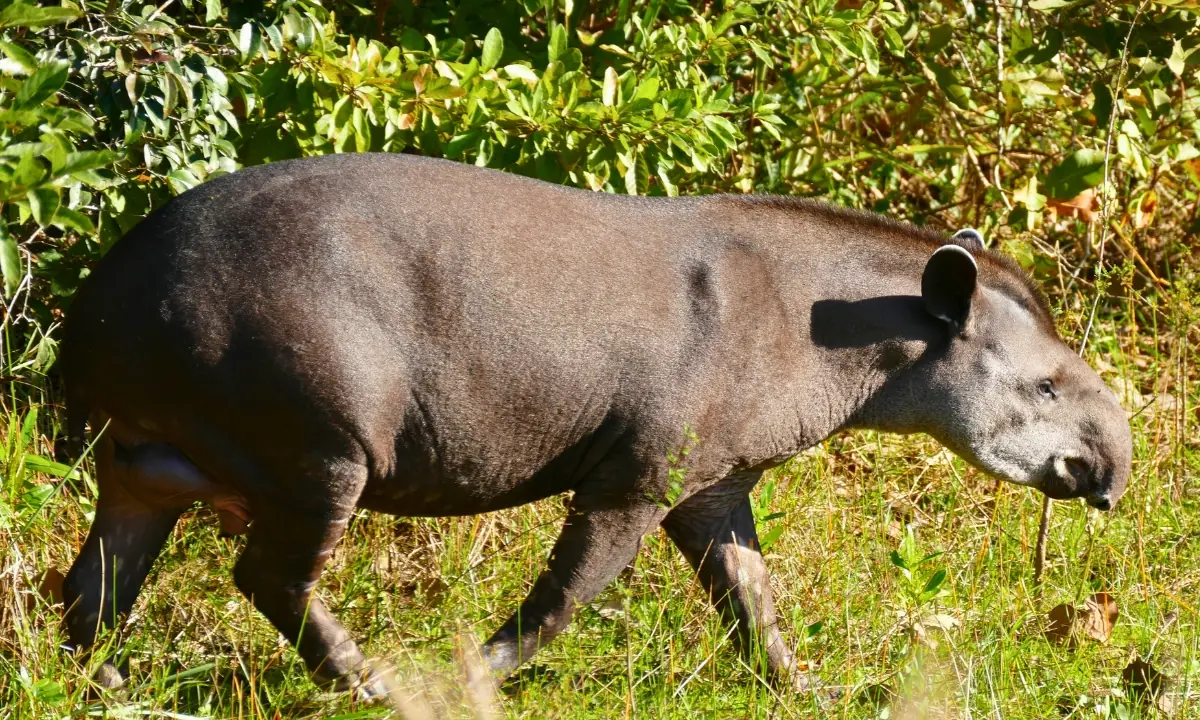
10. South American Tapir / Lowland Tapir (Tapirus terrestris)
The South American tapir is the largest land mammal in South America. Similar to a mix between a large pig and a small elephant (because of its short trunk), it moves through the nocturnal understory in search of fruits and plants. Solitary by nature, it often comes to drink water from pools at dusk. Its fur is dark and smooth. It is classified as vulnerable by the IUCN, mainly due to poaching and habitat loss. Finding a tapir crossing a stream under the moonlight is a magical moment for naturalists.
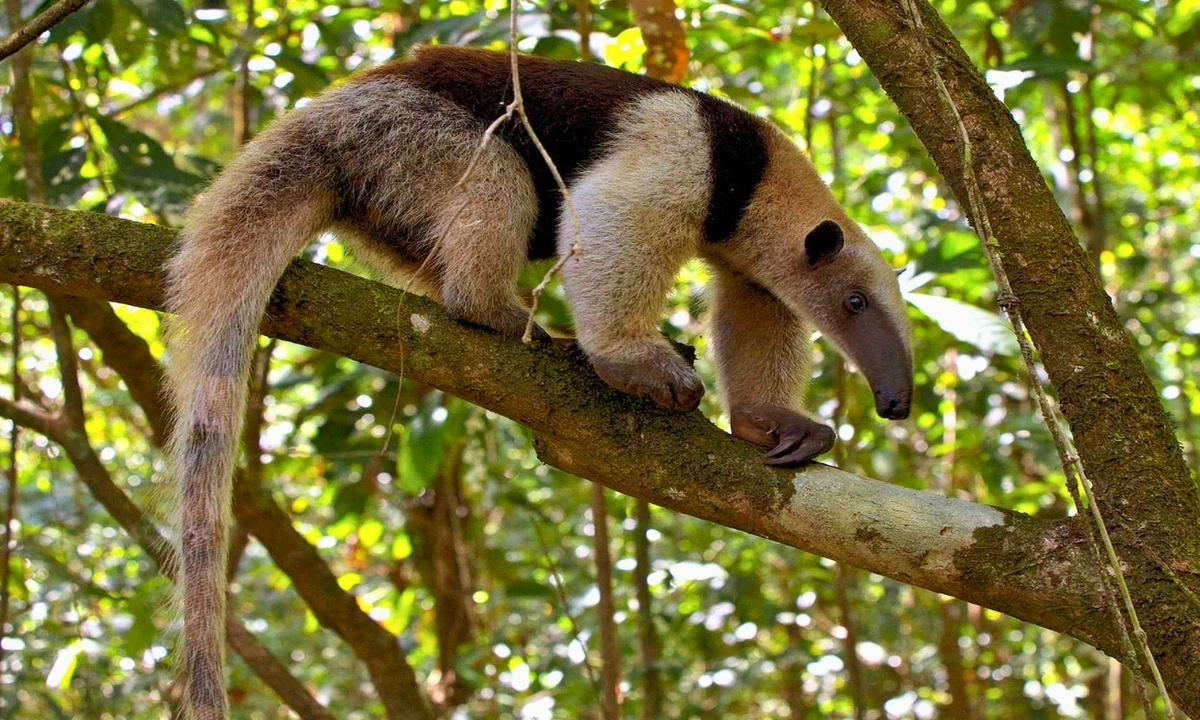
11. Southern Tamandua / Amazonian Anteater (Tamandua tetradactyla)
The southern tamandua is a small, nocturnal anteater. It has an elongated body, golden fur with dark markings on its back, and a long prehensile tail. It skillfully climbs trees in search of ants and termites, using its long sticky tongue. Although it lives in the Amazon, it can also be seen along roads or forest trails. It poses no danger (it is neither venomous nor aggressive), but like many Amazonian animals, it faces risks from illegal hunting.
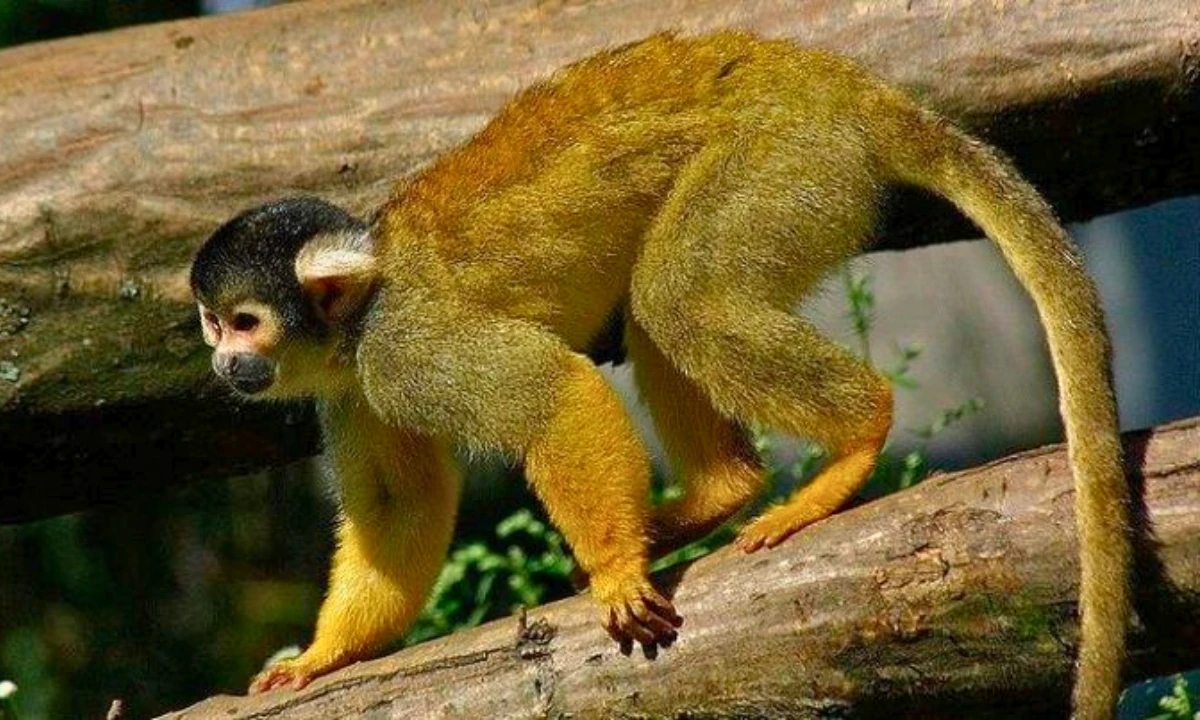
12. Black-capped Squirrel Monkey (Saimiri boliviensis)
This tiny squirrel monkey measures barely 30 cm. Its body is orange, while its head is black with a white neck and chest. Extremely social, it lives in large groups and moves quickly through the treetops. It mainly eats fruits and insects. It reproduces easily in captivity, but in the wild it usually stays away from human presence. Seeing a group of squirrel monkeys constantly leaping is a captivating sight and very typical of daytime excursions in the Amazon.
13. Tucuxi (Sotalia fluviatilis)
The tucuxi is another river cetacean, smaller and light gray in color (unlike the pink river dolphin). It is usually found in freshwater areas of the Amazon and Orinoco rivers. Like the pink river dolphin, it is curious around boats and often swims around them. It measures up to 1.5 m long and feeds on fish. In Peru, it is relatively common to see tucuxis jumping near the shore. They are classified as a near-threatened species due to bycatch, so river tours should observe them respectfully.

Amazon Rainforest Birds
The Amazon is home to thousands of colorful and spectacular bird species. Many Amazonian birds are endemic, and their extinction would be irreversible for the region. Birdwatching expeditions are very popular in the Pantanal, Iquitos, Tambopata, and Manu. These birds are part of the great diversity of forest animals that inhabit the Amazon. Below are some of the most fascinating birds in the Amazon rainforest:
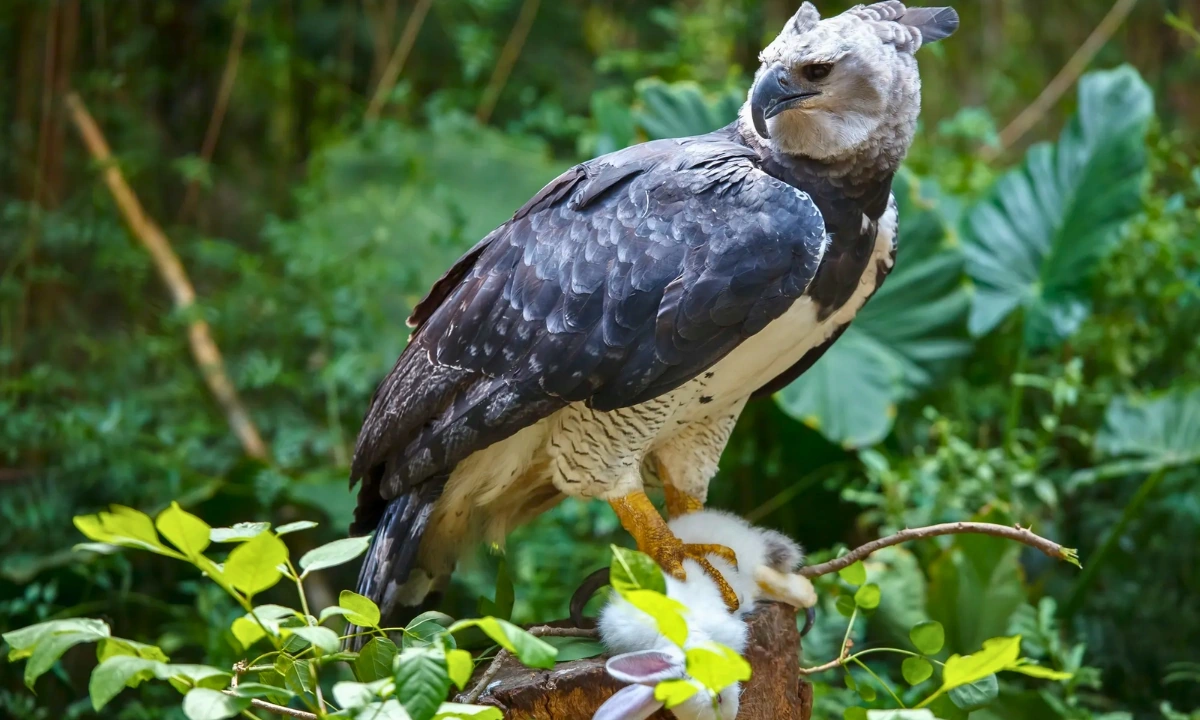
14. Harpy Eagle (Harpia harpyja)
It is the most powerful bird of prey in the Amazon and one of the largest eagles in the world. It can measure up to 100 cm, and its talons are as strong as those of a small bear. It hunts monkeys, sloths, and other large mammals in the treetops. Its wingspan exceeds 2 meters. Although it was once widespread throughout much of South America, it is now scarce and can only be seen in protected areas. Spotting a harpy eagle in flight is an unforgettable experience.
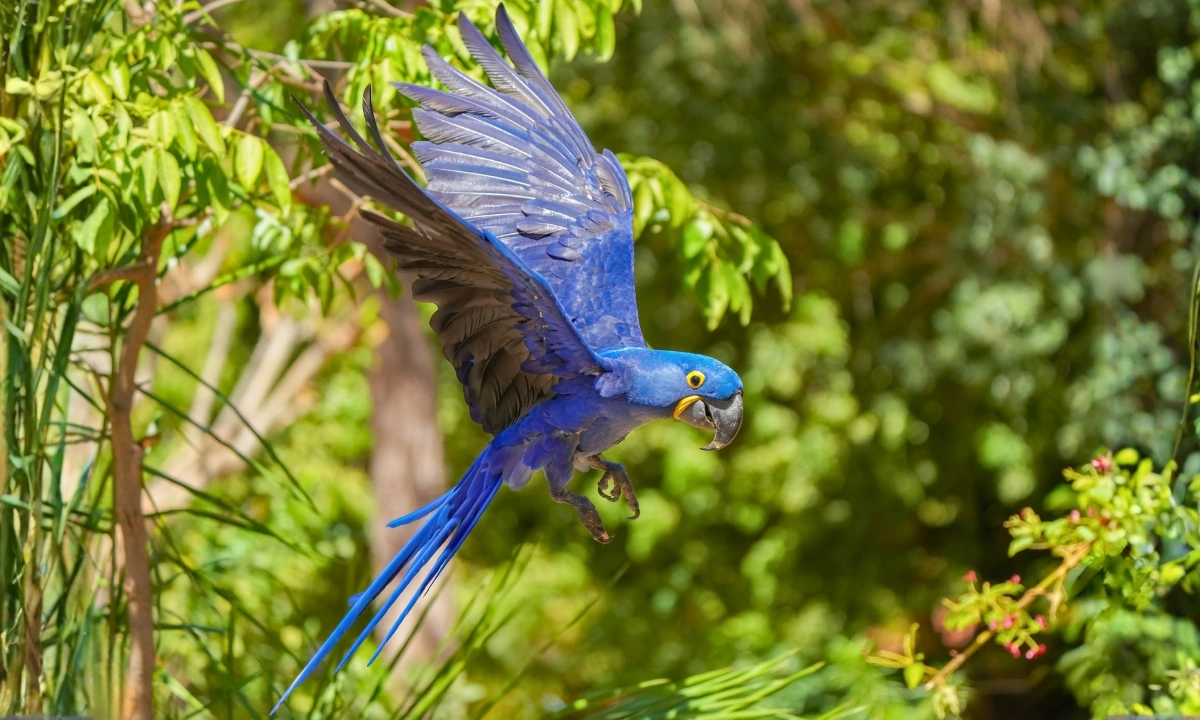
15. Hyacinth Macaw (Anodorhynchus hyacinthinus)
It is the largest parrot in the world, recognizable by its deep blue plumage and powerful beak. It feeds on nuts from native South American palm trees and lives in pairs for life. It is a threatened species due to illegal trade and habitat loss. The Pantanal and the Cerrado (in Brazil, Bolivia, and Paraguay) are the best places to observe it in the wild.
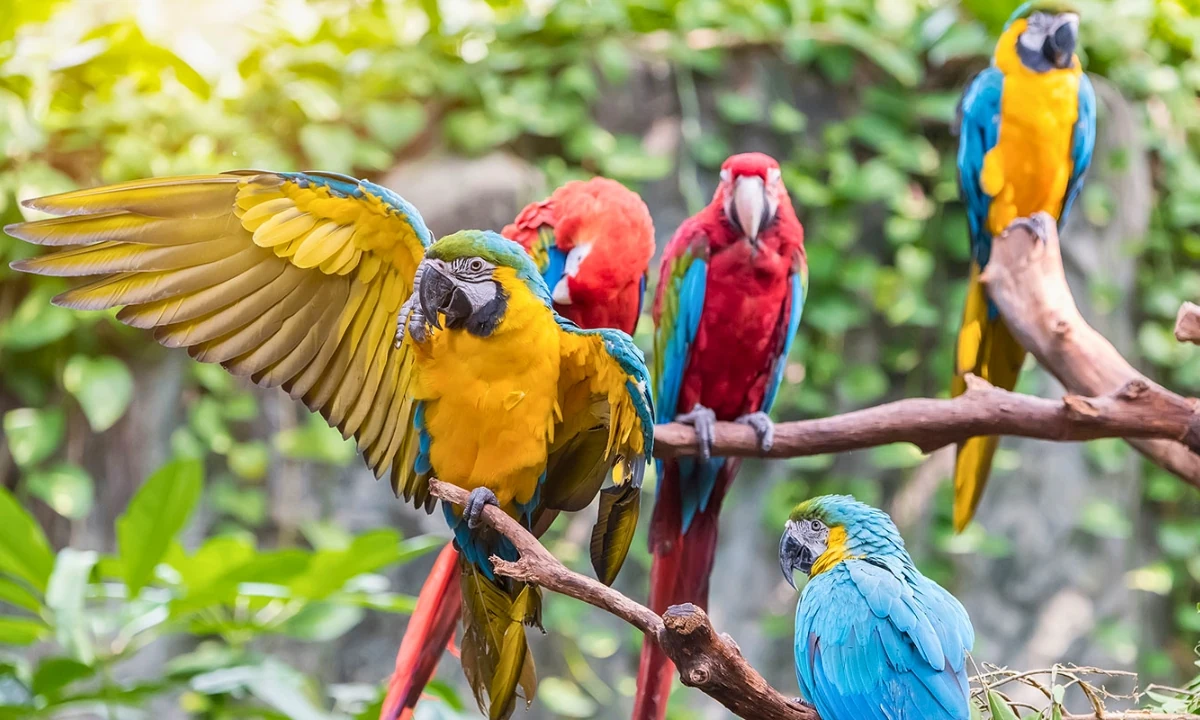
16. Scarlet, Blue-and-yellow, and Great Green Macaws (Ara)
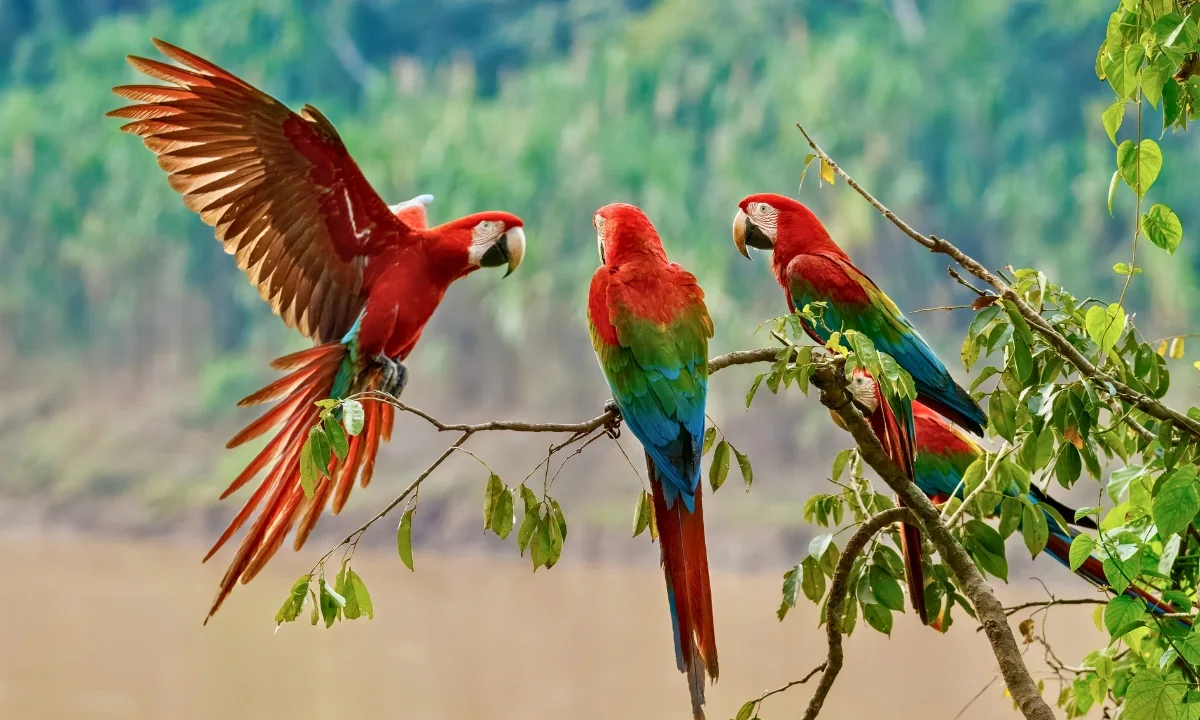
Macaws of the genus Ara form spectacular groups in the rainforest. Famous examples include the scarlet macaw (Ara macao), the blue-and-yellow macaw (Ara ararauna), and the great green macaw (Ara ambigua). These intensely colored parrots are highly intelligent and social, feeding on seeds and fruits. They fly in pairs or flocks and nest in large tree cavities. They are iconic of the Amazon, and their loud calls are part of the rainforest soundscape. They frequently gather at famous “clay licks” (clay shelters).
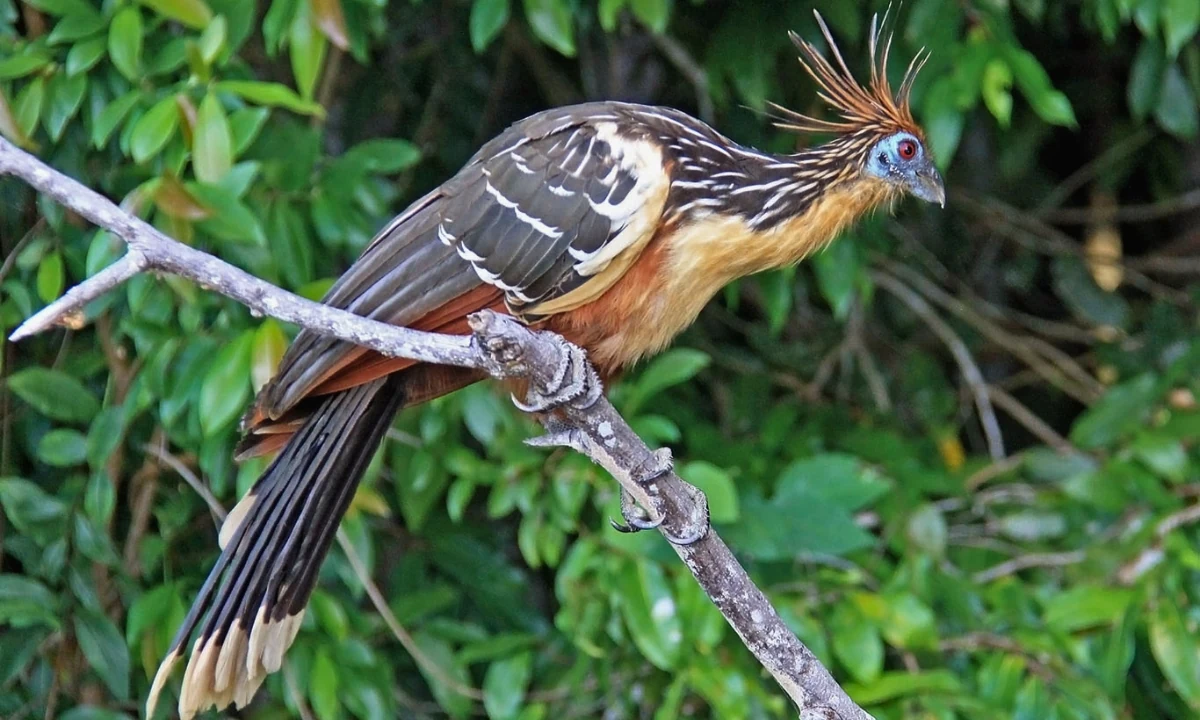
17. Hoatzin / Shansho (Opisthocomus hoazin)
The hoatzin is a unique and strange bird. It has an erect chestnut-colored crest and brown plumage, and it looks half dinosaur-like when it flies awkwardly. It eats leaves, shoots, and fruits, and has fermentative digestion similar to that of a cow, which gives it an unmistakable smell along the riverbanks. The chicks are curious: they have claws on their wings that they use to climb among branches before they are able to fly. The hoatzin only inhabits wetlands and meanders of the Amazon; seeing one is often a surprise for tourists.
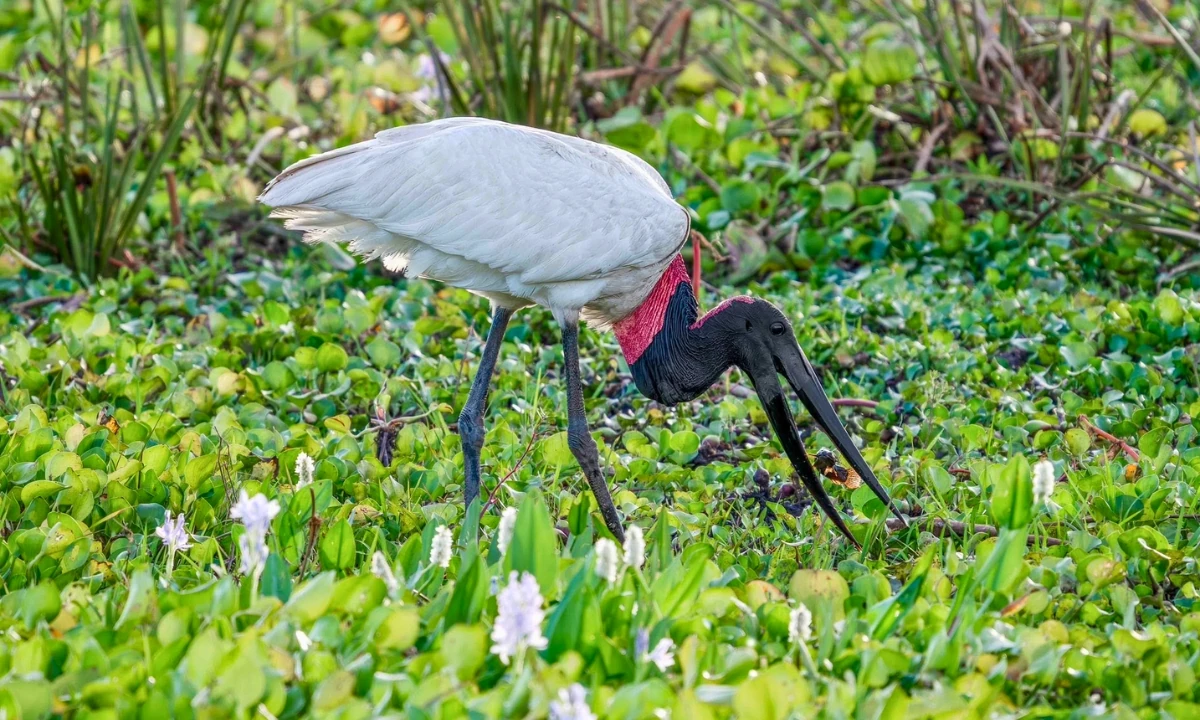
18. Jabiru / Jabiru Stork (Jabiru mycteria)
The jabiru is the tallest stork in the Americas, reaching up to 1.5 m in height. Its body is mainly white with a black neck and head. It is found in swamps and along riverbanks, where it feeds on fish, amphibians, and small mammals while waiting for prey. It builds enormous nests in the crowns of tall trees. An iconic species of the Amazonian plains, it is sometimes confused with the “spoonbill,” but the jabiru is entirely white. It responds well to long-distance tours (by boat or canoe), where visitors travel through its fishing territory.
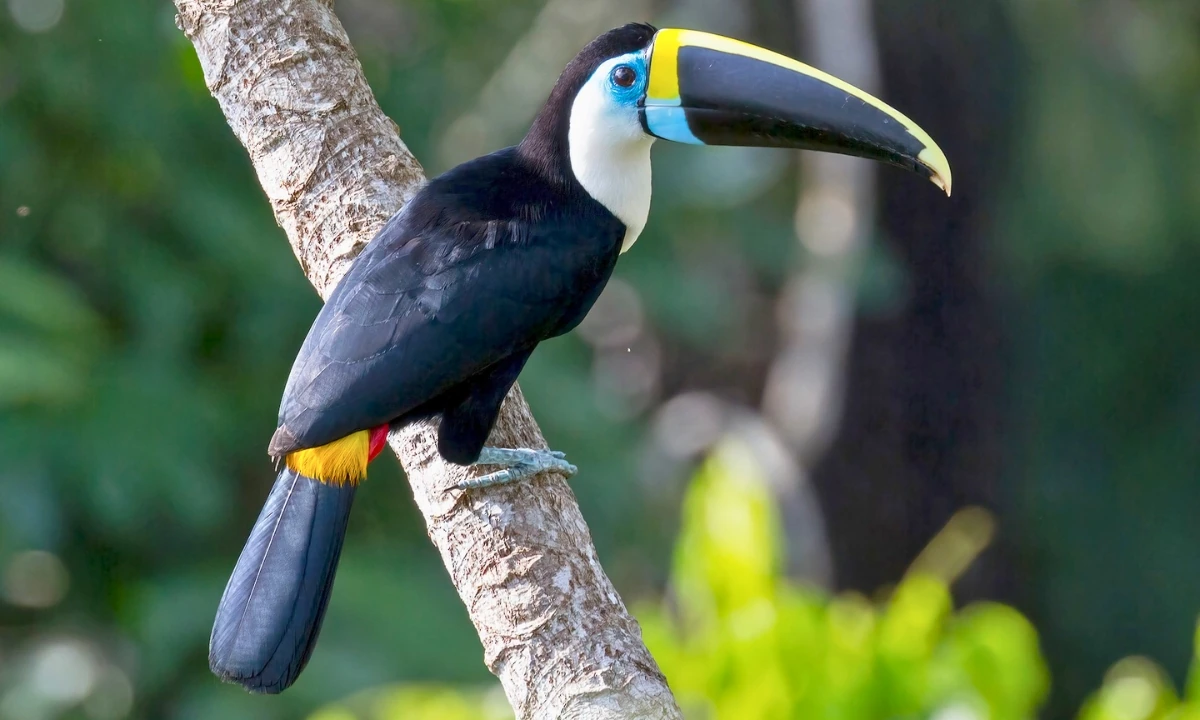
19. Toucan (Ramphastos tucanus)
The red-billed toucan (Ramphastos tucanus) is one of the most representative species of the Amazon. It stands out for its enormous two-toned bill (yellow and black) and dark body. It feeds on fruits, helping to disperse seeds. It flies from branch to branch with agile movements despite its large bill. It lives in pairs and is usually active at dawn and dusk. There are several species of toucans in the Amazon, all with striking bills, making this group of birds almost synonymous with the tropical rainforest in photographs and documentaries.
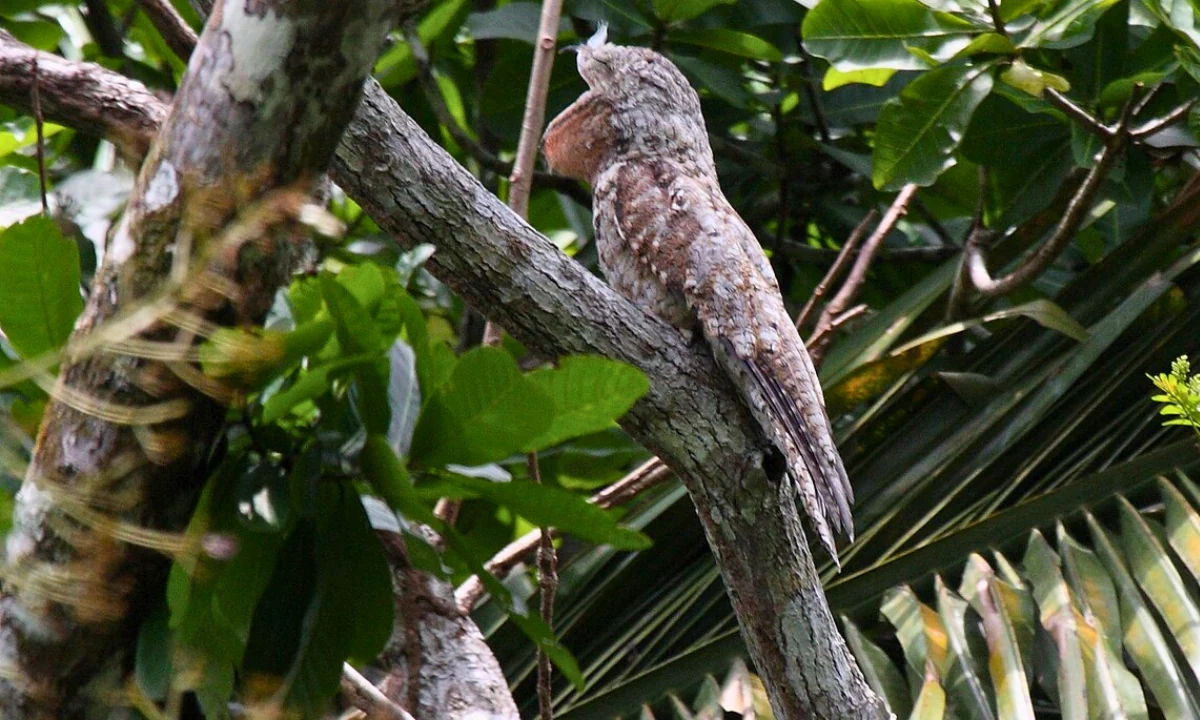
20. Common Potoo (Nyctibius griseus)
The potoo is a nocturnal and secretive bird with a curious appearance. During the day, it remains completely motionless on understory branches, pretending to be a dry tree trunk thanks to its cryptic plumage. Its mottled gray plumage conceals it perfectly. At dusk, it produces strange guttural sounds (“uwét-uwét”) that can be heard throughout the rainforest. Potoos hunt flying insects with their large mouths. Seeing one standing upright beside an Amazonian nighttime trail is an unforgettable sighting.
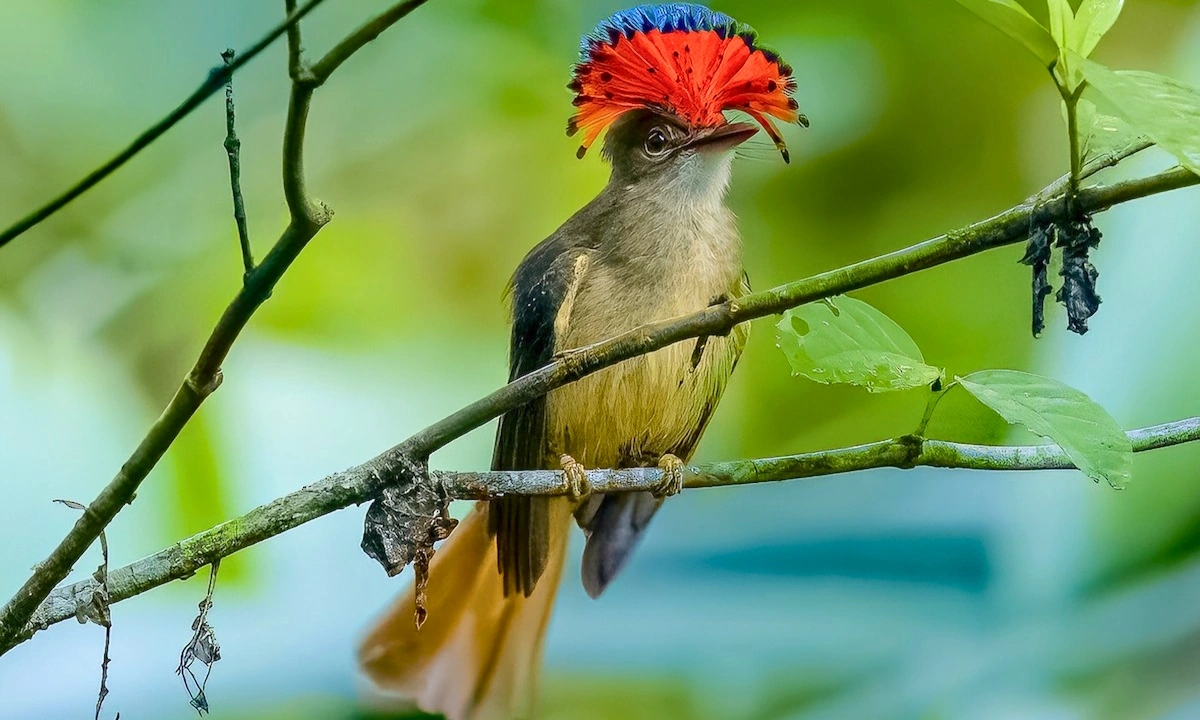
21. Royal Flycatcher (Onychorhynchus coronatus)
The royal flycatcher is a small songbird that lives near rivers and lagoons. It does not attract much attention until it extends its strikingly colored crest (red and blue) to court. Its plumage is dark with a yellow breast. It perches on low branches, listening for insects with its sharp hearing, hence its name “flycatcher.” Its colorful crest is only displayed briefly, so most people see it as an ordinary brown bird.
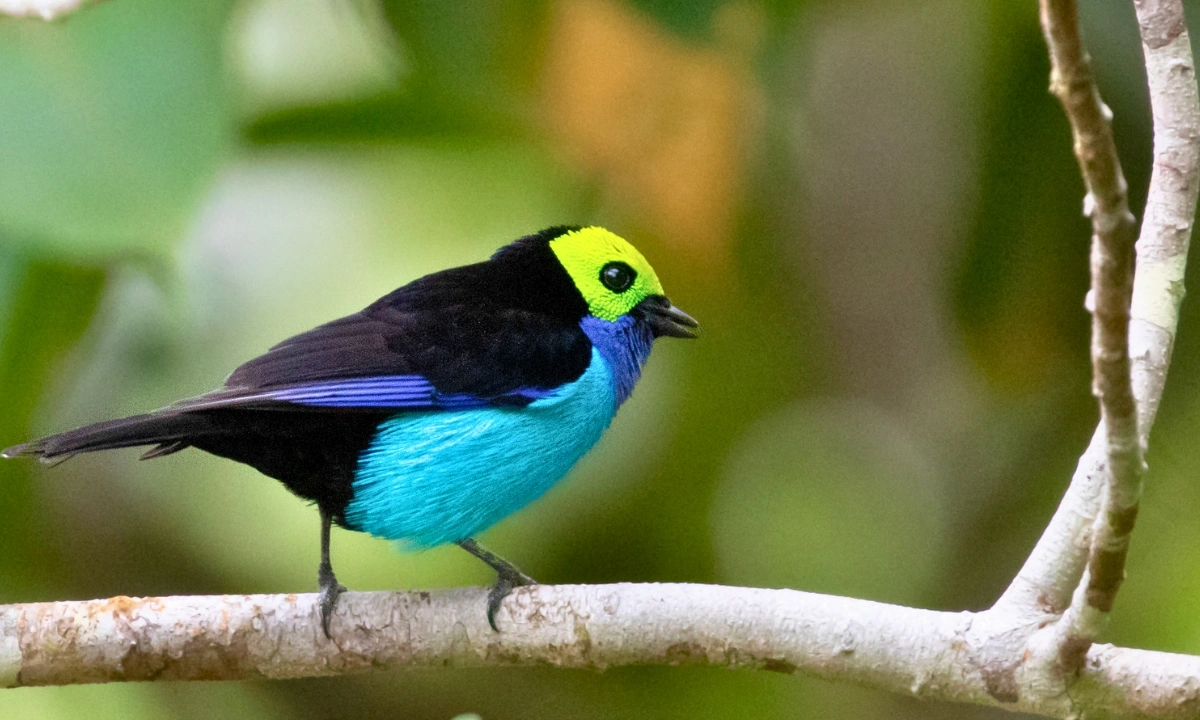
22. Paradise Tanager (Tangara chilensis)
The paradise tanager is a small, brightly colored songbird with orange cheeks, a green back, and blue wings. It inhabits the middle levels of the Amazon rainforest, preferably in the crowns of palm trees and fruit trees. It feeds on nectar and also insects. It lives in small mixed flocks of birds. Although it is not currently considered threatened, it is fascinating for its beauty. In Spanish, it is sometimes called the seven-colored tanager or paradise tanager.
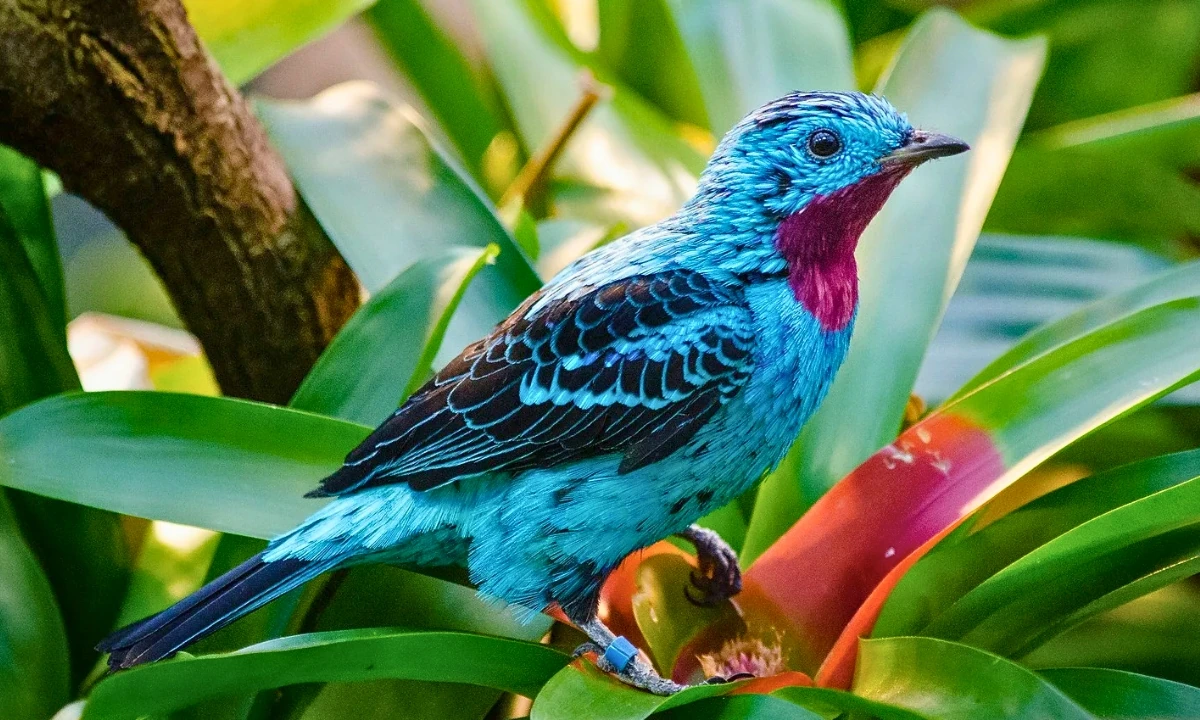
23. Spangled Cotinga / Blue Cotinga (Cotinga cayana)
The spangled cotinga is a brightly colored bird with electric-blue plumage (male) or greenish-brown plumage (female). It measures about 30 cm. It lives in the highest treetops of the rainforest, where it barely moves and is difficult to detect with the naked eye. It feeds on fruits, hanging from thin branches. Humans rarely discover it, but it is known to gather in small groups. Seeing an intense blue patch among the vegetation from below is an exciting sign of its presence.
Reptiles and Amphibians of the Amazon Rainforest
The Amazon is home to many reptiles and amphibians, several of them venomous or large in size. The most imposing reptiles are the snakes and caimans that roam the rivers. Among the amphibians are tiny poisonous frogs and transparent creatures. Some of these forest animals live among the vegetation, leaf litter, and humid environments of the Amazon rainforest. These Amazon rainforest animals perform key functions: they control pests and decompose leaf litter.
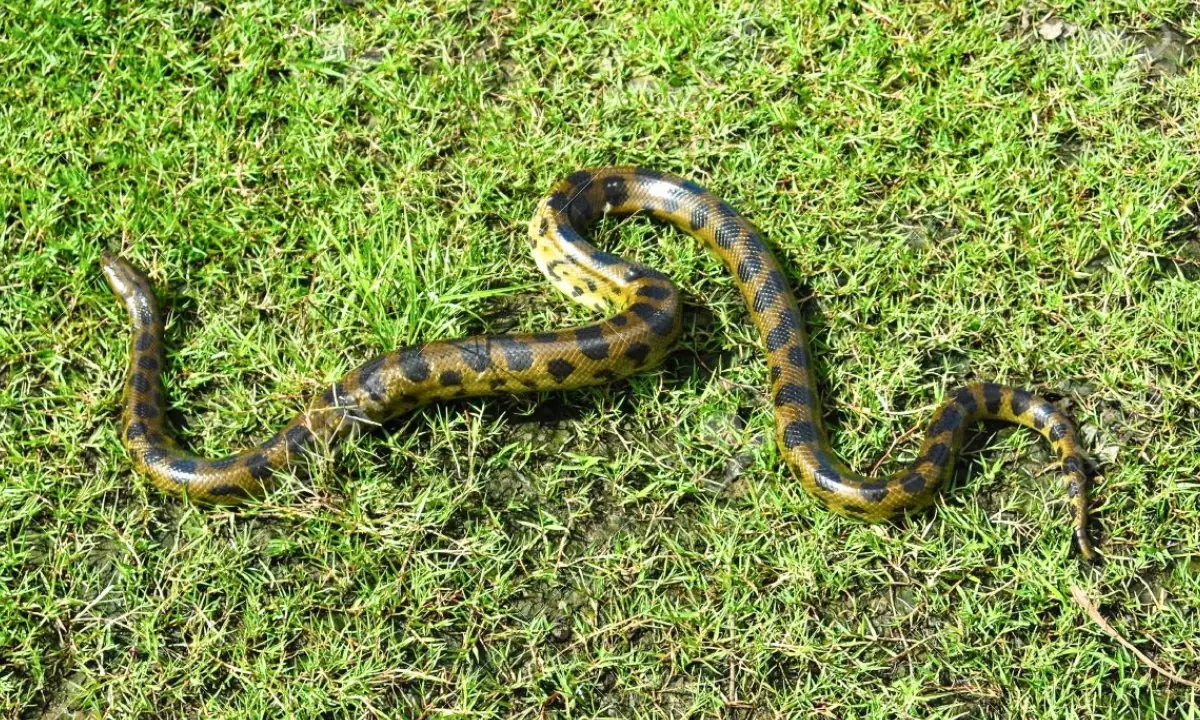
24. Green Anaconda (Eunectes murinus)
The green anaconda is the largest snake in the world by weight. It can exceed 7 m in length and weigh more than 250 kg. It is not venomous: it kills by constriction, squeezing its prey until it suffocates. It inhabits slow-moving rivers and swamps in the Amazon, where it camouflages itself while waiting in ambush. It feeds on capybaras, fish, caimans, and even young tapirs. Despite its size, it usually flees from people; even so, finding an anaconda in the water is a dramatic moment.
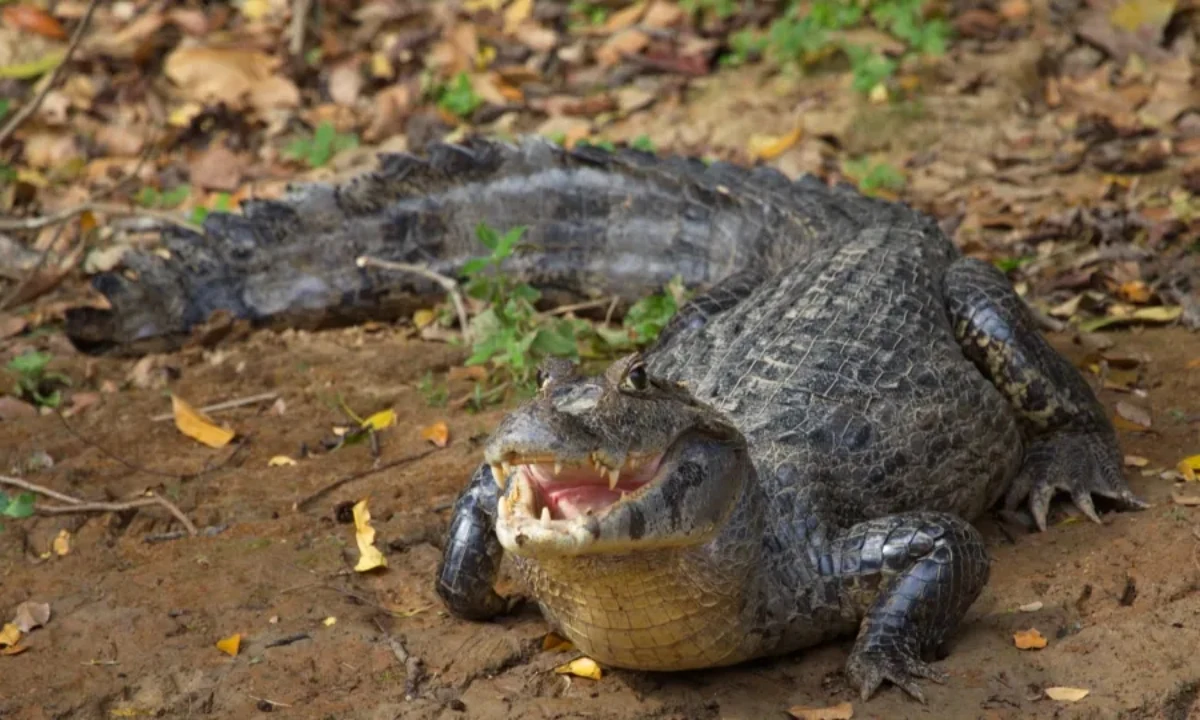
25. Black Caiman (Melanosuchus niger)
The black caiman is the largest freshwater predator in the Amazon. It can reach 4–5 meters in length, with a huge dark gray, almost black body. It swims silently to surprise fish and mammals along the riverbank. It lives in remote lagoons and rivers in the rainforest. Although it is impressive, it generally keeps away from humans. Nature reserves allow visitors to hear it snort or see its back emerge as it basks in the sun.
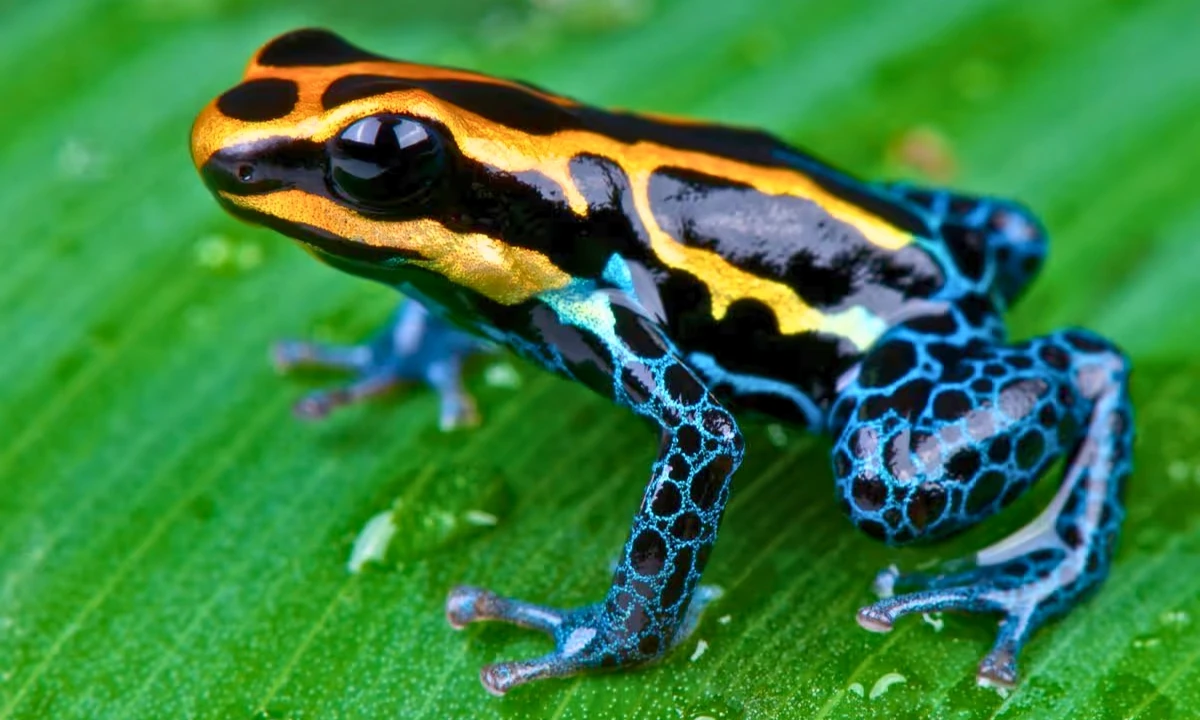
Poison Dart Frog (Ranitomeya ventrimaculata)
This small frog is diurnal and has bright colors (yellow and red) that warn of its toxicity. It lives on the humid rainforest floor, searching for food. Its venom is potent (for small predators), but it rarely affects people. It feeds on ants and grasshoppers. The Amazonian poison dart frog serves as an indicator of a healthy ecosystem: its presence reflects intact rainforests.
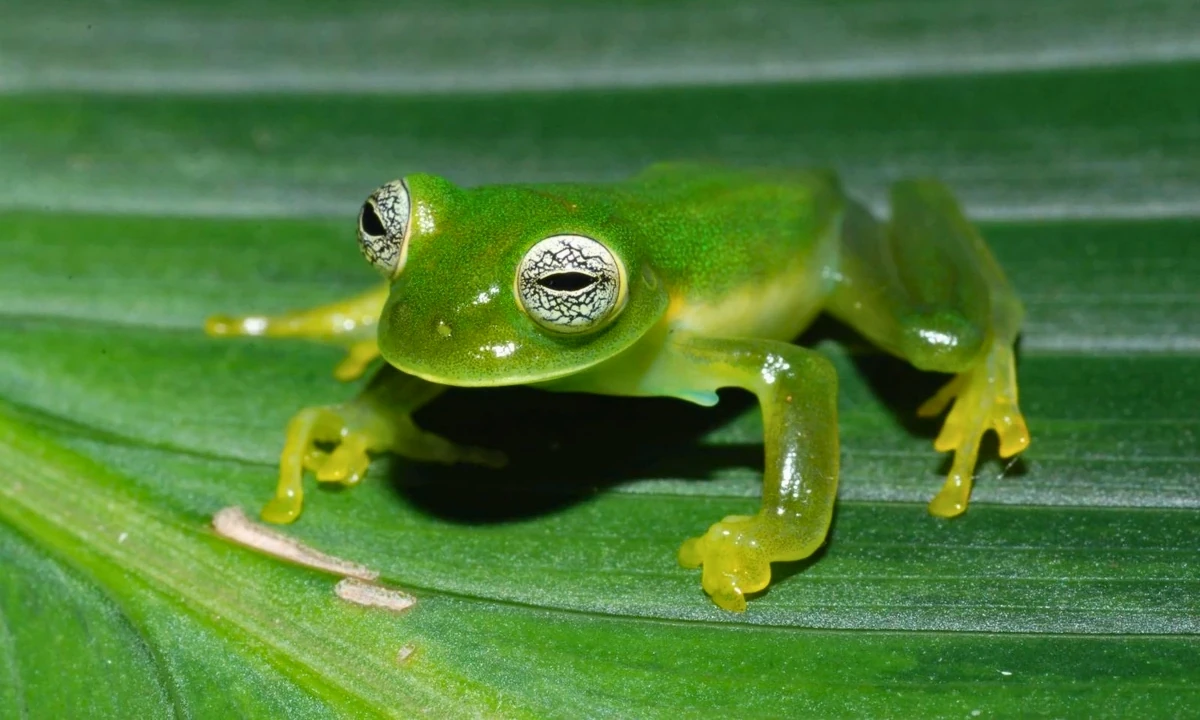
Glass Frog (family Centrolenidae)
Glass frogs are famous for their transparent bellies. Several species are abundant in the Amazon: they can be seen perched on leaves above streams. During the day, they look like a piece of leaf litter thanks to their camouflage. Their eyes are easily noticed when the leaf is illuminated with a flashlight. Some are venomous, but most have mild toxins. They are interesting because the eggs and tadpoles are often visible beneath the biological glass of their bellies.
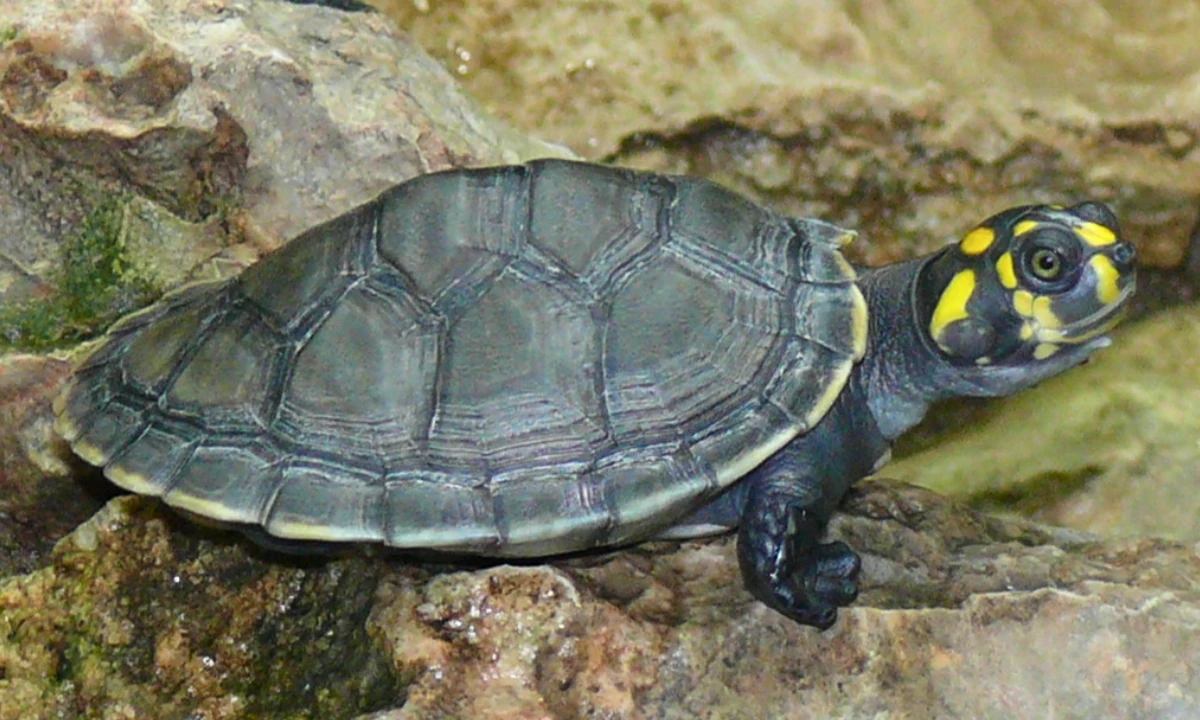
28. Side-necked River Turtle / Taricaya (Podocnemis unifilis)
The taricaya is a medium-sized Amazonian turtle. Its shell is light brown, and its neck is long but can fold to one side (not downward like normal turtles). It inhabits rivers and lakes, where it dives for aquatic plants. Females come out onto river beaches during the dry season to nest in large sand nests. It is classified as vulnerable, so in many protected areas only adult specimens are observed.
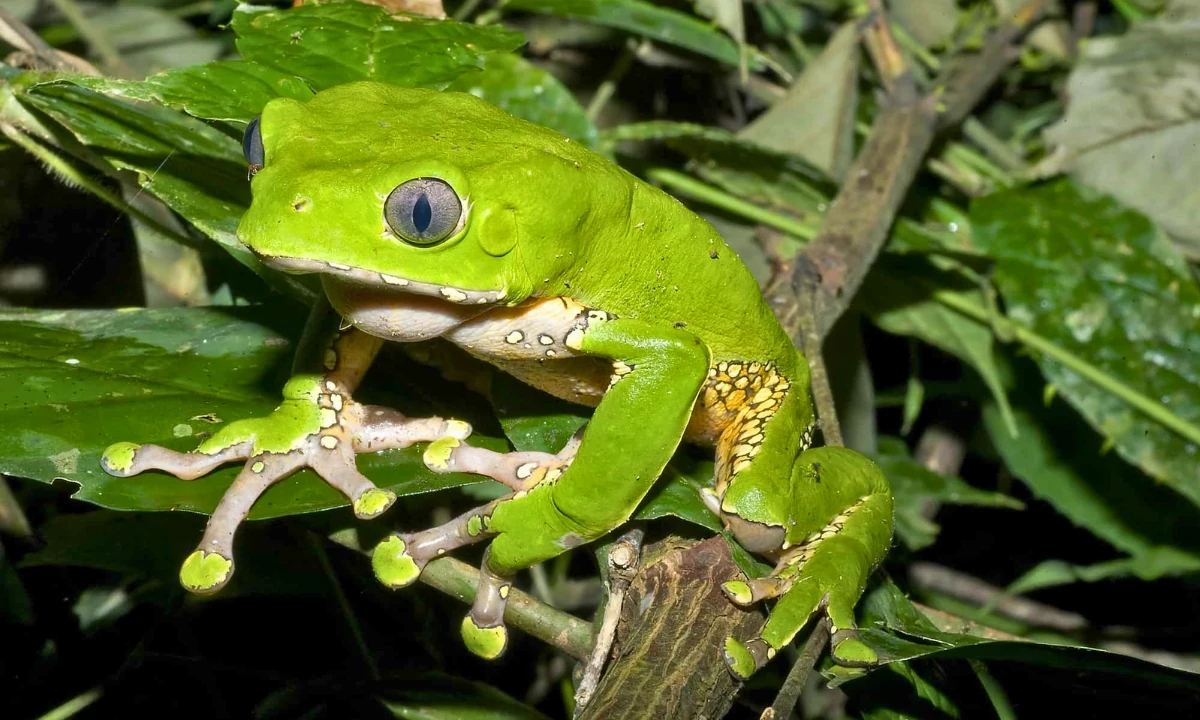
29. Monkey Frog / White-lined Frog (Phyllomedusa bicolor)
Also called the giant monkey frog, it is a large frog (up to 12 cm) with olive-green skin and white lateral lines. It lives in the treetops and descends only to reproduce. It is characterized by secreting a substance that some Indigenous peoples use in rituals (toxic secretion). It is mainly nocturnal and eats large insects. Its sticky saliva helps it capture its prey.
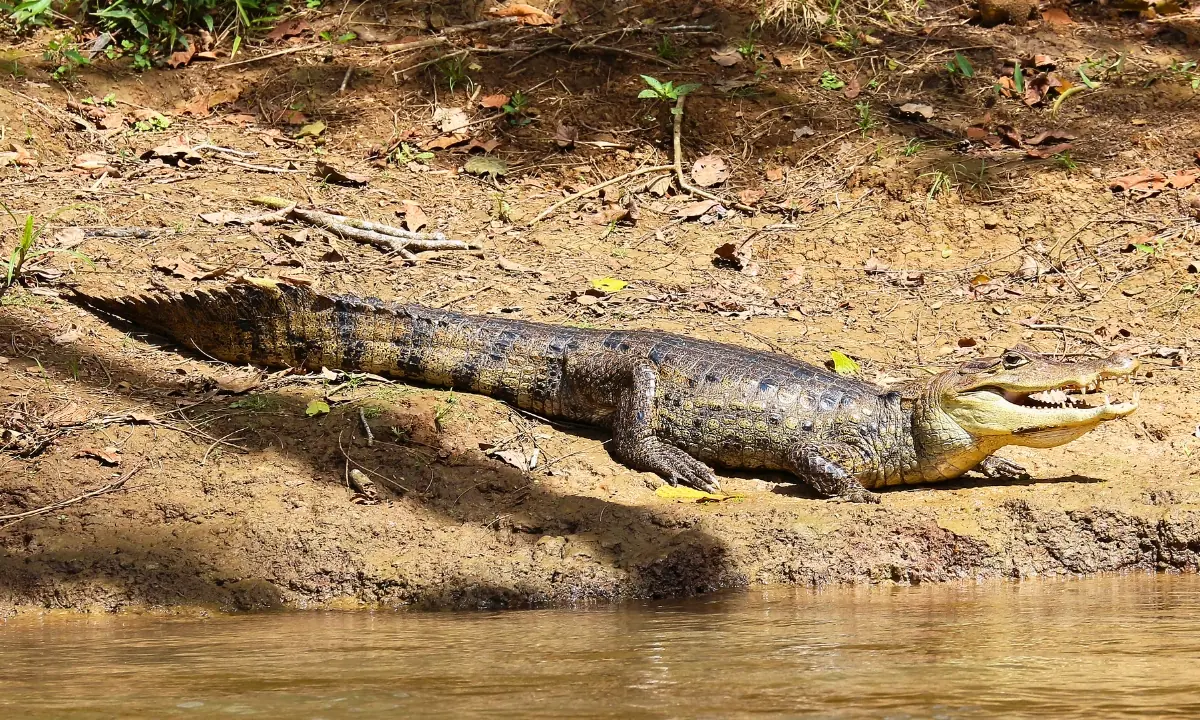
30. Spectacled Caiman / White Caiman (Caiman crocodilus)
This moderately sized caiman (up to 2–3 meters) is very common in lakes and swamps of the Amazon. Its name “spectacled” comes from the bony ridges above its snout that look like glasses. It feeds on fish, amphibians, and small mammals. Unlike the black caiman, the spectacled caiman tolerates human presence and is sometimes seen in areas near settlements. Its population is abundant, as it is well protected today.
Insects of the Amazon rainforest
The Amazon is home to millions of fascinating insects. Among them are giant, venomous, or very colorful species. Although small, many of these forest animals play crucial roles: they pollinate flowers, recycle matter, and provide food for other animals. Some impressive examples are:
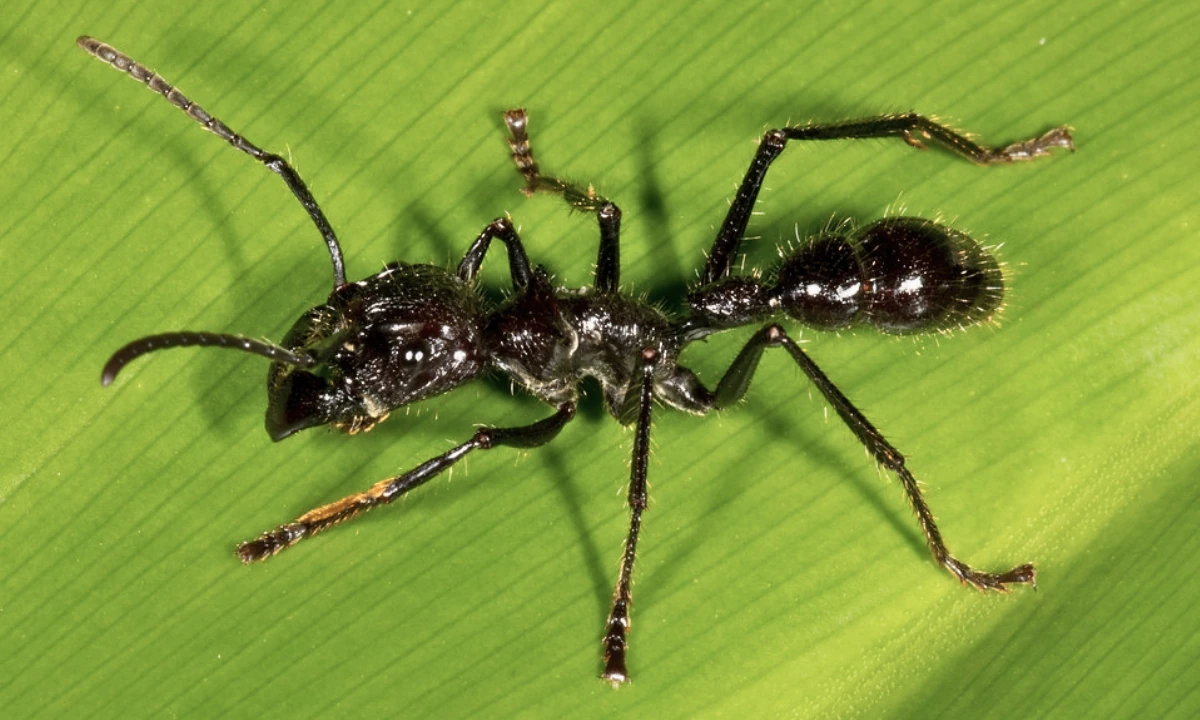
31. Bullet Ant (Paraponera clavata)
The bullet ant is famous for having the most painful sting in the world, compared to the impact of a bullet. It measures up to 2.5 cm in length and builds nests in leaf litter. It lives on the forest floor, attacking termites or interacting with local tribes that know its venom. Despite its reputation, it is not aggressive unless disturbed. Observing its anthill in the Amazon is appreciating a society of millions of efficient insects.
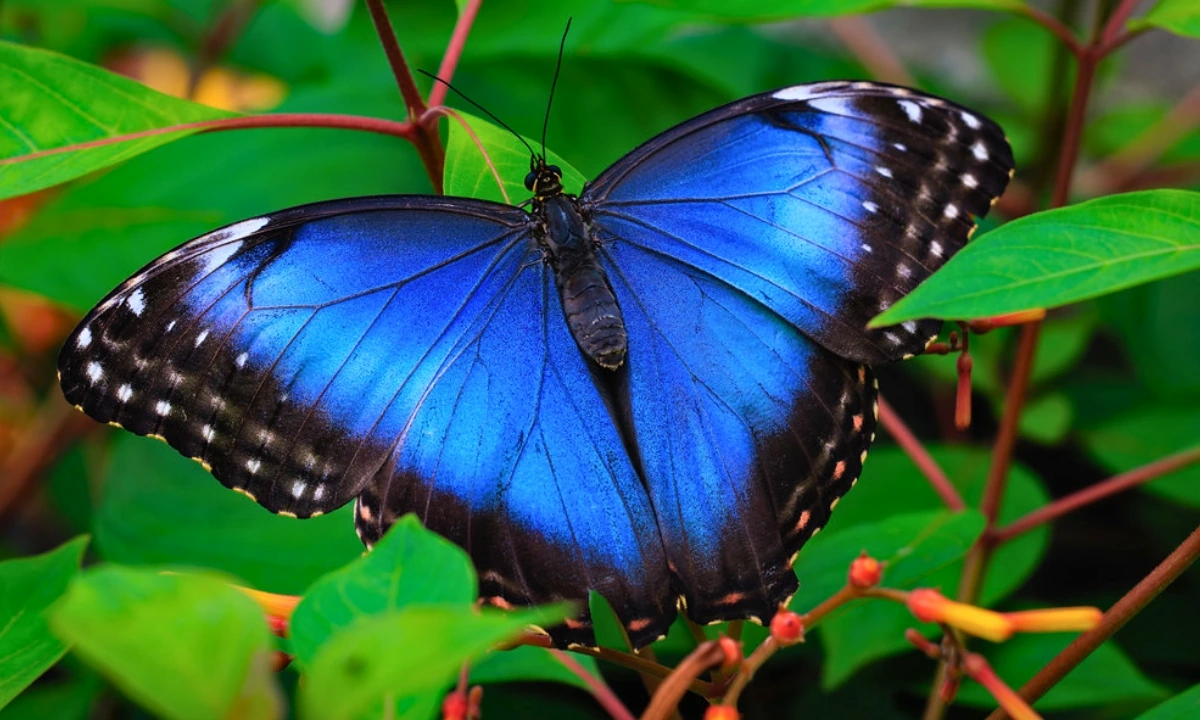
32. Blue Morpho Butterfly (Morpho menelaus)
This butterfly is famous for its enormous iridescent blue wings, which reflect sunlight. It can measure up to 20 cm in wingspan. It often rests in the sun in clearings or along the edges of rivers. Morpho populations are declining due to logging, but they still survive in the deep rainforest. Seeing a blue morpho flying through the forest is a unique spectacle, as its brilliant sapphire color stands out among the green of the forest.
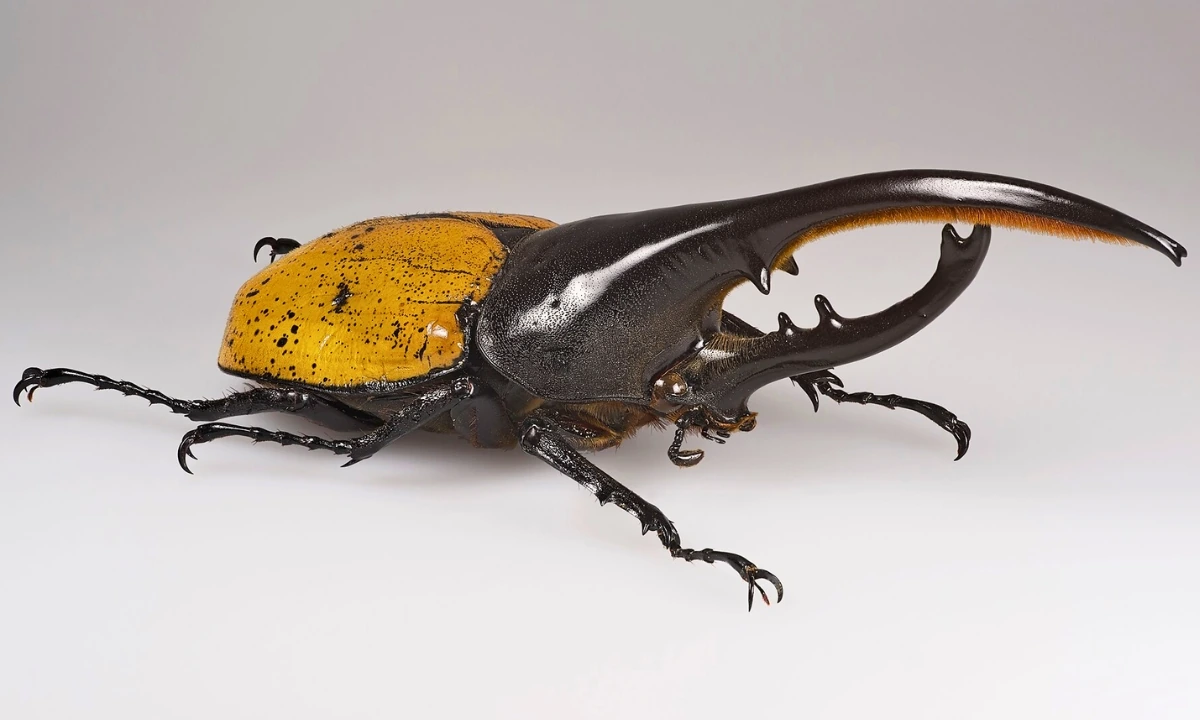
33. Hercules Beetle (Dynastes hercules)
The Hercules beetle is one of the largest beetles in the world. The male can reach 17 cm (with the horn). Its shiny black body contrasts with its greenish legs. It inhabits dead trees, where the larva grows by eating decaying wood. Males use their impressive horns to compete for females. It is harmless to humans and amazingly strong (it can lift objects 80 times its weight). Finding it crawling along a fallen trunk is quite an adventure.
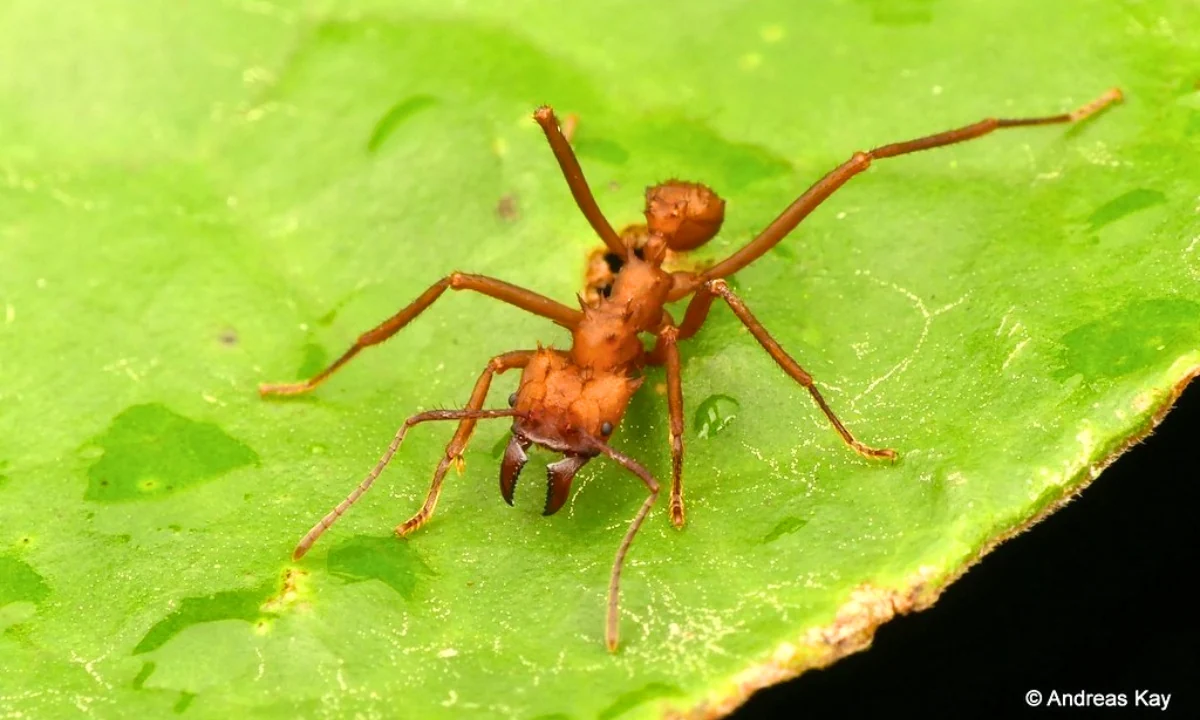
34. Leafcutter Ant (Atta sexdens)
The leafcutter ant is an icon of the Amazon. It forms enormous underground colonies with queens, workers, and soldiers. Its job is to cut small pieces of green leaves and carry them to its nests to grow fungi, which make up its food. A trail of ants carrying fragments of vegetation is a typical scene in the rainforest. Although common, it is a formidable wild animal because of the amount of vegetation it processes. It does not sting (its defense is formic acid), but it will bite strongly if stepped on.
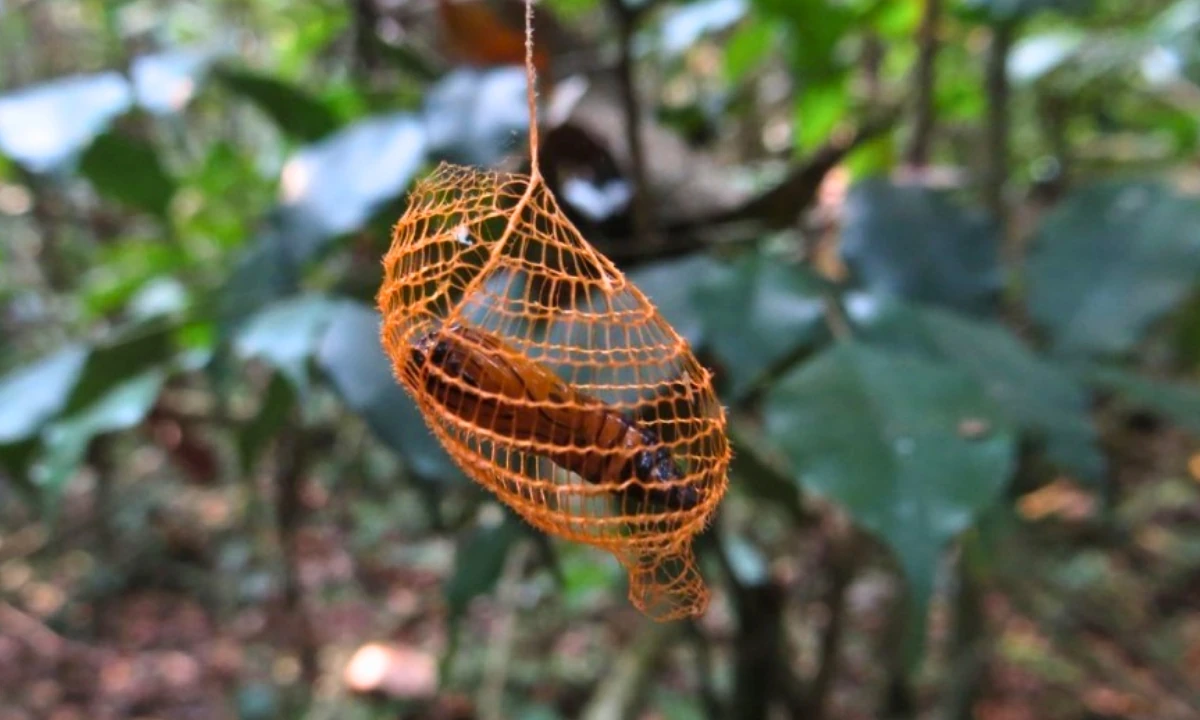
35. Urodid Moth Cocoon (Urodidae family)
A curious forest moth lives in the Amazon whose larvae build very particular cocoons. Its local name may vary, but what is interesting is that some species of Urodidae make nests from leaves stained with urine, creating coiled shelters. These cocoons stick beneath branches and look like miniature works of art. The adult moth is nocturnal and rarely seen. It is another example of the extravagant Amazonian fauna: even its insects “wrap” their homes in style.
Arachnids of the Amazon rainforest
Spiders and scorpions are also abundant in the Amazon. Most avoid humans, but two in particular catch the attention of tourists:
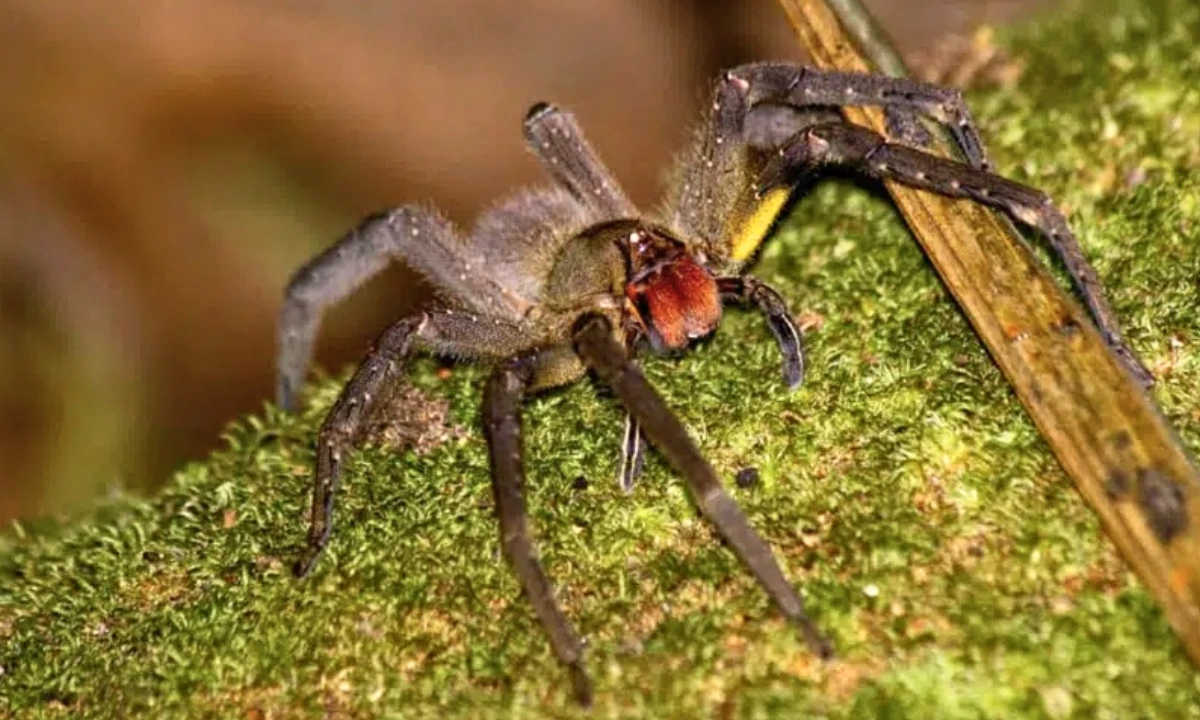
36. Brazilian Wandering Spider / Banana Spider (Phoneutria nigriventer)
It is one of the most venomous spiders in the world. It lives in leaf litter and dark shelters (sometimes in bunches of bananas during transportation). With a brown body and long legs, it is aggressive and active at night, hunting insects. Its venom can be dangerous to humans, so it is recommended not to approach it. Fortunately, it is less common to find it in very crowded areas, and its bite is rarely fatal with medical treatment.
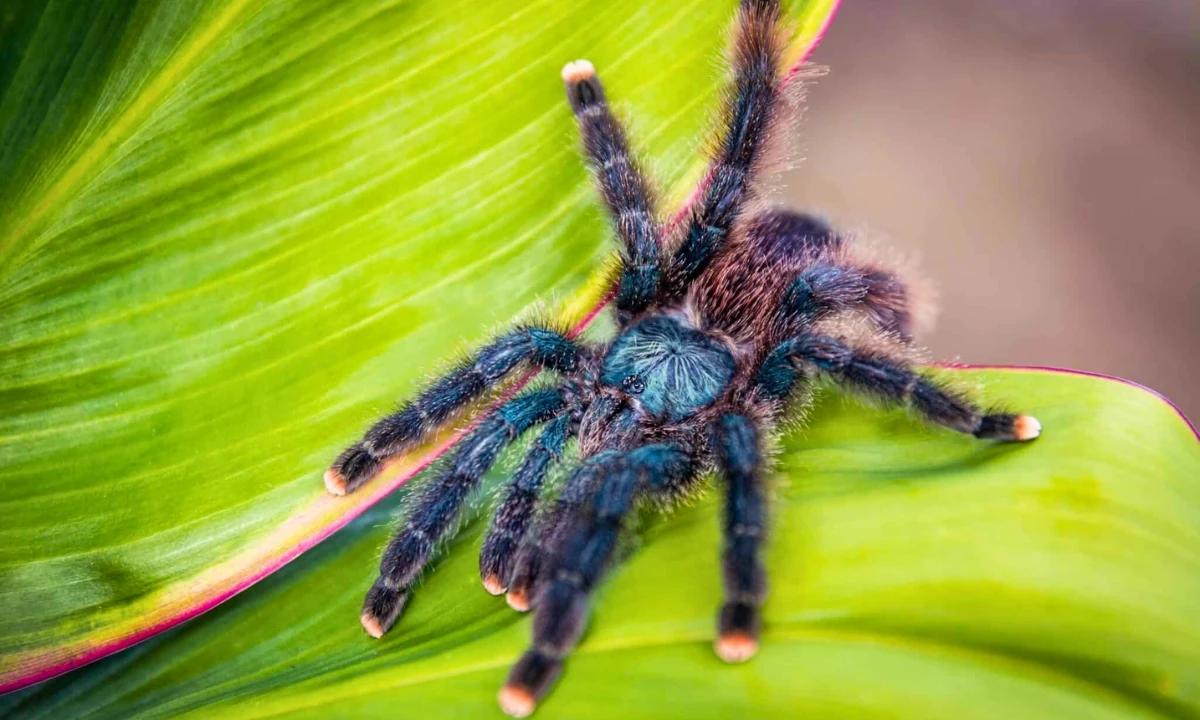
37. Pinktoe Tarantula (Avicularia avicularia)
This arboreal tarantula stands out for its body covered in yellowish hairs and pink-colored toes. It lives high in trees, where it weaves webs on branches and trunks. Although imposing (up to 7–8 cm long), it is quite docile and rarely bites. Its venom is mild for humans, so it is often considered harmless. Observing a pinktoe tarantula is easy if you stop with a flashlight at night and look for dark shapes in the vegetation.
Frequently asked questions about tours to see the 37 animals of the Amazon in their natural state
1. What is the best season to see forest animals of the Amazon?
The dry season, from June to November, usually makes it easier to see forest animals in the Amazon, as river levels decrease and some trails become more accessible. However, it is possible to observe different species of the Amazonian fauna throughout the year.
2. Where can I see forest animals of the Amazon?
The main destinations are Iquitos, Tambopata, and Manu, where it is possible to take tours to observe forest animals and other species of the fauna of the Amazon. Each destination offers different ecosystems and wildlife viewing opportunities.
3. What does a tour to see animals of the Amazon include?
Tours usually include lodging, transportation, meals, and local guides. Hiking, boat rides, and nighttime excursions can also be taken to observe forest animals and other Amazonian species in their natural habitat.
4. Is it safe to observe forest animals in the Amazon?
Yes, as long as you follow the guides’ instructions. When observing forest animals of the Amazon, it is important to maintain a safe distance, not feed or touch them, and remain with the group.
5. How can I book a tour to see animals of the Amazon?
You can book a tour with specialized operators in Iquitos, Tambopata, or Manu. These experiences allow you to see forest animals, birds, reptiles, amphibians, and other species of the Amazonian fauna in their natural habitat.
The Amazon is home to an incredible diversity of forest animals, from jaguars and pink river dolphins to birds, reptiles, amphibians, and insects. Get to know these animals of the Amazon in their natural habitat and contact us to book your wildlife viewing tour in Pacaya Samiria, Tambopata, or Manu.
