The largest mustelid in the world is found in the Peruvian rainforest: the giant Amazonian otter. This animal is also known as the river wolf and inhabits places such as Sandoval Lake (Tambopata), Manu National Park, and Pacaya Samiria National Reserve. It is a wild animal that lives in family groups and is safe to observe from a prudent distance.
In this guide, we tell you everything you need to know about giant Amazonian otters, where to increase your chances of seeing them, whether they are dangerous or friendly, and what to do in case of a bite. Keep reading and learn more about this species with Peru Jungle Trips.
What is the giant otter?
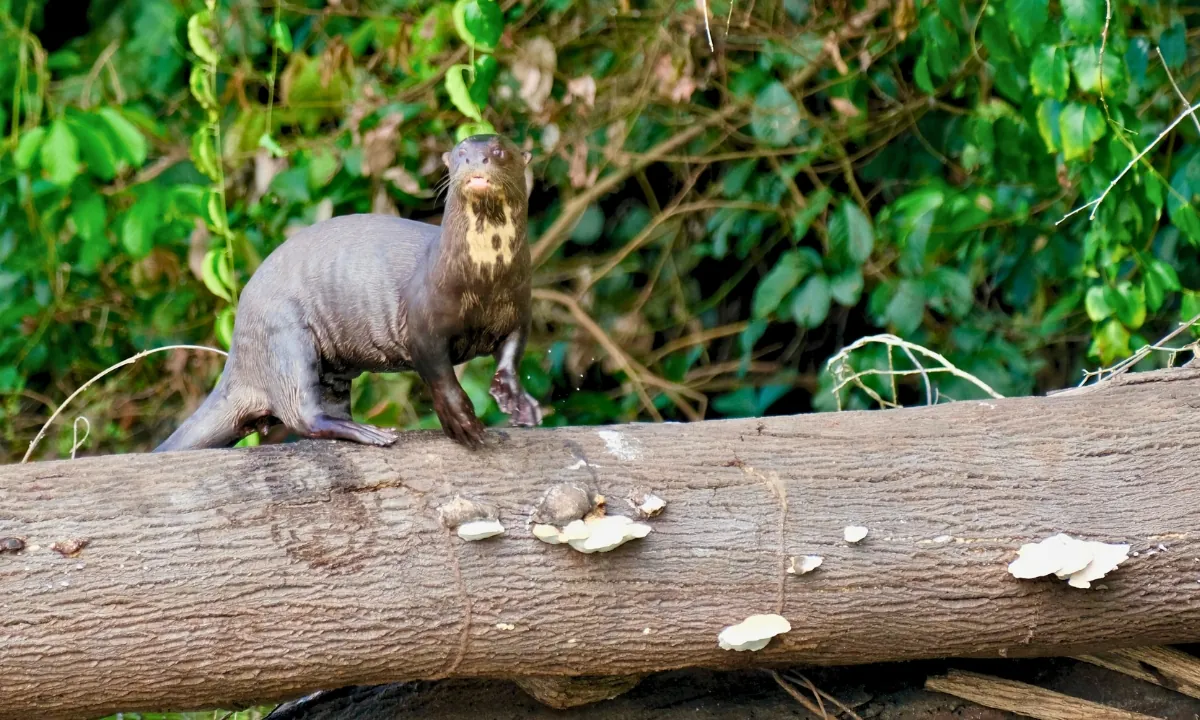
The giant otter (Pteronura brasiliensis) is a semi-aquatic mammal that can reach up to 1.8 meters in length and weigh between 22 and 32kg. Characterized by its dark brown fur and a cream or white patch on its throat (a unique characteristic of each otter), it is one of the largest predators in the Amazonian forests.
- It lives in groups of 3 to 10 individuals (sometimes even more).
- It stands out for being a very noisy and social species.
- It builds its nest or den along the banks of rivers or lakes.
- It is currently endangered.
In some indigenous cultures of the Amazon, the giant otter represents a protective spirit because it is an important element for monitoring and conserving wildlife.
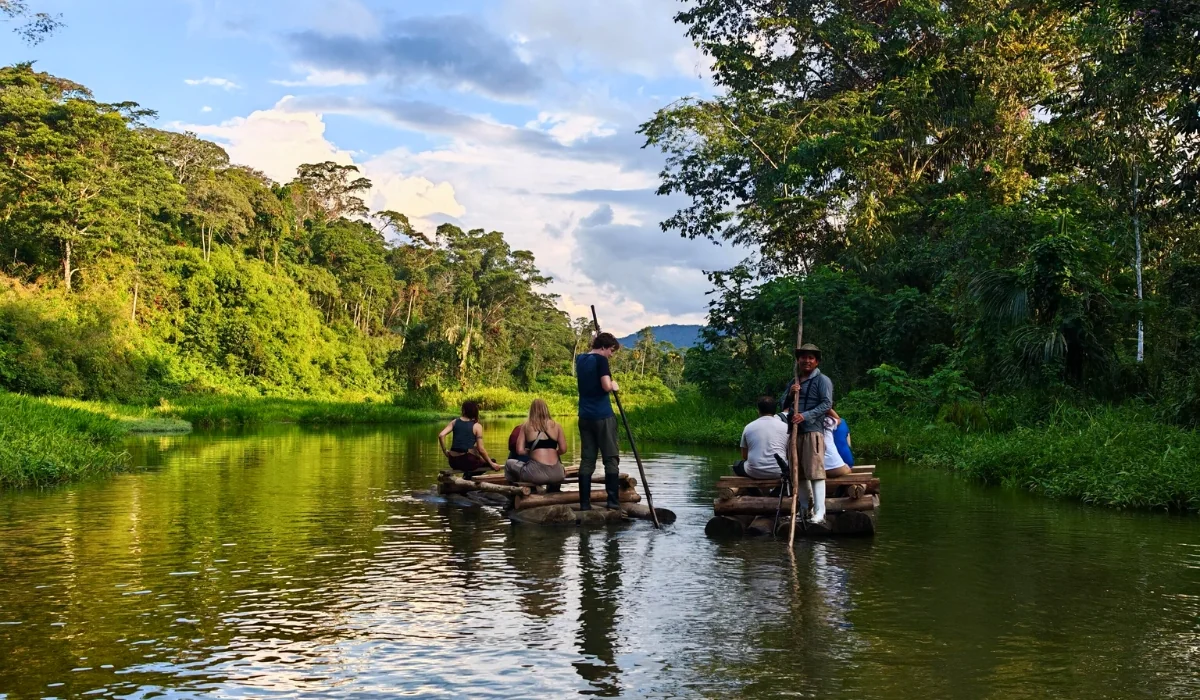
You can observe giant otters while navigating Sandoval Lake in Tambopata. Remember that, as it is a wild species, sightings are not guaranteed.
Where and how do giant otters live?
In the Peruvian Amazon rainforest, they inhabit Madre de Dios, Manu National Park, and Pacaya Samiria National Reserve. They live in slow-moving rivers, lakes, and basins.
- They dig along the water’s edge to build their dens.
- At first, only the pair of otters lives there; later, after having offspring, the larger young care for the smaller ones.
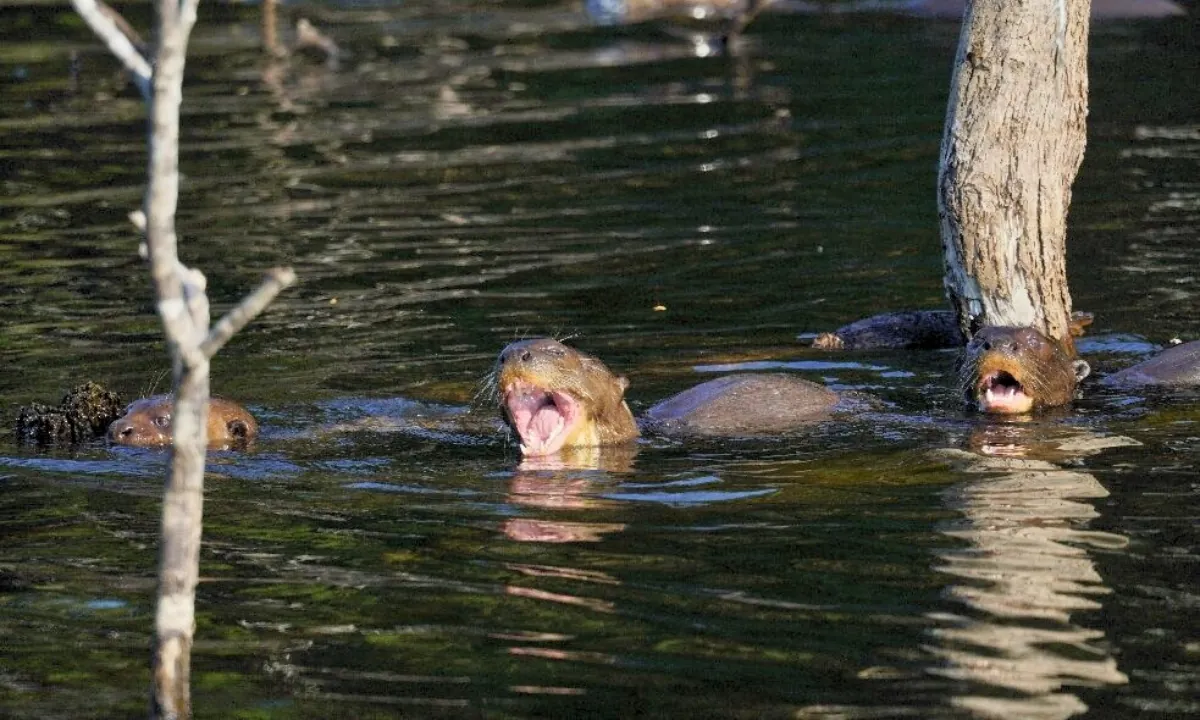
- They communicate through sounds such as squeaks, loud snorts, and whistles.
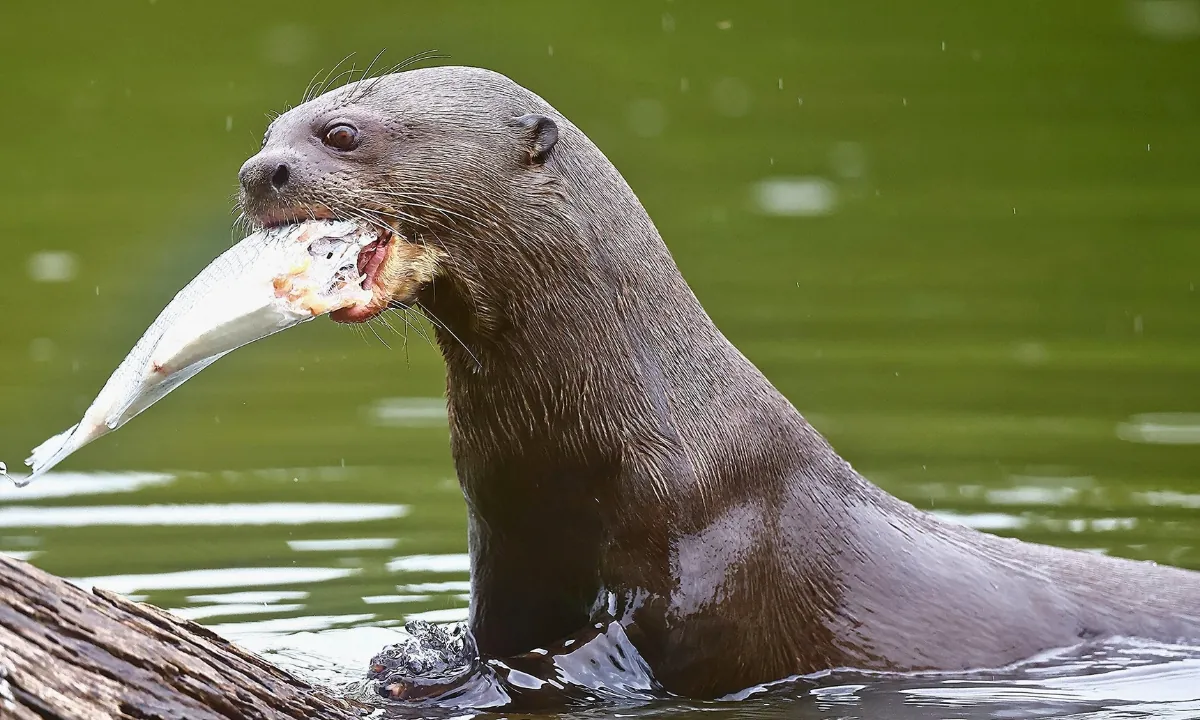
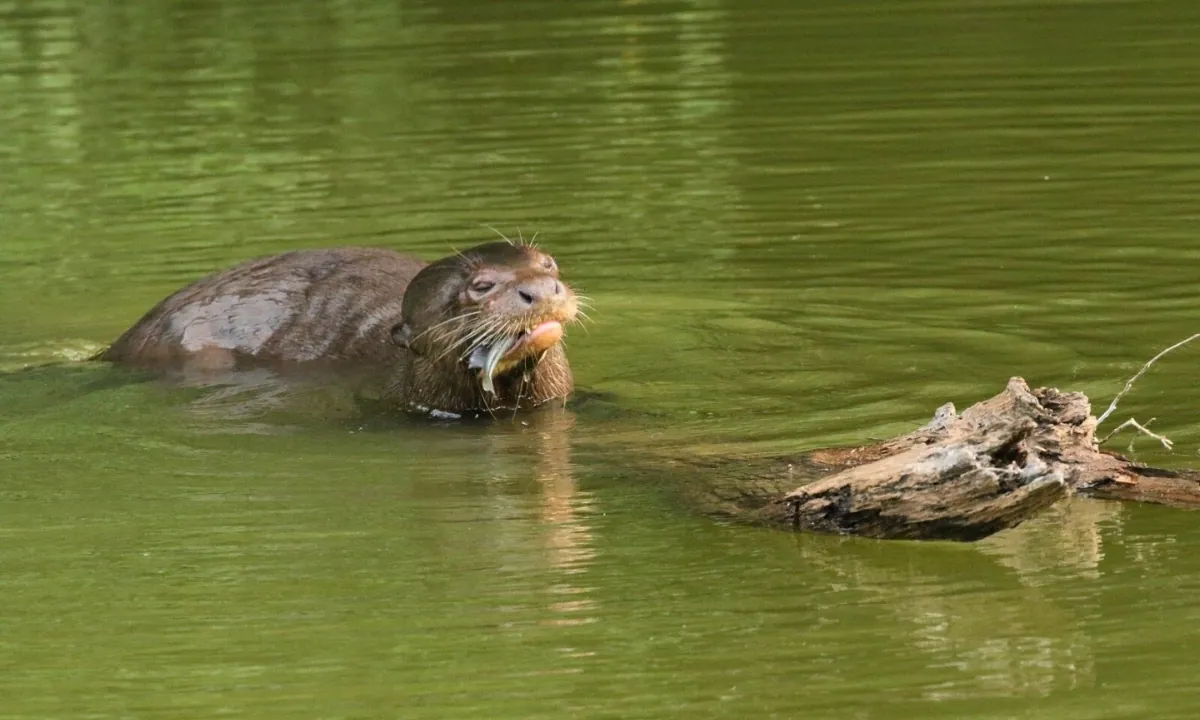
- To survive, they need to hunt prey such as catfish and piranhas; small reptiles such as caimans, turtles, smaller anacondas, and crustaceans such as river crabs.
- They hunt in groups, which allows them (sometimes) to hunt somewhat larger prey.
Are giant otters friendly?
They are not friendly in the domestic sense. By this, we mean that they are not accustomed to living with people; however, they are curious and social among themselves.
When you navigate in Manu or Tambopata, the otters may approach the boats where you are. However, they do so out of curiosity, not because they want contact. Remember:
- Giant otters are not domestic pets. Therefore, capturing them, even when they are baby pups, is prohibited.
- Do not touch or feed a wild Amazonian otter. Getting them accustomed to this puts them at risk.
- If they have offspring, they become more defensive. Since they live in family groups, they react more intensely to a threat.
Are giant Amazonian otters dangerous?
Normally, no. As a wild species of the Amazon, they are not dangerous if you observe them from a prudent distance, avoid approaching them, and follow safety measures. However, like any species, they defend themselves if they feel threatened or cornered.
Learn the signs that they feel threatened
- Alert vocalizations through squeaks and growls.
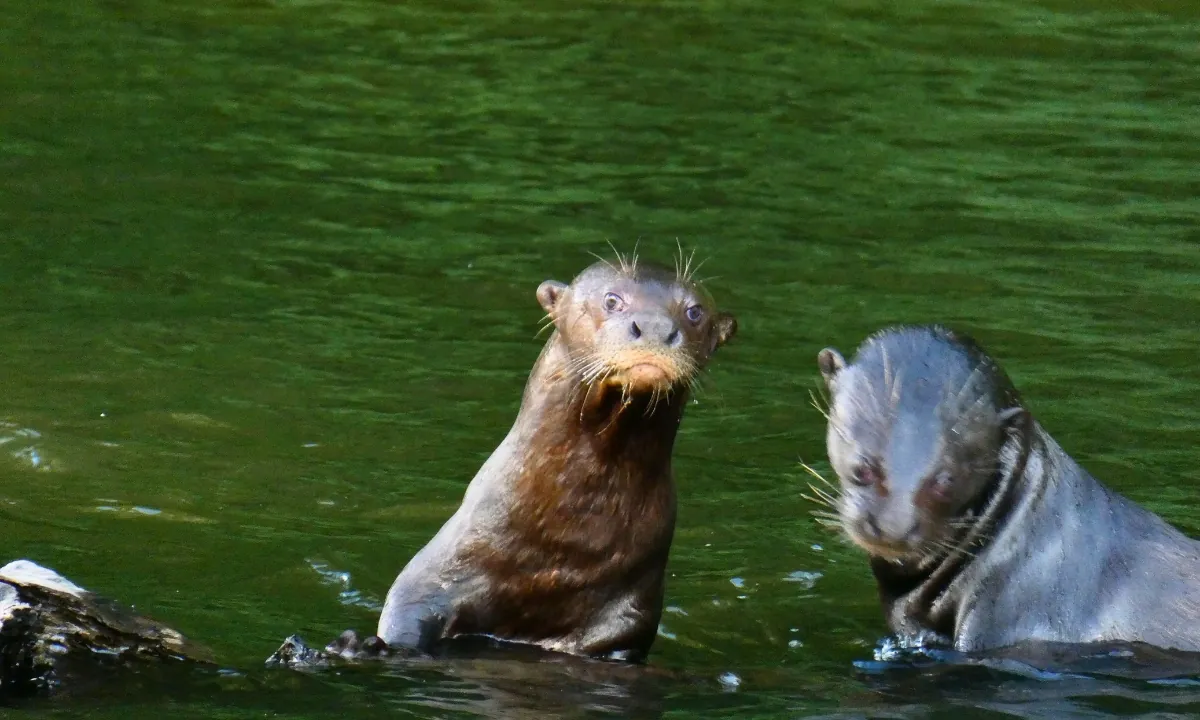
- They stand upright in the water, showing their chest and head.
- They hit the water and splash with their tails.
If you see these signs, remain calm, do not make loud noises, do not make sudden movements, and contact the guide immediately.
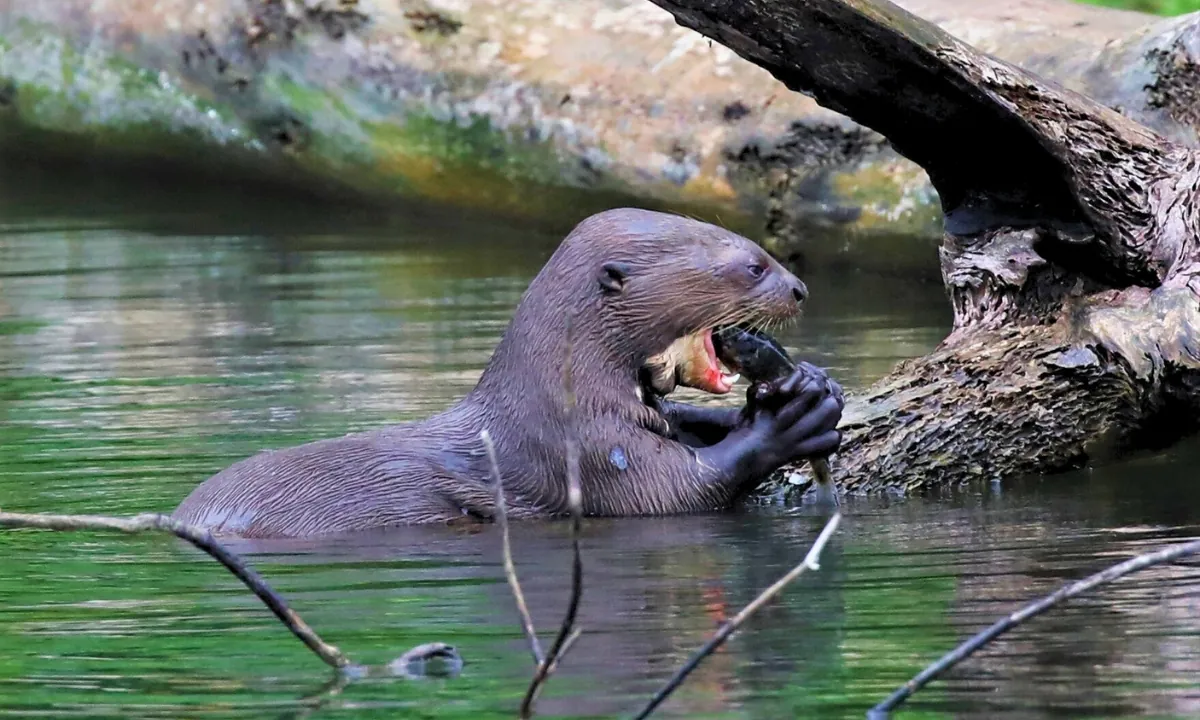
What should I do if an otter bites me?
First, wash the wound and disinfect it for at least 15 minutes. Second, see a doctor. Although otters do not cause severe bites, because they are wild animals, they can transmit diseases.
How to Observe Giant Otters Safely and Responsibly
- It is crucial to travel with an authorized local guide because they know their behavior and their areas.
- Always keep the distance indicated by your guide, especially if there are pups. Do not try to approach them, especially if you are in a boat, because you could put other passengers at risk.
- Do not enter the water near a family or their dens. Remember that they are highly protective, especially when they have pups.
- Do not feed them, chase them, or surround them with the boat. Always leave them an escape route, or they will perceive danger and defend themselves.
- Use zoom or a telephoto lens instead of approaching them, and turn off the flash (this applies to most species in the Amazon).
- Choose operators that respect the regulations of protected areas. Remember that a serious operator committed to the environment will never disturb the habitat of a wild animal for a good photograph.
Risks Faced by Giant Otters
Due to their fur, this species has been hunted throughout history.
- In Ecuador, the otter is endangered due to intensive hunting in the northern part of the country.
Reduction of their habitat due to pollution caused by the expansion of informal and illegal mining. As well as due to laws enacted by the Peruvian government that weaken or eliminate protection for natural areas.
Where to See Giant Otters in Peru
Giant otters are best seen in calm lakes and rivers in the lowland rainforest, almost always with the help of a guide. As Amazon specialists, we recommend 2 places:
- Tambopata (Puerto Maldonado): on our excursions on Sandoval Lake, you can increase your chances of seeing giant Amazonian otters.
- Manu National Park: while navigating Lake Salvador at sunrise, it is sometimes possible to observe giant otters as well as monkeys and caimans.
Embark on an Amazon adventure and visit the habitat of giant otters with us. Request a quote here.
Frequently Asked Questions
Are giant otters friendly?
Yes, they are social and curious with other otters, but not with people. They are wild animals. Sometimes they approach boats out of curiosity, but they do not seek contact and should not be touched or fed.
Are giant otters dangerous?
Normally, they are not dangerous to people if they are observed from a boat and at a distance. They may bite if they feel cornered or are protecting their pups.
What happens if an otter bites you?
Wash the wound with soap and water for at least 15 minutes. Tell the guide that you require emergency medical attention so that any bleeding can be controlled. Afterwards, seek medical attention to assess the risk of infection, tetanus, and rabies.
Where can giant otters be seen in Peru?
In rivers and lakes in the lowland rainforest, such as Tambopata, Manu, and Pacaya Samiria, always with the help of a guide. Although sightings are not guaranteed, hiring a specialized tour increases the chances of seeing them.
Can you swim near giant otters?
No. Although they are not dangerous, swimming near them is not recommended because they may feel threatened. Also, remember that Amazonian rivers have other risks since they have their own wild aquatic fauna.
Can giant otters be kept as pets?
No. As travelers and specialized tour operators, we never recommend buying wild species to keep them in captivity. Otters are protected wild species, and their capture and possession are prohibited. In addition, you may face legal investigations if you take a giant otter outside its habitat.