

The Taricaya Turtle in the Peruvian Amazon is one of the greatest symbols of Amazonian wildlife and, at the same time, one of the most protected species in the country. Today, travelers from all over the world can get to know it, learn about its conservation, and participate directly in the nesting and release of taricaya turtles, a unique experience that brings together nature, education, and responsible tourism.
Taricaya Turtle (Podocnemis unifilis)
The taricaya turtle, whose scientific name is Podocnemis unifilis, is an Amazonian freshwater turtle that lives in rivers, lagoons, and wetlands of the Peruvian rainforest. It is also known as the side-necked turtle, since it bends its neck to the side instead of pulling it completely inside its shell.
The Taricaya Turtle in the Amazon has historically been used as a food source, especially for its eggs, which reduced its populations for decades. It is currently considered a vulnerable species, which is why it is protected and forms part of the main conservation programs in the Peruvian Amazon.

Ecological characteristics of the Taricaya Turtle
1. Characteristics of the Taricaya Turtle
- Scientific name: Podocnemis unifilis.
- Type: Amazonian freshwater turtle.
- Size: Adult females can measure between 38 and 52 centimeters, while males are smaller and can measure up to 37 centimeters.
- Coloration: Males and juveniles display yellow spots on the head, a distinctive feature of the species.
- Longevity: It can live for several decades in the wild.
- Conservation status: Vulnerable, but recovering thanks to protection and egg nesting programs.
These characteristics make the Taricaya Turtle in the Amazon one of the most representative species of the biodiversity of the Peruvian rainforest.
2. Diet of the Taricaya Turtle
The diet of the taricaya turtle is mainly herbivorous, although it is also omnivorous. It feeds on:
- Aquatic plants
- Fruits and seeds that fall into the water
- Leaves and roots
- Insects, small fish, and crustaceans
Thanks to its diet, the Taricaya Turtle in the Amazon plays a key role in seed dispersal and in maintaining the balance of aquatic ecosystems.
3. Life cycle and reproduction of the taricaya turtle
The life cycle of the taricaya turtle is closely linked to river seasons. During the dry season, when water levels drop, females come out onto sandy beaches to lay their eggs.
Each female lays between 10 and 48 taricaya turtle eggs in a nest dug into the sand. She then returns to the river and does not provide further care. Natural incubation lasts between 60 and 90 days.
The hatchlings are born small and vulnerable. In nature, few survive, which is why taricaya turtle nesting programs have become essential to ensure their survival.
4. Distribution and habitat of the Taricaya Turtle
The habitat of the taricaya turtle extends throughout the Amazon Basin. In Peru, the Taricaya Turtle in the Amazon lives mainly in:
- White-water and black-water rivers
- Lagoons, oxbow lakes, and wetlands
- River beaches used for reproduction
It is a species that depends entirely on clean, well-conserved rivers, making it a natural indicator of environmental health.
5. Ecological importance of the Taricaya Turtle
The importance of the taricaya turtle is enormous. This species:
- Maintains the balance of aquatic ecosystems
- Helps with seed dispersal
- Is part of the Amazonian food chain
- Is a symbol of Amazonian turtle protection
Protecting the Taricaya Turtle in the Amazon means protecting rivers, forests, and local communities.

Habitat of the Taricaya Turtle in the Peruvian Amazon
- Pacaya Samiria National Reserve (Loreto): The main conservation and repopulation area. The taricaya turtle in Pacaya Samiria is the protagonist of one of Peru’s most successful conservation programs.
- Tamshiyacu-Tahuayo Communal Reserve (Loreto): An area managed by local communities that actively protect the nests.
- Sierra del Divisor National Park (Loreto–Ucayali): A remote area with rivers and streams ideal for the species.
- Tambopata National Reserve and Madre de Dios: Home to a great diversity of freshwater turtles in Peru.
- Other Amazonian rivers and wetlands of Peru: Especially in the Marañón and Ucayali river basins.
Taricaya turtle nesting process in the Peruvian Amazon – Incubation
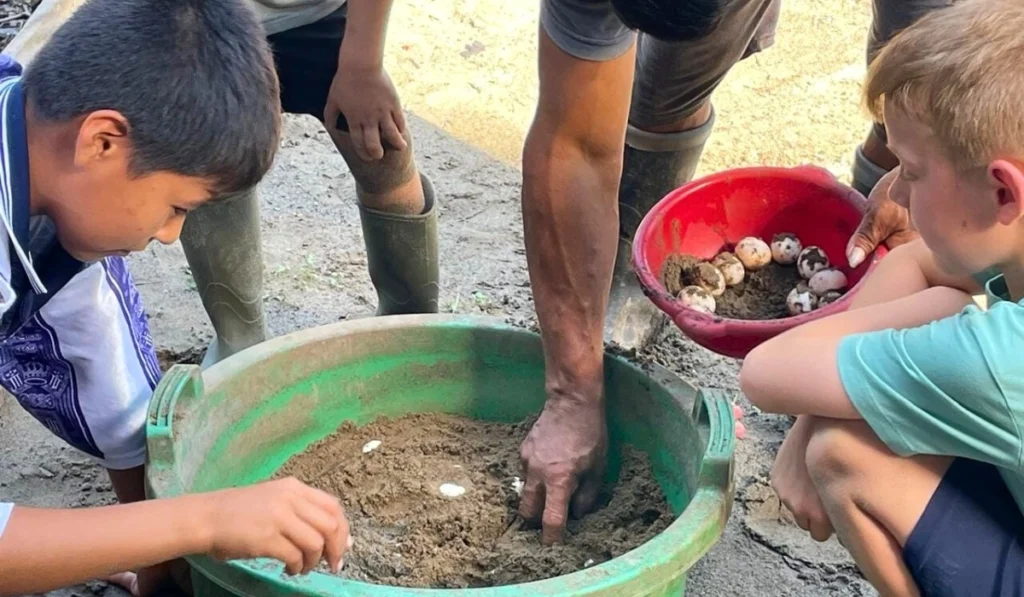
The incubation of the taricaya turtle begins with the controlled collection of eggs from natural beaches. The eggs are carefully transferred to protected incubation banks, where they are reburied in sand similar to the natural environment.
This taricaya turtle nesting process prevents the eggs from being eaten by predators or destroyed by floods. Thanks to this technique, most of the eggs manage to hatch, significantly increasing the species’ population.

Process of releasing the taricaya turtle into its natural habitat
Once the hatchlings are born and reach an adequate size, the release of the taricaya turtle takes place in protected rivers and lagoons.
This moment is one of the most exciting, as the baby turtles return to the water for the first time. Many international visitors participate in this process as part of responsible tourism experiences. Peru Jungle Trips offers you the opportunity to live this activity in the Pacaya Samiria National Reserve, combining adventure, environmental education, and real conservation.
Differences between the taricaya turtle and other Amazonian turtles
- The taricaya is smaller than the charapa, another very well-known Amazonian turtle.
- The taricaya reproduces twice a year, which facilitates its recovery.
- It is a completely freshwater turtle, unlike sea turtles.
- It has yellow spots on its head, a feature that makes it easy to distinguish.
These differences make the Amazon taricaya species unique and easy to identify during jungle excursions.
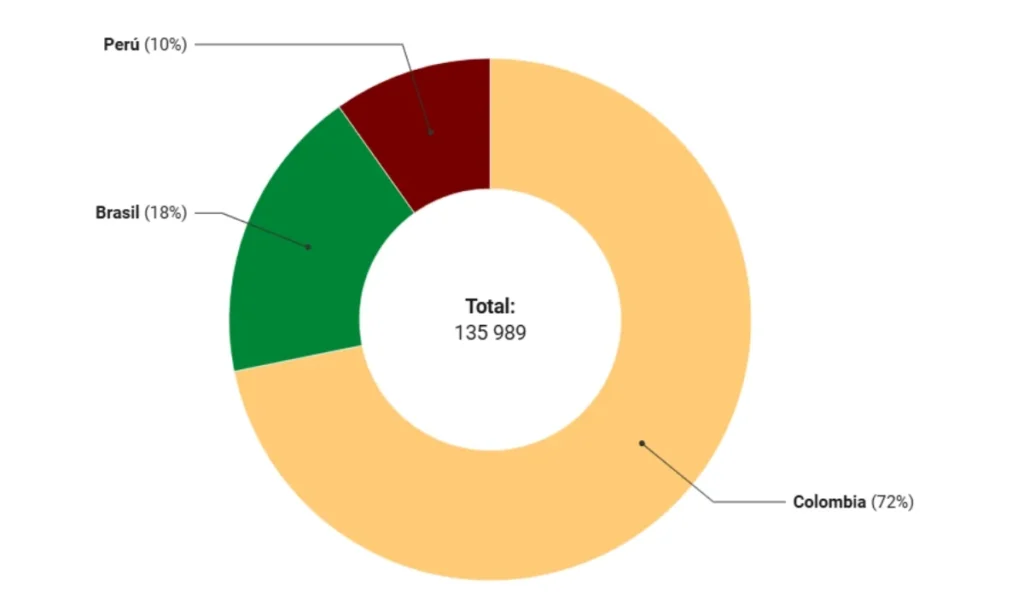
Reptiles Seized in Brazil, Colombia, and Peru
Taricaya and hicotea turtles are the most trafficked reptiles, according to seizure records from the three countries.
Frequently asked questions about the Taricaya Turtle in the Peruvian Amazon
1. What is the taricaya turtle?
It is a protected Amazonian freshwater turtle, fundamental to the biodiversity of the Peruvian rainforest.
2. Where does the taricaya turtle live?
It lives in rivers, lagoons, and wetlands of the Peruvian Amazon, especially in protected areas.
3. Why is the taricaya turtle endangered?
Due to egg extraction, hunting, and environmental impact in the Amazon.
4. How do conservation programs help?
By protecting eggs, incubating them, and releasing hatchlings to reinforce wild populations.
The Taricaya Turtle in the Amazon is much more than a protected species: it is a symbol of hope for the biodiversity of the Peruvian rainforest. Participating in its nesting and release allows travelers to become an active part of conservation. If you are looking for an authentic, educational, and transformative experience in the Peruvian Amazon, Peru Jungle Trips is the best option to experience up close the history, protection, and future of the taricaya turtle. Contact us and live this Incredible experience.