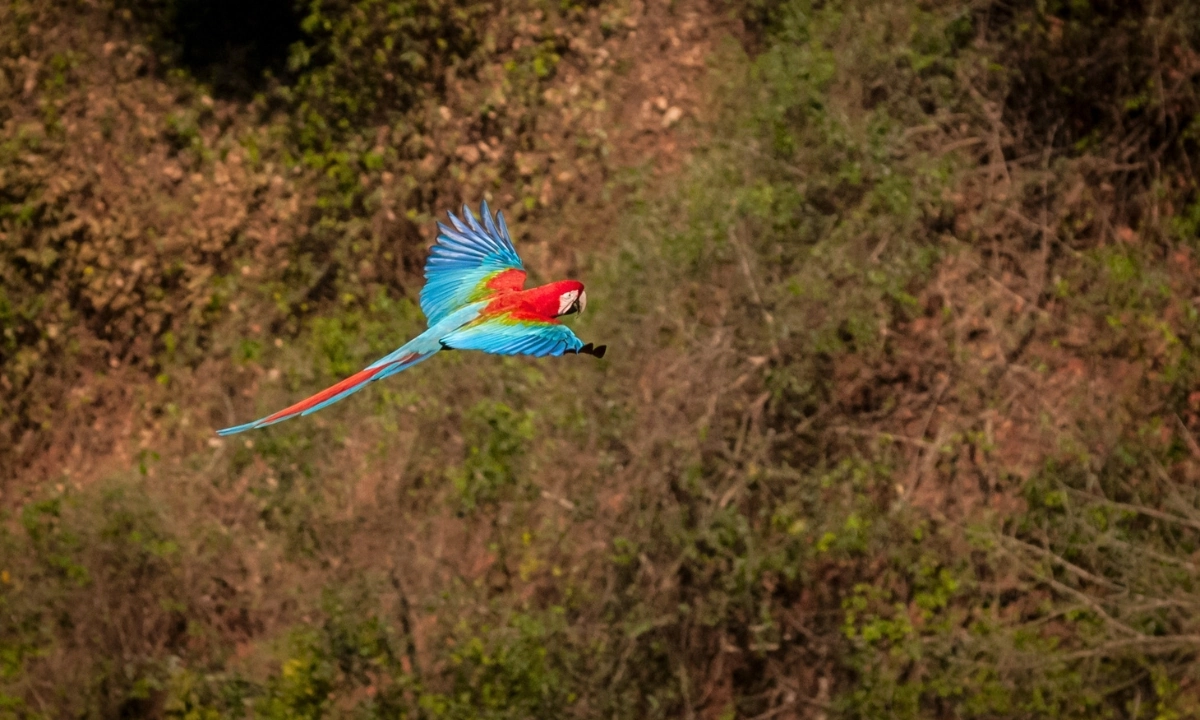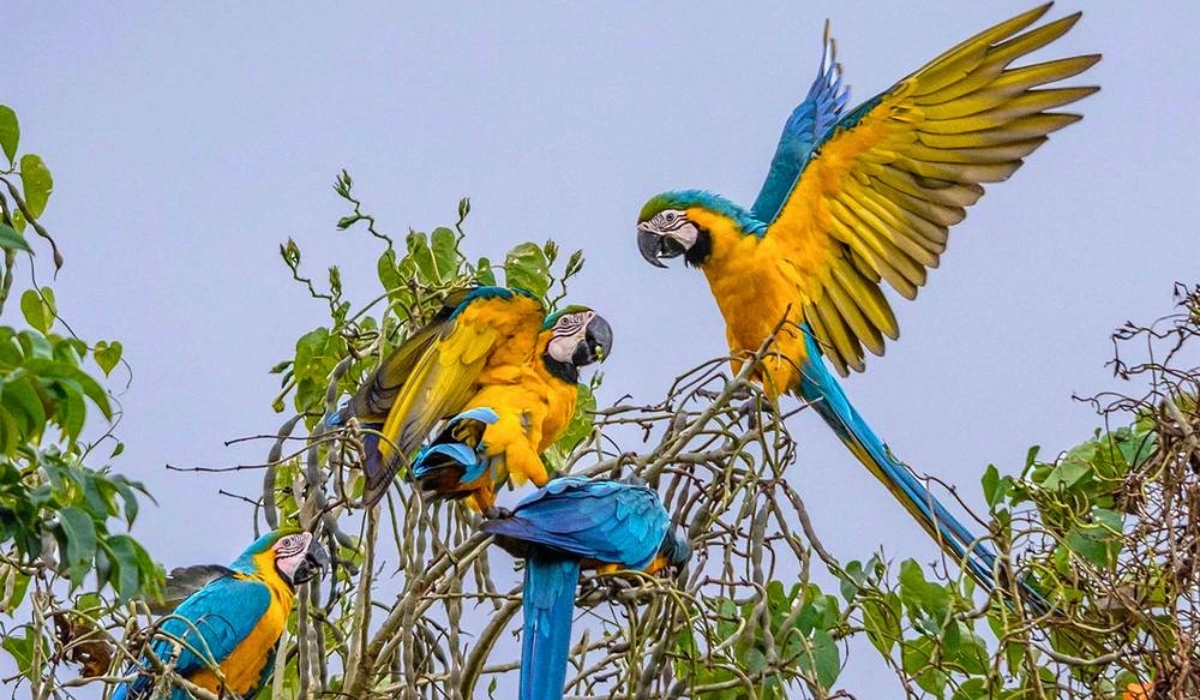
The Tambopata National Reserve in Madre de Dios (Peru) is one of the best destinations thanks to its incredible bird diversity and, above all, the species of macaws in the Tambopata Rainforest. Every morning, dozens of huge macaws fly to the natural clay licks (collpas) to feed on mineral-rich clay. These colorful macaws, with their brilliant red, yellow, blue, and green plumage, provide a truly unique spectacle.
Macaw Clay Lick in Tambopata – Puerto Maldonado
The macaw clay licks in the Tambopata National Reserve are natural salty clay banks where these giant parrots gather to eat mineral-rich clay (especially sodium). In Tambopata, the most famous clay licks are Chuncho and Colorado, both accessible from Puerto Maldonado by boat. At first light, visitors can observe different species of macaws feeding on clay along the riverbank while their loud calls echo through the rainforest.
It is a natural phenomenon unlike any other in the world. The macaw watching tours in the Tambopata National Reserve usually include safe observation platforms that allow visitors to get close without disturbing the birds. Chuncho Clay Lick is especially well known because every morning dozens of macaws descend to feed on clay. Organizing this excursion with the local agency Peru Jungle Trips guarantees greater success and comfort for visitors.

4 Species of Macaws in the Tambopata Rainforest: 4 Types of Macaws in Puerto Maldonado
Several species of macaws in the Tambopata Rainforest inhabit the Tambopata Amazon. The largest and most spectacular are:
1. Scarlet Macaw (Ara macao)
A large and colorful macaw. Its plumage is bright scarlet red, with yellow and blue wings, and a white face marked by fine black feather lines.
- Size: Approximately 85–95 cm (33–37 in) in length (wingspan around 1 meter / 3.3 ft) and about 1 kg (2.2 lb) in weight.
- Diet: Mainly seeds and fruits from palm trees, fruit trees, and shrubs. It also occasionally feeds on nectar and insects, while supplementing its diet with clay.
- Breeding Season: Nests in tree cavities during the transition from the rainy season to the dry season (approximately November to May). The female lays 2–3 eggs, incubates them for about 28 days, and the chicks fledge around their third month.
- Lifespan: Up to 50 years in the wild (and even longer in captivity).
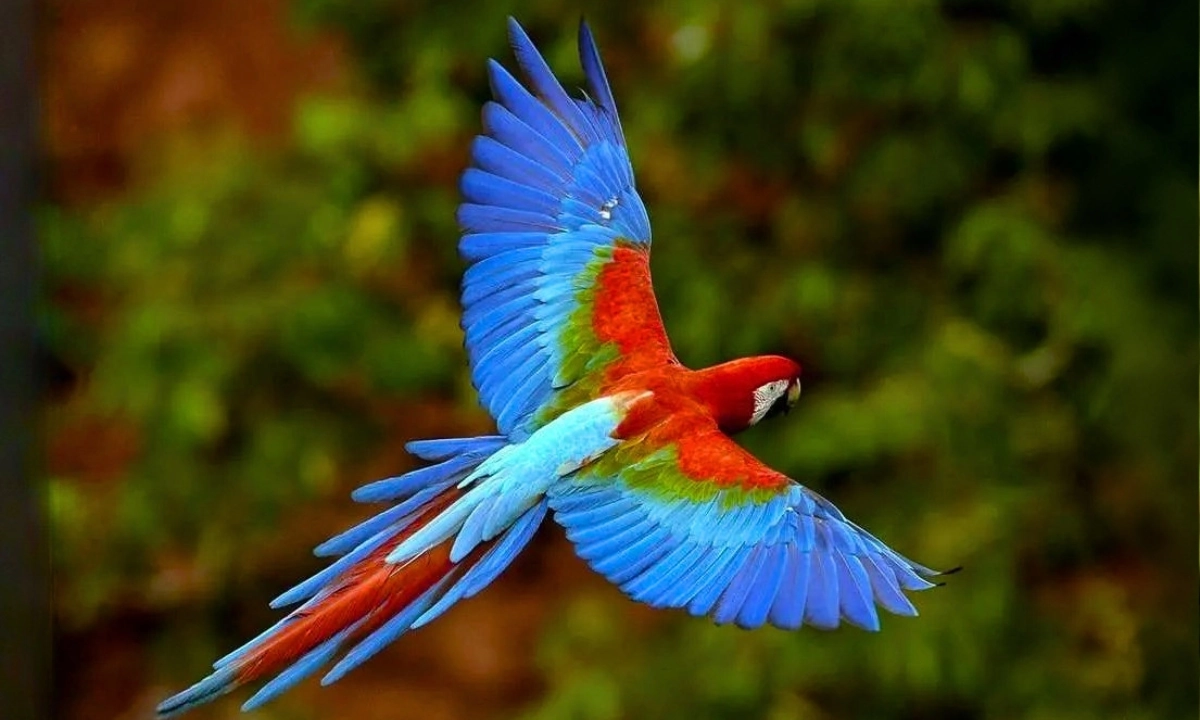
The scarlet macaw is one of the species of macaws in the Tambopata Rainforest that is easiest to observe at the clay licks, where it usually gathers in large flocks during the early morning hours.
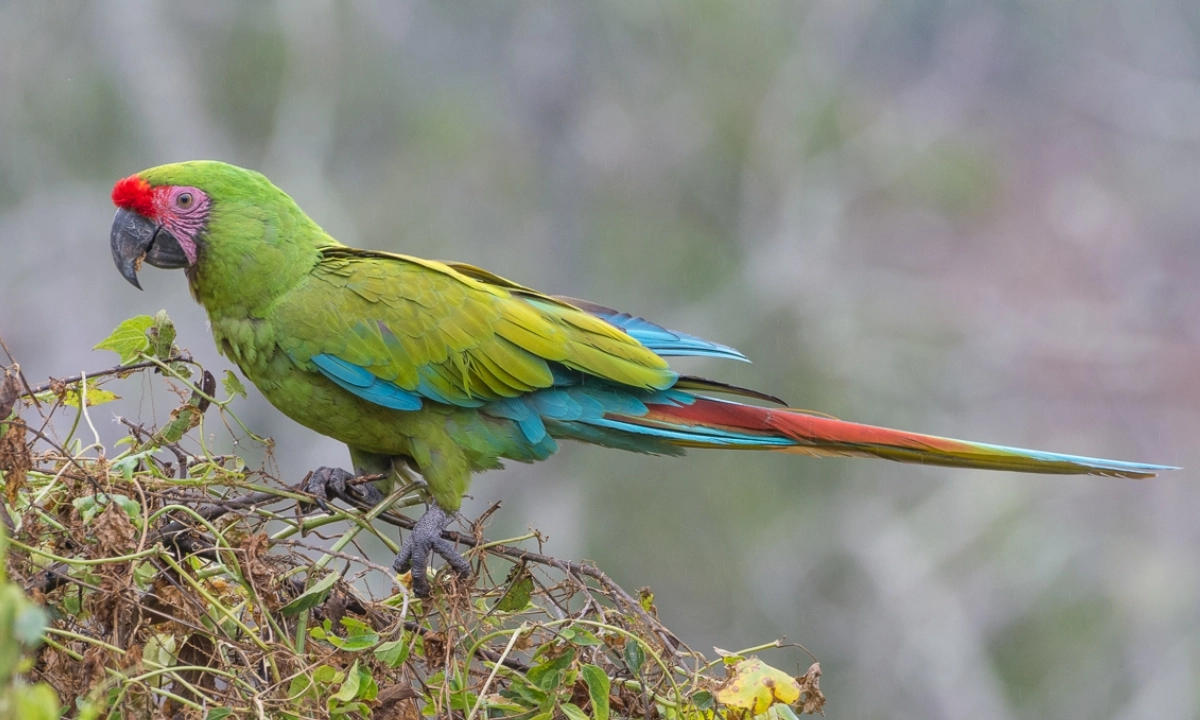
2. Military Macaw (Ara militaris)
Also known as the Military Macaw, it is a large green macaw. It is recognized by its predominantly bright green plumage, red forehead, and blue feathers on its wings.
- Size: Approximately 70–75 cm (28–30 in) in length, with a long tail.
- Diet: Feeds on seeds, nuts (such as those from palm trees and fig trees), and fruits. Its powerful beak allows it to crack hard seeds. It also visits clay licks to obtain essential minerals.
- Breeding Season: Mates for life. The breeding season typically occurs at the beginning of the year (January–March), depending on the region. It nests in high tree cavities.
- Lifespan: Up to 50–60 years in the wild (many macaws live more than 50 years in captivity).
3. Blue-and-yellow Macaw (Ara ararauna)
Easy to recognize thanks to its striking two-tone plumage. Its back and wings are deep blue, while its chest and belly are golden yellow. Its forehead is bright green.
- Size: Approximately 76–86 cm (30–34 in) in length, weighing about 1–1.5 kg (2.2–3.3 lb).
- Diet: Fruits, seeds, and palm nuts. It also consumes clay at clay licks to neutralize toxins in its diet.
- Breeding Season: Pairs for life and nests every 1–2 years. Breeding usually takes place during the dry season (August to January), laying 2–3 eggs. The chicks take about 3 months to fledge.
- Lifespan: It can live around 50 years in the wild, while some individuals reach 60–70 years in captivity.
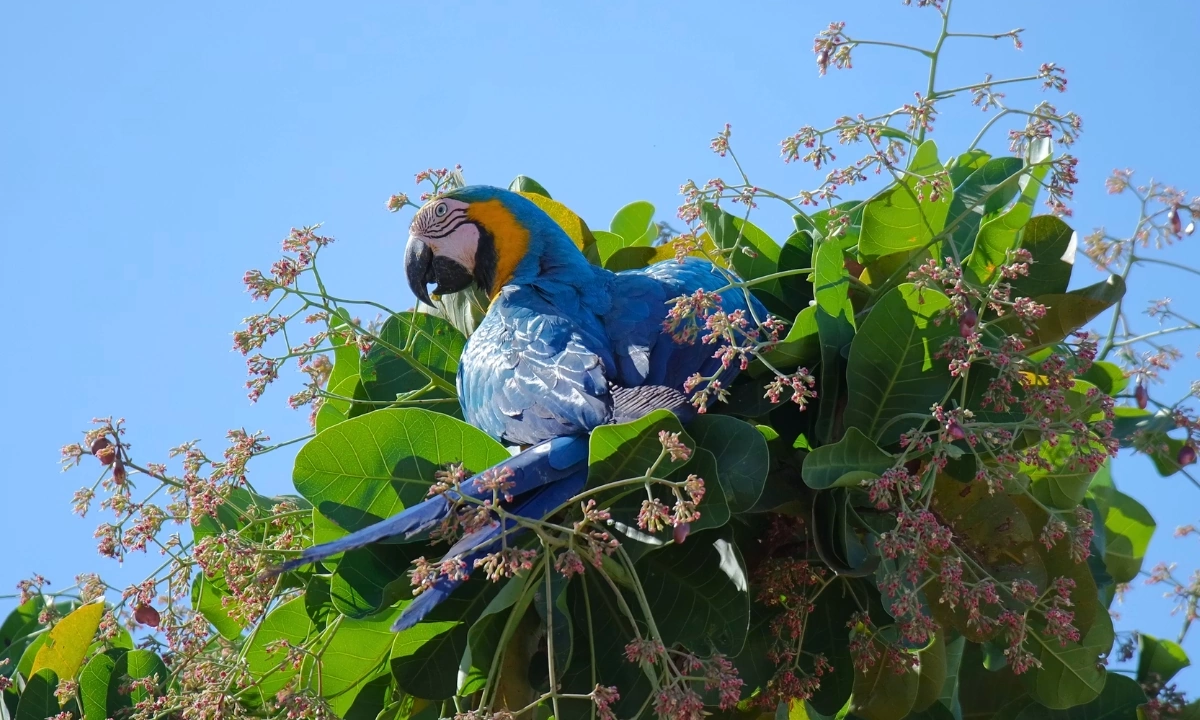
Among the species of macaws in the Tambopata Rainforest, the Blue-and-yellow Macaw stands out for its striking colors and for being one of the most photographed birds by visitors.
4. Green-winged Macaw (Ara chloropterus)
Also called the Red-and-green Macaw, it is the largest species of the Ara genus after the Hyacinth Macaw. It has bright red plumage with green and blue bands on its wings.
- Size: Approximately 90–95 cm (35–37 in) in length, with a large beak, weighing around 1.2 kg (2.6 lb).
- Diet: Seeds and fruits from tropical trees, similar to other macaws. At clay licks, it supplements its diet with mineral-rich clay.
- Breeding Season: Similar to the Scarlet Macaw, it breeds during the transition from the rainy season to the dry season. The female lays 2–3 eggs, incubates them for about 28 days, and the chicks fledge after about 3 months.
- Lifespan: Around 40–50 years in the wild.
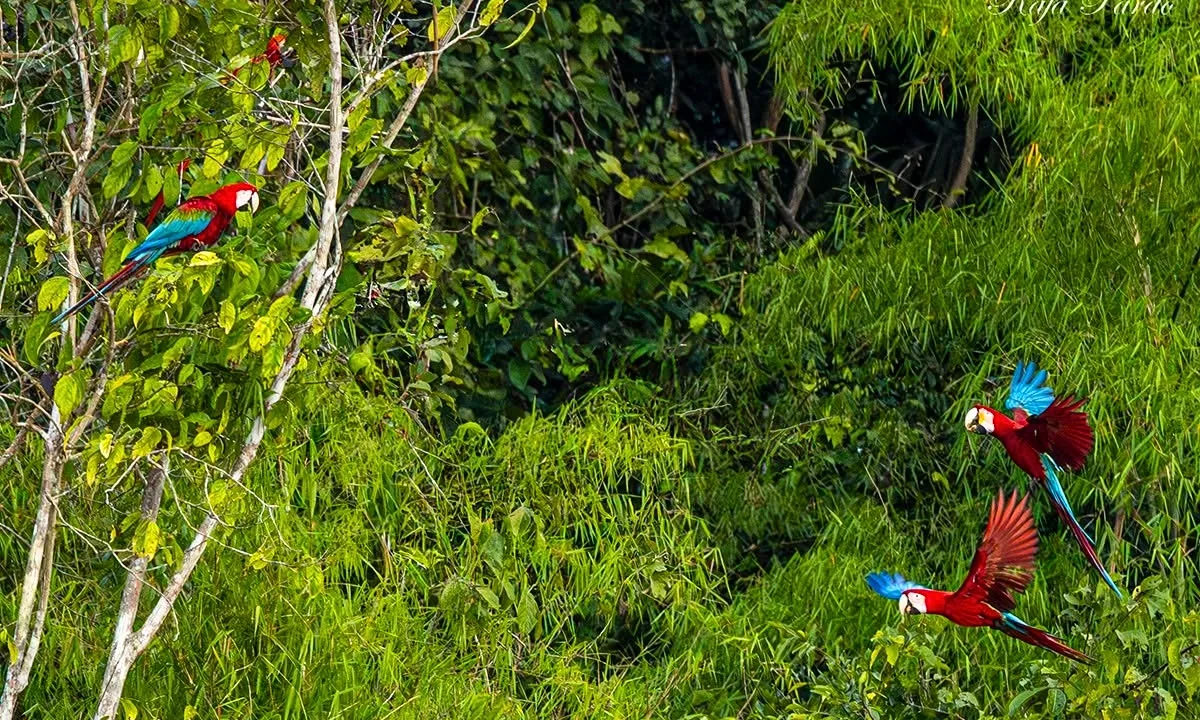
Tambopata National Reserve: A Natural Habitat for Macaws
The Tambopata National Reserve covers 274,690 hectares of tropical rainforest in Madre de Dios. It is one of the most biodiverse areas in the world. Giant river otters and caimans can be seen in its rivers and oxbow lakes, but what especially attracts visitors are the macaw clay licks and the hundreds of bird species that inhabit the area. Tambopata protects more than 600 bird species, including several species of large macaws.
Its accessibility from Puerto Maldonado (the regional capital) allows visitors to reach the heart of the rainforest by boat. Thanks to the mineral-rich clay licks, Tambopata’s macaws have the ideal place to feed in flocks. The entire region is managed for conservation, and entry is only permitted with authorized guides. Tourists from around the world come here to enjoy birdwatching in the Tambopata National Reserve, making this destination an unforgettable ecotourism experience in the Peruvian Amazon.
Recommendations for Watching Macaws in the Tambopata Rainforest
- Go at sunrise: Macaws visit the clay licks at sunrise. Arriving before sunrise (5:30–6:00 a.m.) increases the chances of seeing large numbers of birds.
- Choose the right season: The best time to see macaws in Tambopata is during the dry season (May to October), when the clay licks are most active and the weather is more stable.
- Essential equipment: Bring binoculars and a camera with a good zoom lens. Wear comfortable clothing in neutral colors (green or brown) to avoid attracting attention. A light jacket, sunscreen, and insect repellent are also recommended.
- Hydration and health: The weather is hot and humid, so bring water and light snacks. Wear boots or closed-toe shoes for walking along the trails.
- Professional guide: Book a macaw watching tour with experienced local guides (for example, from Peru Jungle Trips). They know the best schedules and the safest routes. Entering the park with authorized guides is mandatory.
- Proper behavior: Remain quiet and avoid sudden movements near the birds. Do not offer food or use flash photography. Respect the rules of the observation platform.
- Learn beforehand: Discover interesting facts about macaws (such as why they eat clay and their natural habits). This enriches the experience. For example, macaws eat clay because they need the sodium and minerals found in the soil for their health and to neutralize toxins in their natural diet.
- Tour coverage: When booking, make sure the package includes transportation, meals, and the necessary equipment. Also bring your own binoculars if you have them.
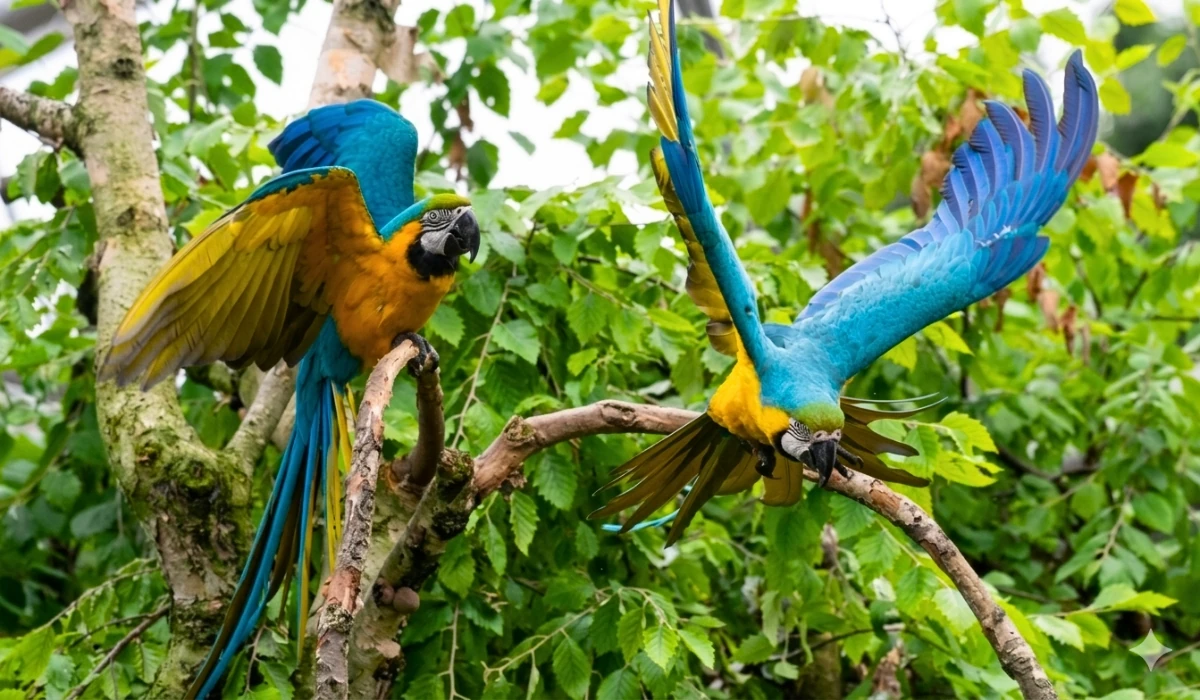
Frequently Asked Questions about the Species of Macaws in the Tambopata Rainforest
1. What species of macaws can be seen in Tambopata?
The Tambopata National Reserve is home primarily to three large macaw species: the Scarlet Macaw (Ara macao), the Blue-and-yellow Macaw (Ara ararauna), and the Green-winged Macaw (Ara chloropterus). The Military Macaw (Ara militaris) lives in nearby forests and is occasionally spotted, but it does not usually visit the clay licks. It is also possible to see other similar birds (such as Chestnut-fronted Macaws) in the area.
2. How many macaw species live in Tambopata?
Generally, 3–4 large macaw species are recorded in the Tambopata River basin. The three species mentioned above are the most common at the clay licks. Overall, Madre de Dios is home to 6–7 species of macaws and large parrots, although not all of them are seen on every excursion.
3. Why do macaws eat clay?
Eating clay is a behavior known as geophagy. Macaws need the sodium and other minerals found in the clay to balance their diet of seeds and fruits. In addition, the clay helps neutralize toxins found in some of the seeds they eat. That is why they visit the clay licks every day—it is a vital “natural supplement” for their health.
4. What is the best season to observe macaws in Tambopata?
The dry season (May–October) is the ideal time. During this period, there is less rainfall, making excursions easier and keeping the clay lick surface dry and visible. Although macaws visit throughout the year, the dry months attract larger numbers of birds to the clay licks. It is always best to visit early in the morning.
5. Do I need a guide to see macaws in Tambopata?
Yes. Visiting the Tambopata National Reserve requires an authorized tour guide. This ensures both safety and the best wildlife viewing experience. A knowledgeable guide (for example, from Peru Jungle Trips) also provides valuable information about macaws and the rainforest. Most tours to Chuncho Clay Lick include a bilingual guide and transportation from Puerto Maldonado.
6. How should I pack for a macaw watching tour in Tambopata?
It is recommended to bring: comfortable cotton clothing in earth-tone colors, a hat or cap, sunscreen, insect repellent, binoculars, a camera with a zoom lens, water, light snacks, and an extra change of clothes. A light jacket for the cool morning hours and hiking boots or closed-toe shoes are also recommended.
The species of macaws in the Tambopata Rainforest make this region one of the best destinations in the Peruvian Amazon for birdwatching. If you would like to enjoy this experience safely and with the best opportunities for wildlife observation, we offer customized macaw watching tours in Tambopata, led by expert guides and supported by safe equipment. We have extensive experience in the Tambopata National Reserve and know exactly how to maximize your chances of seeing these magnificent birds. With Peru Jungle Trips, you can comfortably enjoy macaw watching in Tambopata. Book your macaw watching tour in Tambopata.