
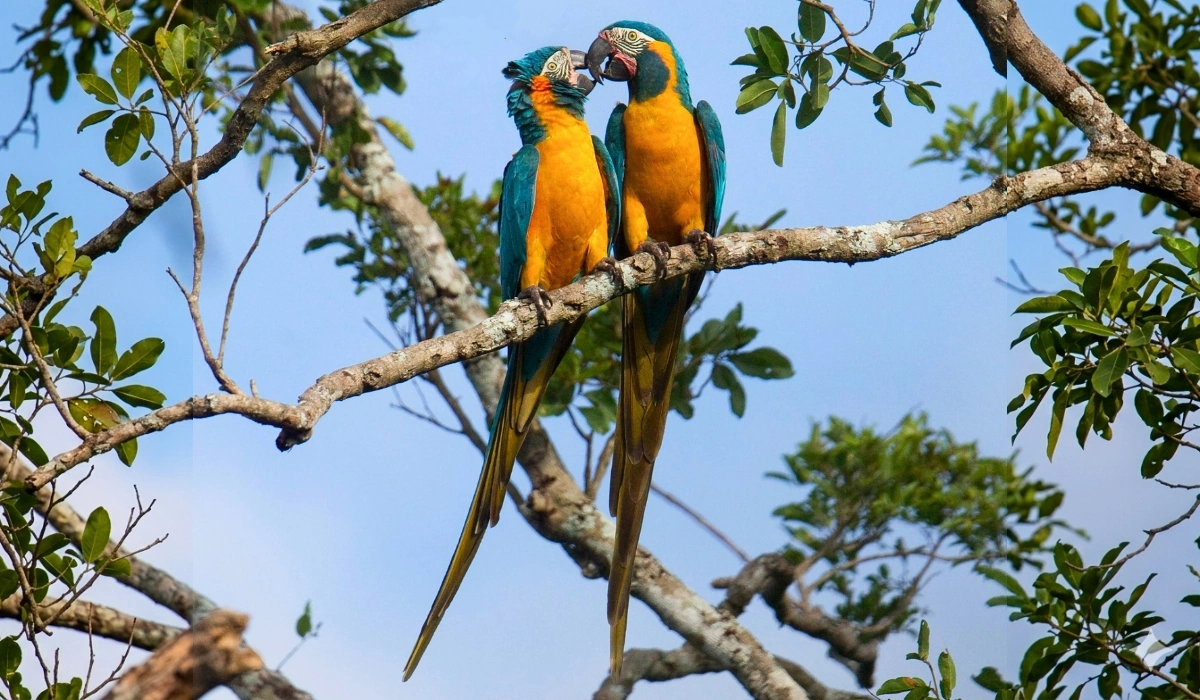
As you wake up in the comfort of your bed, you hear the leaves of the trees swaying and the first songs of the birds begin to appear. The room starts to turn golden thanks to the sun’s rays, and little by little a cry emerges that breaks the chorus of thousands of birds and insects. This cry is an ancestral call, and among the infinity of trees a deep blue shape begins to dominate—the blue-and-yellow macaw in the Peruvian Amazon takes over the skies, offering one of the most incredible spectacles in birdwatching.
The sapphire in the jungle
Among tropical rainforests and seasonally flooded areas lives a macaw native to Latin America, characterized by its radiant feathers, it crowns the skies with its striking colors—this is the blue-and-yellow macaw. The blue-and-yellow macaw (ara ararauna) belongs to the psittacidae family; it is a large bird emblematic of the Peruvian Amazon, it is monogamous, can live from 30 to 35 years in its natural habitat, and is highly intelligent, which allows it to imitate human speech.
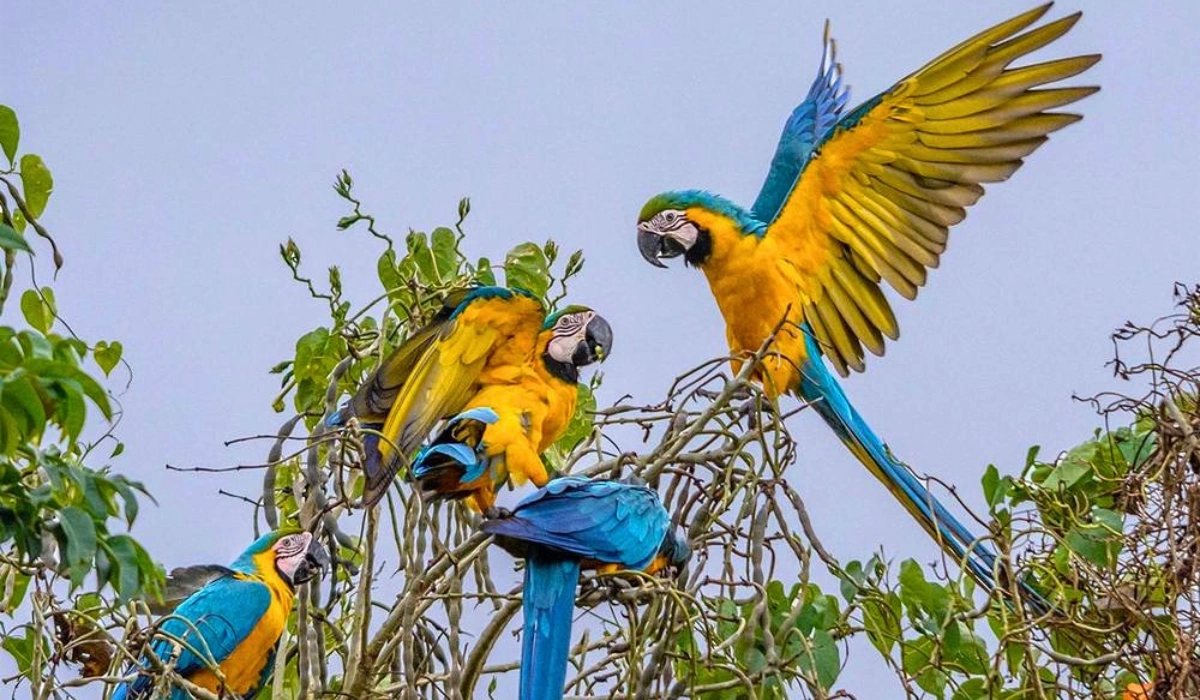
Where to observe the blue-and-yellow macaw?
This radiant bird is endangered in countries such as Paraguay; however, there are several specimens in Peru, Brazil, and other countries in the region, so it is not classified as a species in critical danger of extinction. As it feeds mainly on fruits, hard seeds, nuts, and clay, it is possible to see it at dawn at macaw clay licks. You can see this stunning macaw at the Chuncho macaw clay lick in Tambopata or at the Manu macaw clay lick (Blanquillo area) along with other species of macaws and birds.
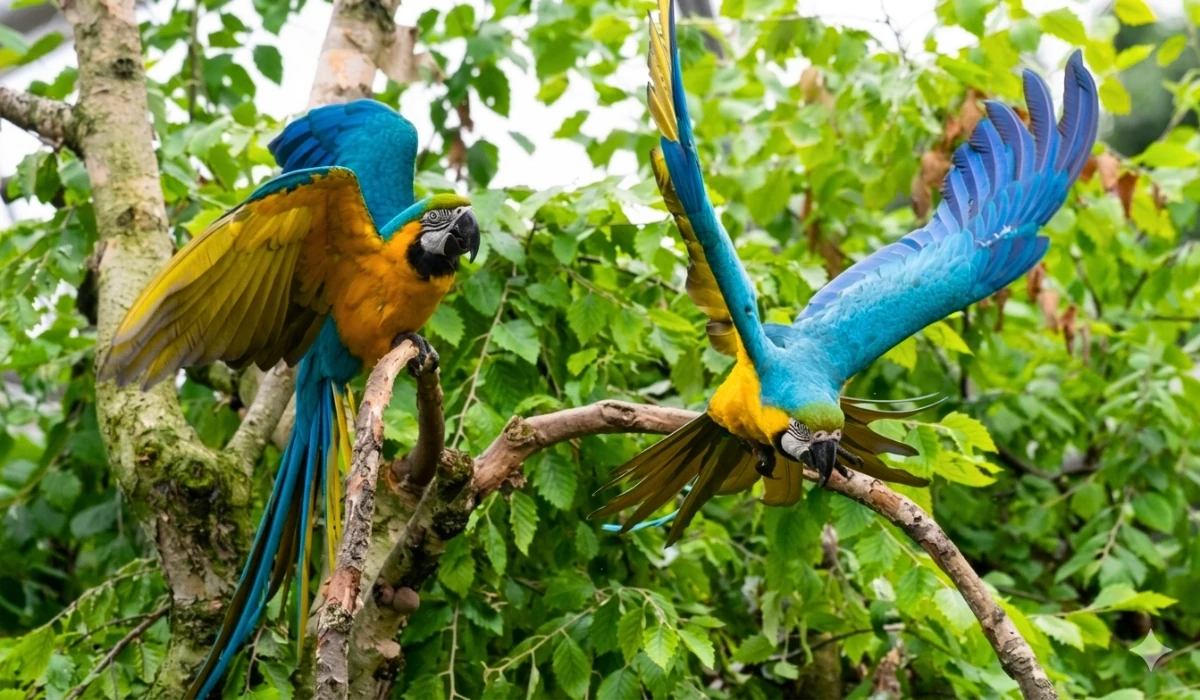
Aspects you should consider before visiting a macaw clay lick
Getting to Madre de Dios is simple, and some will tell you that reaching the macaw clay lick is as well—but remember, it’s easy if you live in the area and know the route! Otherwise, walking and navigating through the Amazon rainforest could be dangerous. Below, we provide aspects you should consider for your next birdwatching adventure:

- Travel with an agency or operator that holds all permits issued by the Peruvian government and the local government. While there are several agencies offering transportation and guiding services to the clay lick, it is important to remember that if they do not have all the documentation, you risk receiving very poor service without being able to report it to any relevant authority. We hold all the necessary licenses and certifications.
- Verify that the guide carries the official ID of an Official Tourism Guide and is registered in the Directory of Tourism Service Providers of Mincetur. This guarantees that you travel with a local expert who knows the routes and the strategic points for birdwatching.
- Prioritize traveling in small groups or request a private expedition. This is the best way to experience the Amazon and reduce your carbon footprint, as traveling in small groups reduces trail erosion and is less invasive to animal habitats.
- Wear quick-drying clothing. The climate is tropical and warm—bring quick-drying clothes, your skin will thank you.
- Use insect repellent and sunscreen. The warm Amazon climate is pleasant, but it is always important to take care of your health.
- Avoid straying from the group or your guide. While it is exciting to venture into the jungle, it is necessary to remember that you are visiting an area with its own rulers, from small spiders to large anacondas; these species prefer to remain calm in their habitats and do not attack humans, however it is always best to follow the guide’s instructions.
- Prioritize choosing a tour based on quality rather than price. There are several companies offering low-cost expeditions to the macaw clay lick; however, they make additional charges during the trip—and you end up paying more than you initially expected! So always ask about what is included in your trip and for transparent pricing.
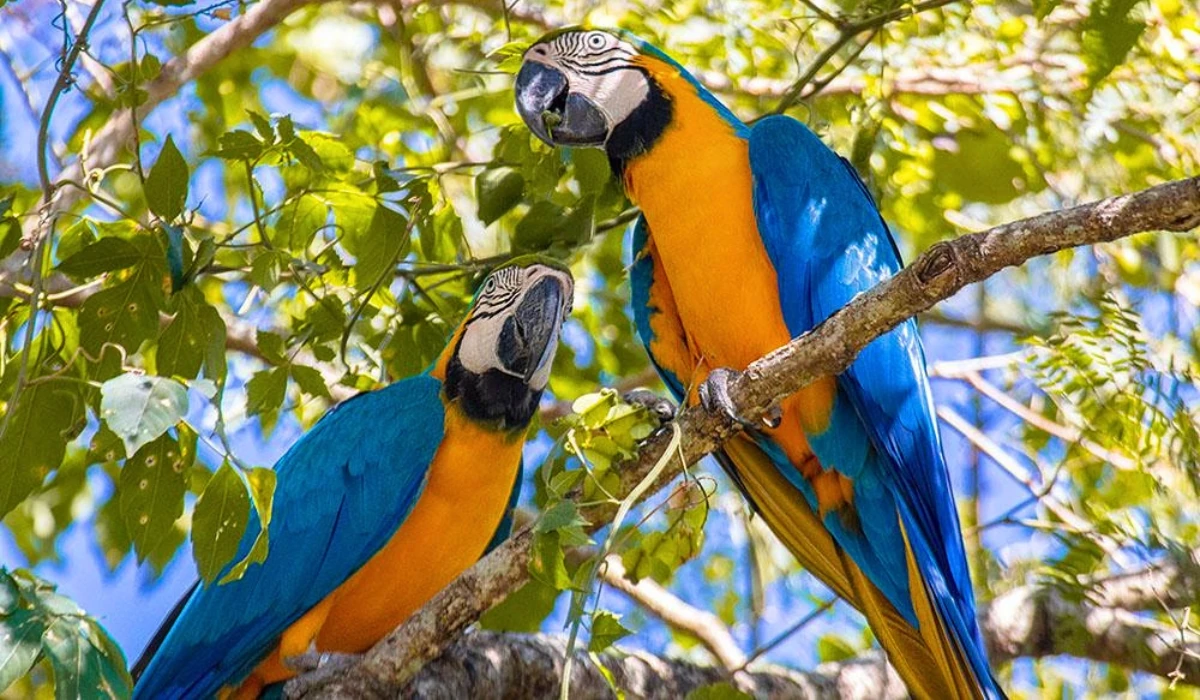
Safety and care for your next encounter with the Peruvian Amazon
We know that planning your trip to the Peruvian Amazon can be full of uncertainty, especially regarding dangerous animals in the Amazon, which is why we take care of all the logistics of your trip—just focus on fully enjoying the adventure!
If your schedule is tight but you want to see the macaw clay lick, we recommend these short tours:
If you wish to experience a complete immersion, we recommend booking:
Do you have more questions? Contact one of our travel advisors here!