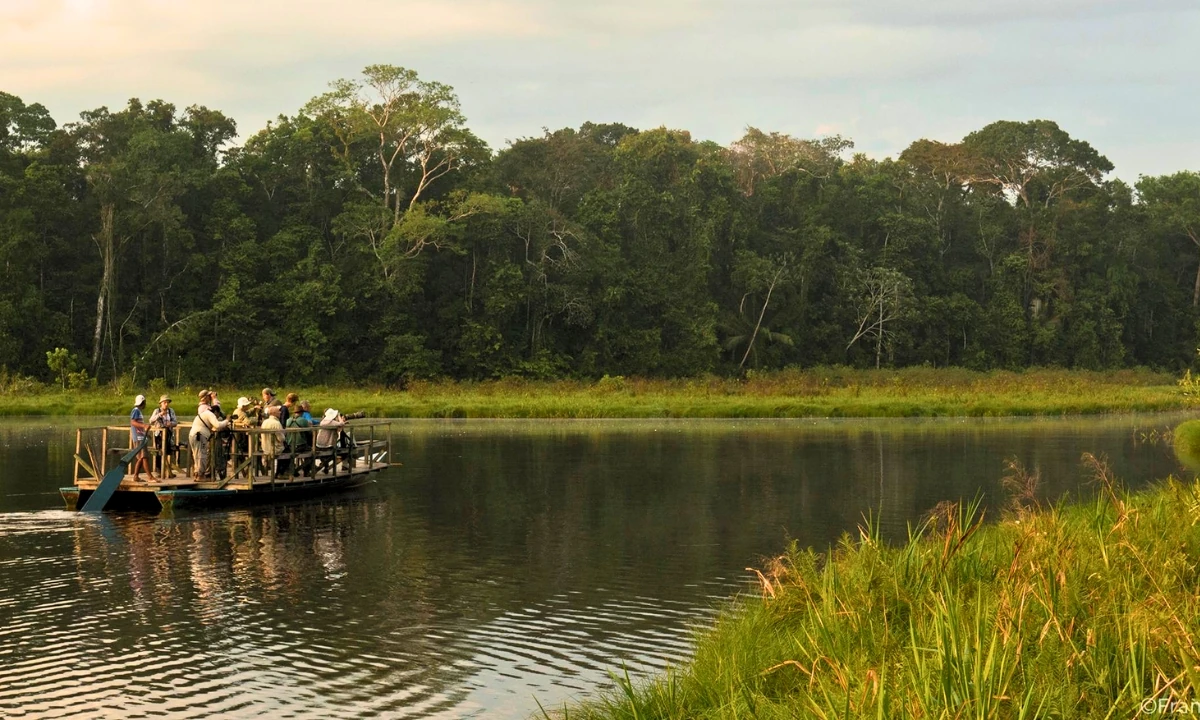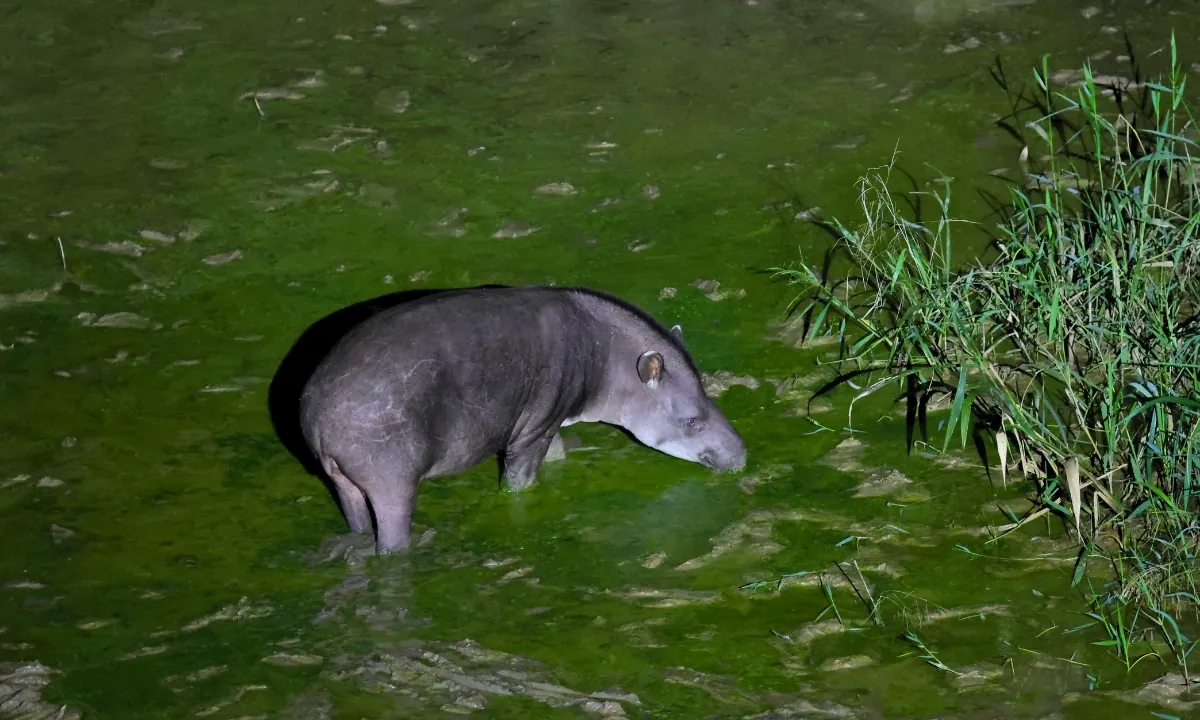
Known as one of the architects of the rainforest, the South American tapir is considered the largest land mammal in the Amazon. In Peru, the best opportunity to spot one is by exploring the lowland rainforest on night walks and boat trips. If you are already thinking about booking a tour to the Peruvian Amazon to see a tapir, we explain everything you should consider when planning your trip.
What Is a Tapir?
The tapir (Tapirus terrestris), also locally known as sachavaca, is a herbivorous mammal that plays a crucial role in forest protection and reforestation. This mammal is characterized by:
- Measuring about 2 meters in length.
- Weighing between 110 kg and 320 kg.
- Being mainly nocturnal and crepuscular.
- Feeding mainly on leaves, fruits, and aquatic plants, making it a herbivore.
Unlike adults, tapir calves are born with coats featuring light-colored stripes and spots, which makes it easier for them to camouflage themselves in the forest.
Because of its physical appearance, the South American tapir is often believed to be closely related to pigs. However, its closest relatives are horses and rhinoceroses.
Tapir Species in South America
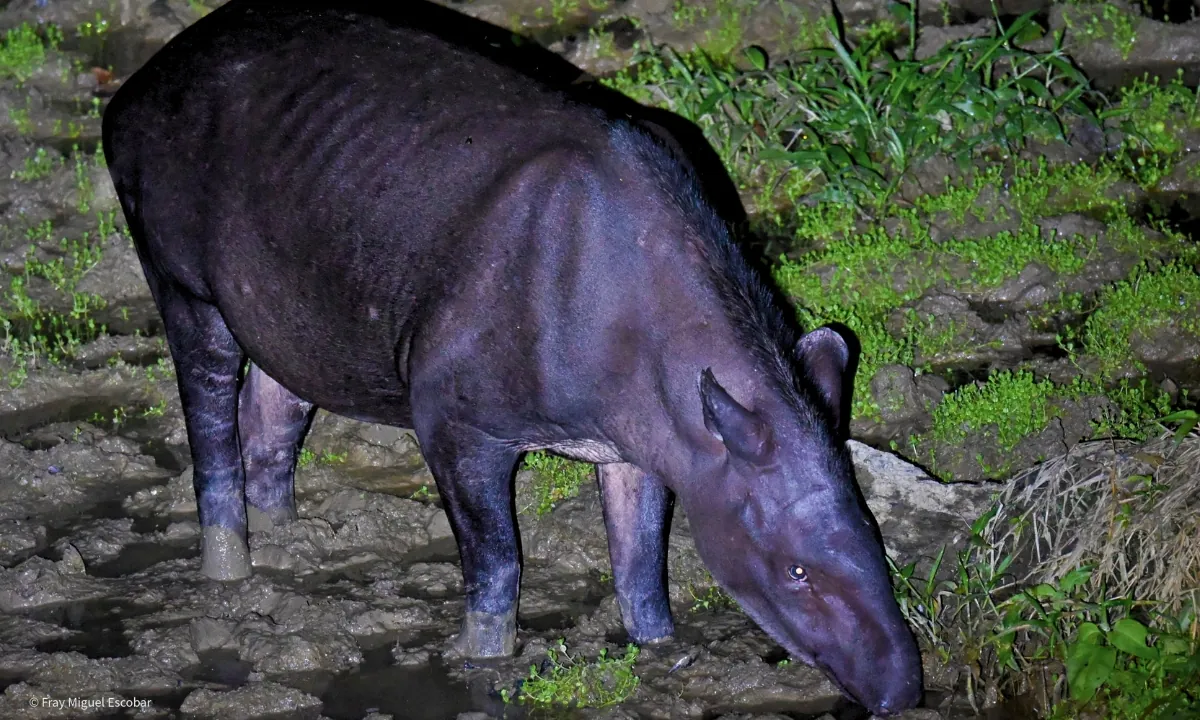
There are 5 tapir species in the world, 2 of which are found in Peru.
- Amazonian tapir (Tapirus terrestris), lives in rainforests and wetlands of the Amazon Basin.
- Mountain or Andean tapir (Tapirus pinchaque), inhabits cloud forests and páramos in the Andes.
It is also important to mention that the tapir is classified as vulnerable due to hunting, habitat loss caused by deforestation, and informal and illegal mining.
Where Do Tapirs Live in Peru?
Tapir sightings have been recorded throughout this Latin American country.
Andean Tapir
- Piura: in the páramos and cloud forests of Cachiaco and San Pablo.
- Cajamarca: in the region’s páramos and forests.
- Lambayeque: in isolated areas.
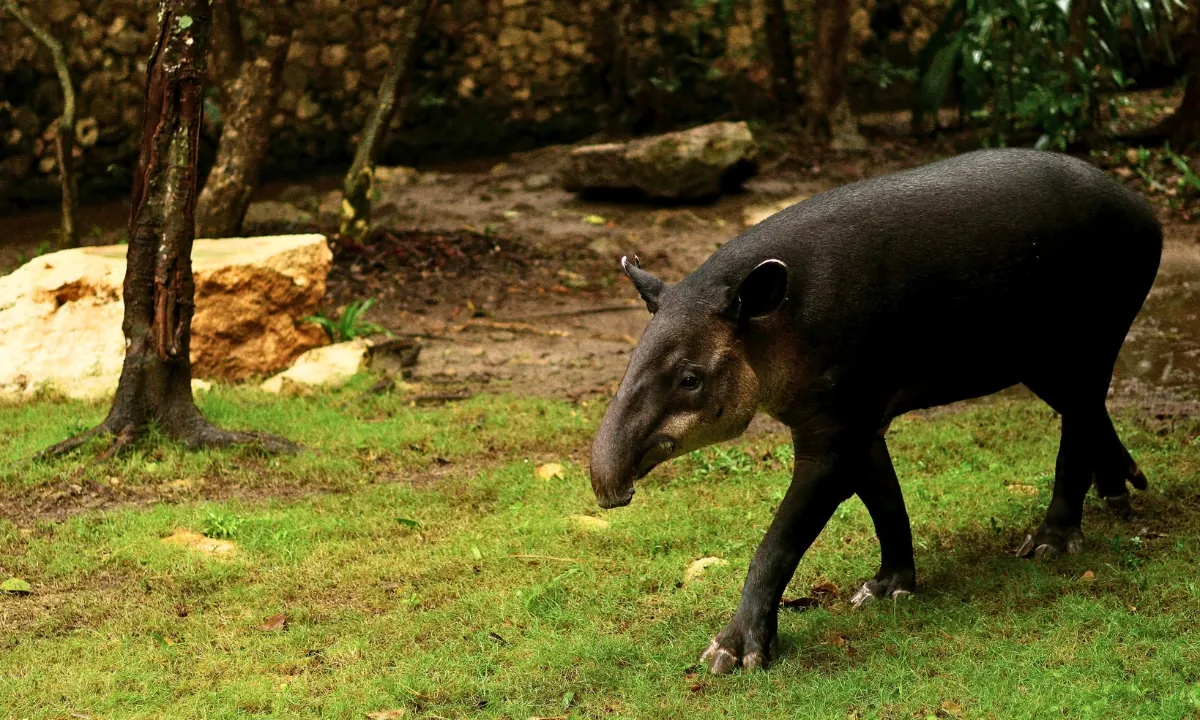
Amazonian Tapir
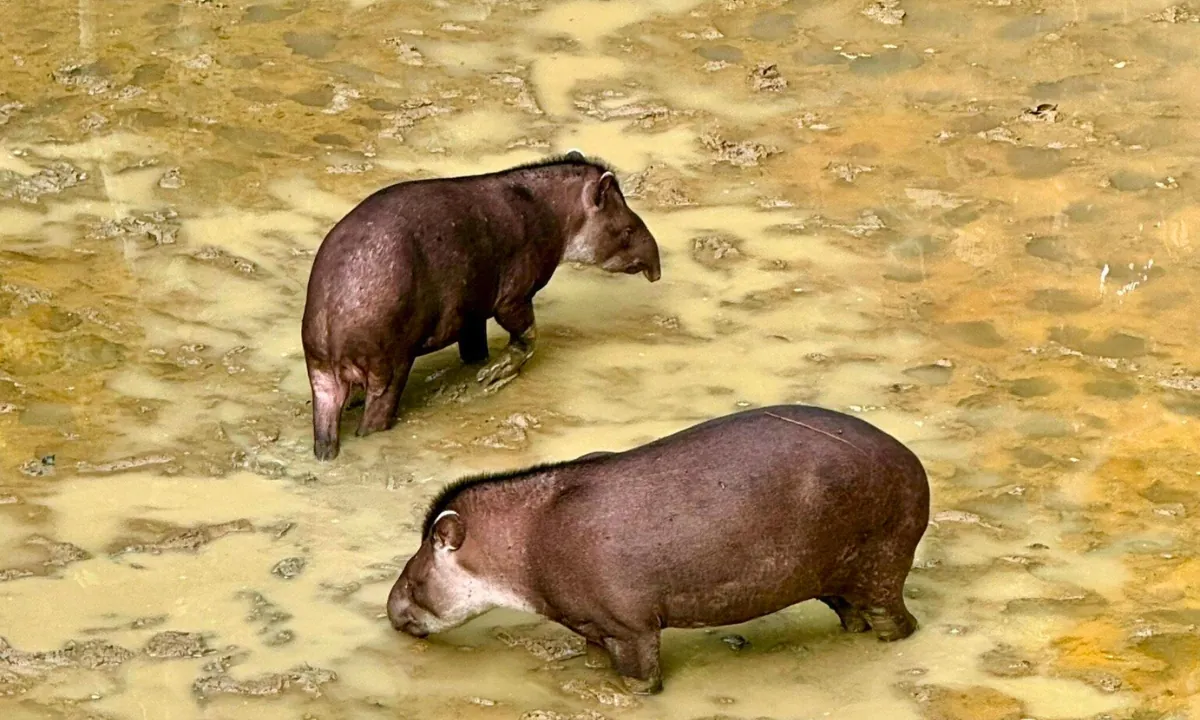
It is found throughout the Peruvian rainforest, with notable locations including the Tambopata National Reserve and Manu National Park.
Where to See a Tapir in Peru
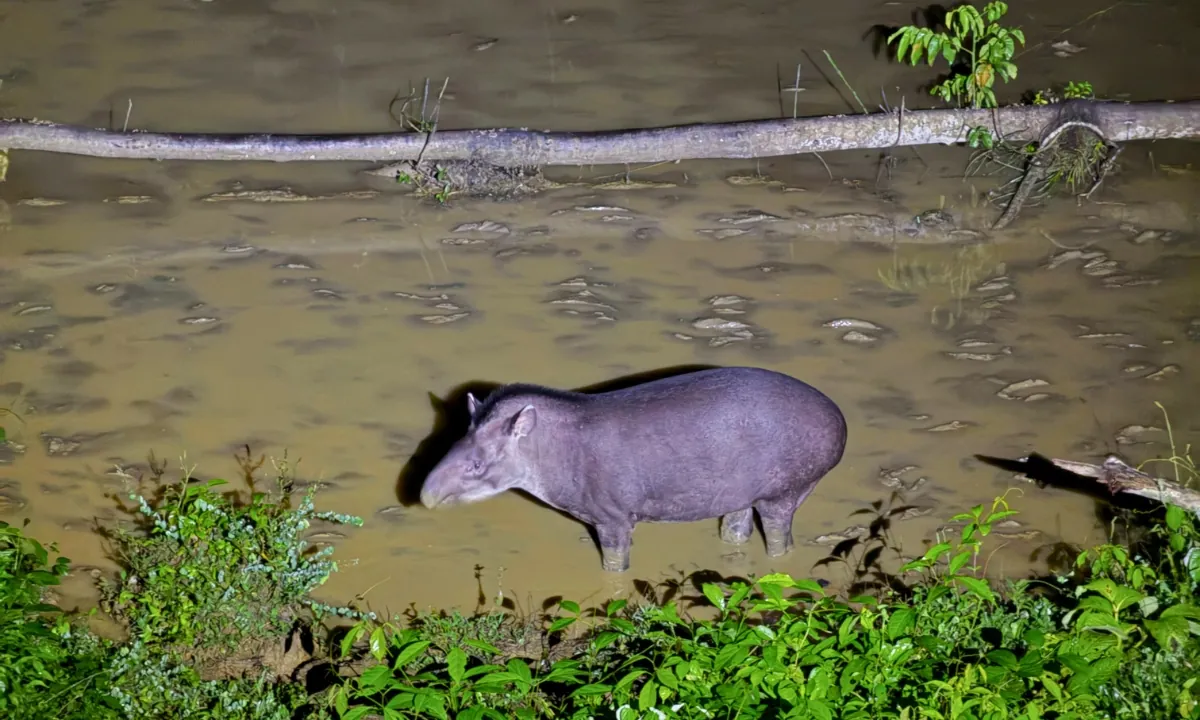
At Peru Jungle Trips, we want to be honest with you: no guide or reputable company can guarantee that you will see a wild tapir on a tour. However, your chances of spotting one improve if you travel with professional guides who specialize in the Amazon or plan your expeditions at night or in the early morning. For this reason, we recommend visiting:
- Tambopata (Puerto Maldonado): tapir activity has been detected in this natural area.
- Manu National Park: the Manu Biosphere Reserve is known for its rich biodiversity, and tapirs have been found mainly in humid forest areas and transition zones.
In addition, your chances of spotting a tapir increase during the dry season or low-water season.
How to Choose a Tour to See Tapirs
Here are 6 aspects you should consider before booking a tour.
- Make sure the travel agency works with professional, certified guides who specialize in the Peruvian Amazon. If you want to take a private tour, remember to request a guide who, in addition to having the required certifications, specializes in naturalist guiding.
- Ask whether your tour includes nighttime or early-morning outings, as this is when tapirs are most active.
- Ask for information about the accommodation, and prioritize options located within or next to the rainforest so you do not waste time traveling between locations.
- Prioritize traveling in small groups, as this is a better alternative to large group tours because smaller groups make less noise and disturb fewer animals.
- Choose a tour with a sufficient duration. More nights in the rainforest mean more opportunities to see a tapir.
- Require clear pricing information, including what is included and the cancellation policy.
At Peru Jungle Trips, we work with guides who specialize in the Peruvian Amazon, eco-lodges in the heart of the rainforest, and itineraries that include daytime and nighttime activities. Contact us and request a quote today.
Explore More Amazon Wildlife
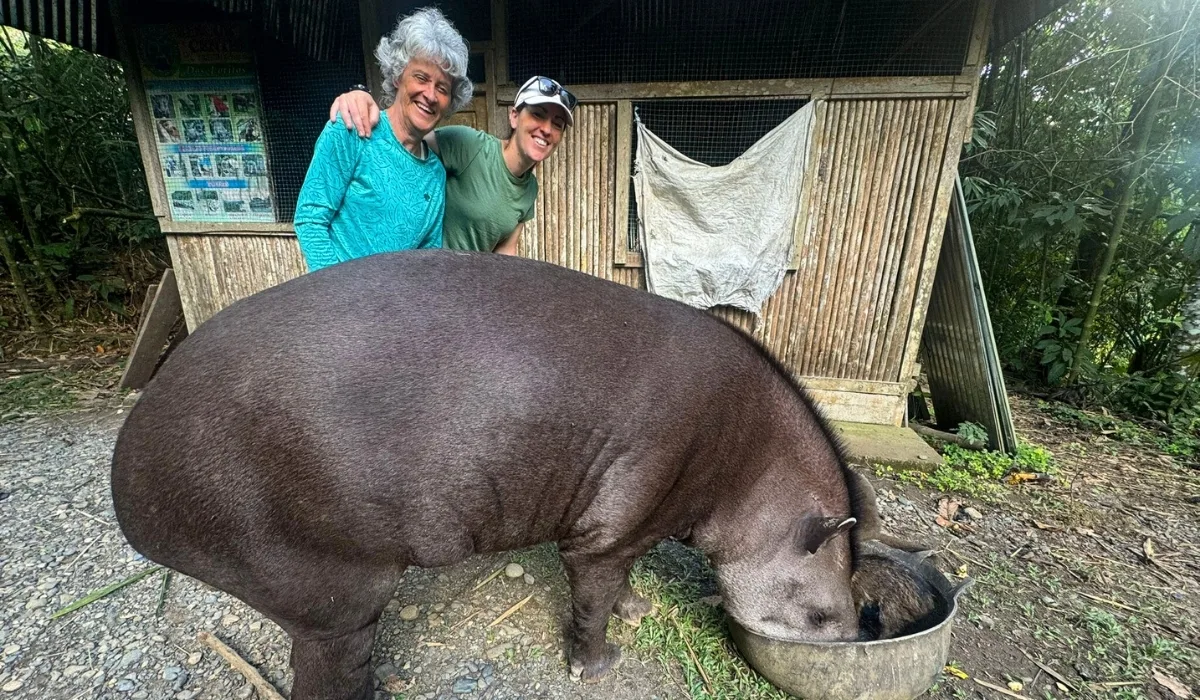
In addition to the tapir, the Peruvian Amazon is home to amazing species such as:
- Giant otter, which lives in lakes and rivers with calm waters.
- Blue morpho butterfly, considered one of the most beautiful butterflies on the planet.
- Anaconda, recognized as one of the most dangerous animals in the Amazon rainforest.
- Andean cock-of-the-rock, recognized as one of Peru’s most iconic birds.
- Jaguar, one of the kings of Amazonian wildlife and an animal at the top of the food chain.
On our 6-day tours from Cusco to Manu, you can increase your chances of spotting these species.
Now that you know more about the tapir, don’t hesitate to book your tour to Tambopata, Manu, or Iquitos today. Book your next adventure here.
Frequently Asked Questions
What types of tapirs are found in South America?
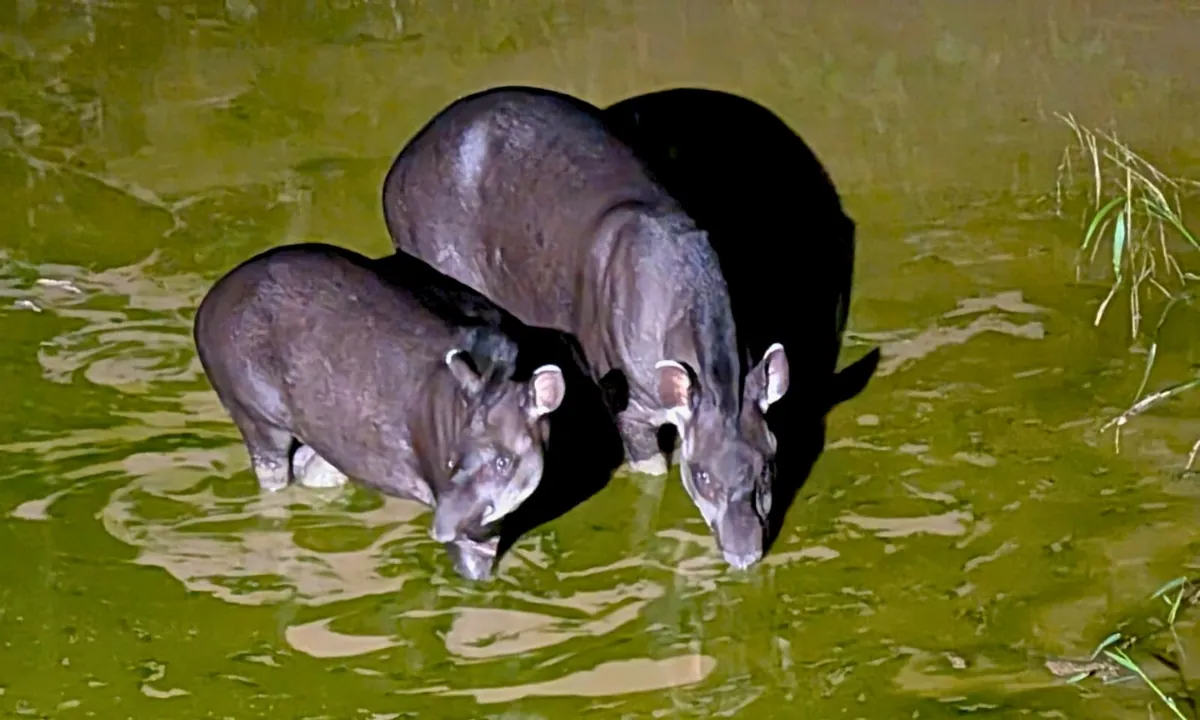
Two species live in South America: the Amazonian tapir (a lowland species) and the mountain tapir, which lives in the northern Andes and is much harder to spot.
What does a tapir eat?
Leaves, fruits, shoots, and aquatic plants. By eating fruits, tapirs disperse seeds, making them important for forest health.
Are tapirs dangerous?
They are not usually dangerous. They are shy and flee, but they can defend themselves if they feel cornered, so you should keep your distance.
What is the best place to see a tapir in Peru: Tambopata or Manu?
It depends on your available time and the type of trip you want. Tambopata is easier to combine with Cusco and Machu Picchu. Manu is more remote and usually attracts visitors looking for less disturbed natural environments. If you have more than 4 days, we recommend choosing Manu from Cusco.
Can a tapir sighting be guaranteed?
Not if you want to see one in its natural habitat. Tapirs are elusive wild animals. A good guide, the right location, and more nights in the rainforest increase your chances.
How much does a wildlife-watching tour in the Amazon cost?
It depends largely on the route, duration, and accommodation. At Peru Jungle Trips, we offer group and private tours. Check availability here or request a personalized quote here.
How do I book a tour?
It’s easy. Contact us through this form and send us your dates and the number of travelers. We will reply within 24 hours with an itinerary and a price.
If you have already decided on your destination, check out our available packages here.