
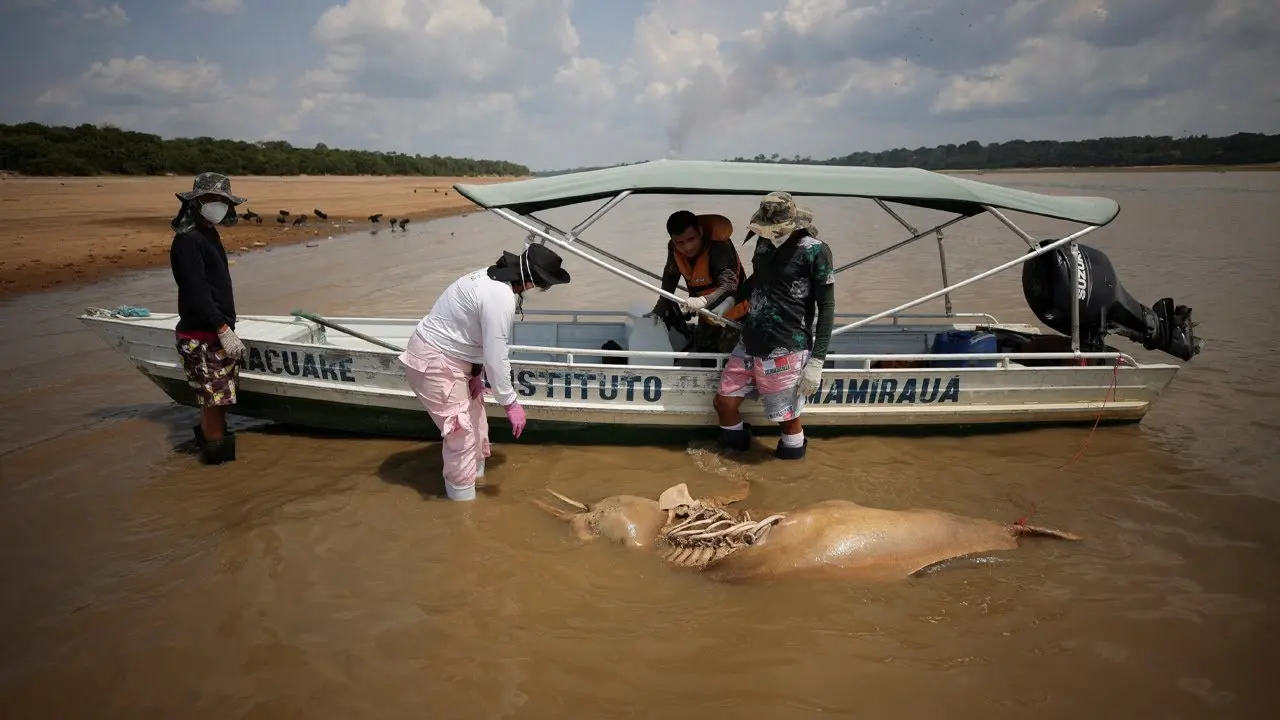
In 2023, the Amazon faced one of the most severe environmental crises in its recent history: hundreds of dead dolphins were trapped in lakes that reached temperatures comparable to hot shower water. This tragedy was not an isolated event. It is a symptom of the profound disruption that climate change is causing in the planet’s largest tropical region.
A Lake Turned into a Deadly Trap
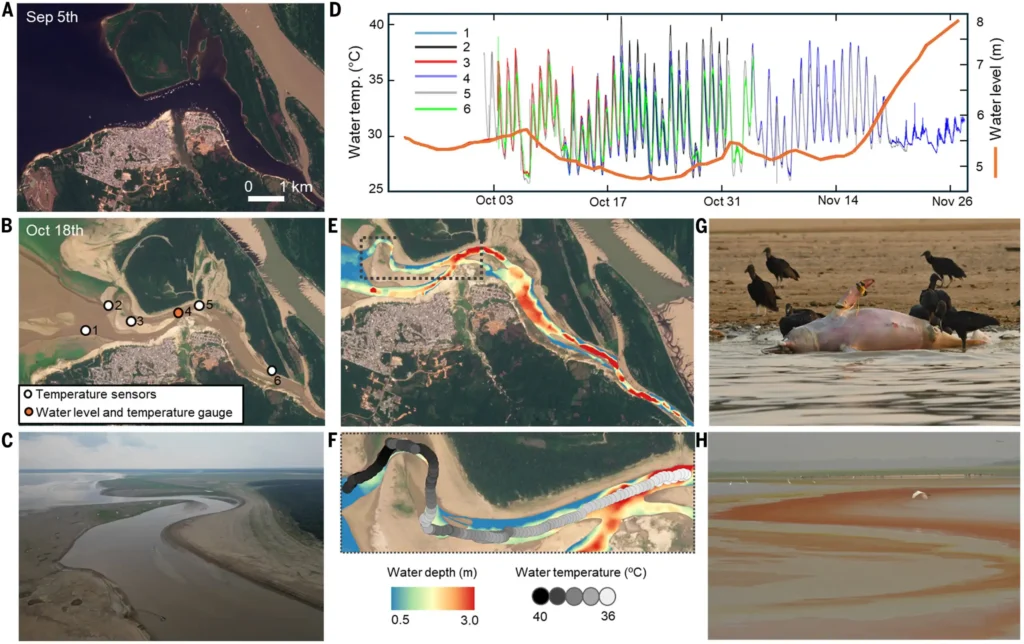
Research conducted in ten lakes in the central Amazon revealed that in half of them, water temperatures exceeded dangerously high levels for aquatic life. But the most extreme case occurred in Lake Tefé, where the water reached 41 °C and that temperature persisted up to two meters deep.
The lake had also lost much of its area and depth due to drought. It shrank from about 400 km² to barely 100 km². Its average depth decreased from 13 meters to half a meter. With less water and no cool layers at the bottom, animals had no thermal refuges.
These extreme conditions were caused by a combination of intense solar radiation and shallow depth. Murky waters, which absorb more heat, and the absence of wind, which prevented mixing of cold and hot layers, also contributed. The result was an environment where temperature ceased to be variable and became a lethal barrier.
Why the Dolphins Could Not Escape
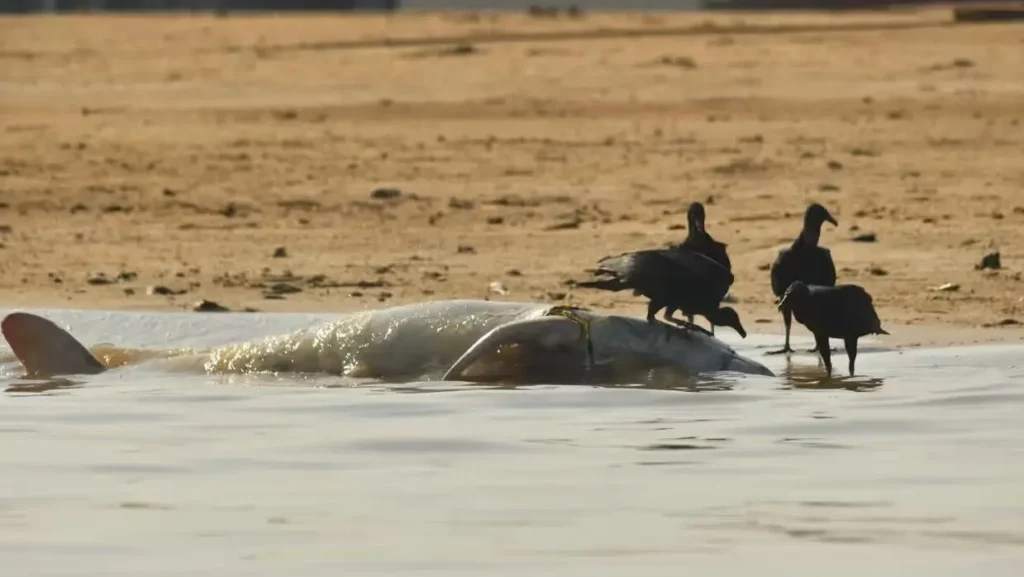
Fish were the first to succumb: at such extreme temperatures, their metabolic processes stall and stop functioning.
Dolphins, although able to regulate their body temperature, also depend on their environment to survive. In such a hot lake, with no food available and no cool areas to relieve thermal stress, their bodies could not sustain the energy required to stay alive.
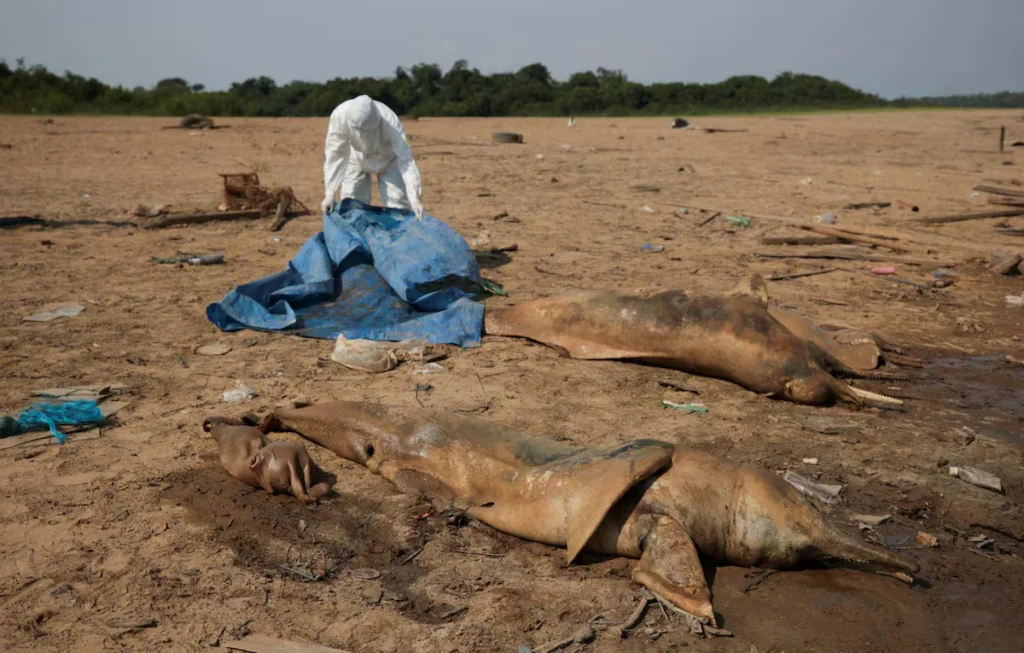
In total, 275 dolphins died in the studied lakes, and 209 of them in Lake Tefé. This event represents one of the worst freshwater dolphin die-offs ever recorded.
A Tragedy That Also Affected Human Communities
The crisis not only devastated aquatic wildlife. The extreme drop in river levels left entire communities isolated. Many lacked adequate access to water and food. River transport, the only means of movement in many areas, became almost impossible.
Even the scientists studying the area faced extreme conditions. Trips that normally took three hours extended to eight or ten due to the retreating water. The emotional impact was profound in the face of hundreds of dolphin carcasses and completely cut-off families.
An Extreme Event or a Glimpse of the Future?
The drought that caused this disaster was not an isolated phenomenon. The region had already suffered historic droughts in previous years, and in 2024 the drought continued, considered the most severe in over a century. Studies also indicate that around 60% of the world’s rivers experience drought each year, a pattern that is intensifying.
The Amazon, due to its enormous biodiversity and limited monitoring, is particularly vulnerable. When lakes shrink, lose depth, or increase in turbidity, they become highly susceptible to heat accumulation. If these patterns continue, events like the one at Lake Tefé could occur elsewhere in the basin.
Five Reasons to Protect River Dolphins
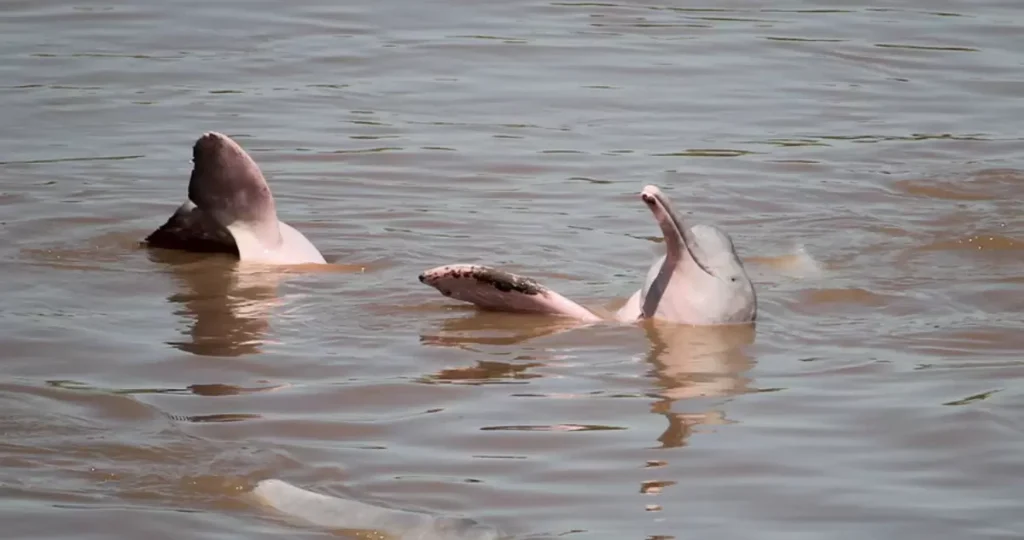
Amazonian dolphins, pink and gray, are much more than charismatic animals. Their preservation is vital for forest health and for communities that depend on the river. Here are the main reasons to protect them:
- They are indicators of water health: The presence of dolphins indicates clean rivers, abundant fish, and functional ecosystems.
- Protecting them benefits other species: Conserving their habitat also protects turtles, manatees, otters, crocodiles, and dozens of fish species.
- They are essential for local fisheries: By feeding on a wide variety of fish, their presence indicates healthy fish populations.
- They have deep cultural value: For many Amazonian peoples, dolphins have spiritual significance and are part of their cultural identity.
- They promote sustainable ecotourism: River dolphin watching is one of the Amazon’s top attractions, and their conservation can foster local economies based on sustainable activities.
Organizations dedicated to their protection operate in several South American countries. They face growing threats: pollution, illegal mining, dams, deforestation, and overfishing.
What Happened at Tefé Must Not Happen Again
The mass death of dolphins in waters with unsustainable temperatures is a clear warning. The Amazon is reaching its limits. Although thousands of lakes have not yet experienced such extreme levels, the risk of this phenomenon repeating is real.
Protecting river dolphins means protecting rivers, forests, and the communities that depend on them. The case of Tefé shows that the climate crisis is no longer a future threat: it is a reality already claiming lives.