
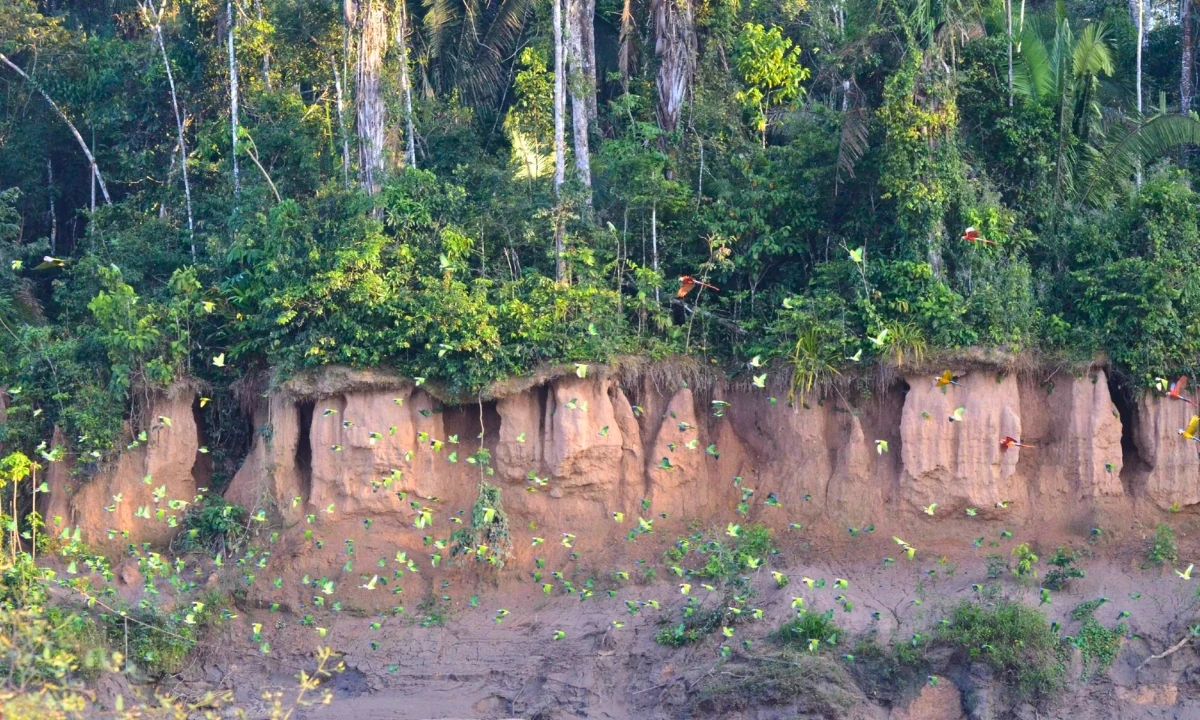
The Tambopata National Reserve is the best place for spectacular parrot clay licks in Tambopata, clay cliffs where parrots, parakeets, and macaws gather every morning to feed. These natural formations allow birds to consume essential minerals that are absent from their diet. Among the most famous in the area are five clay licks: Chuncho, Colorado, La Cachuela, Hermosa, and Ocho Gallinas. At each one, dozens of parrot species gather to lick the nutritious clay, offering a unique parrot, macaw, and parakeet watching experience in Tambopata.
What Are Parrot Clay Licks in Tambopata?
Clay licks are clay cliffs along Amazonian rivers where parrots, parakeets, and macaws gather every morning. These birds eat mineral-rich clay to neutralize toxins and supplement their diet. In Tambopata, parrot clay licks offer a unique spectacle: dozens of parrots descend from the trees to lick the mud, creating one of the most impressive wildlife gatherings in the world. In addition to birds, other animals such as howler monkeys, squirrels, and even tapirs make use of these mineral deposits.
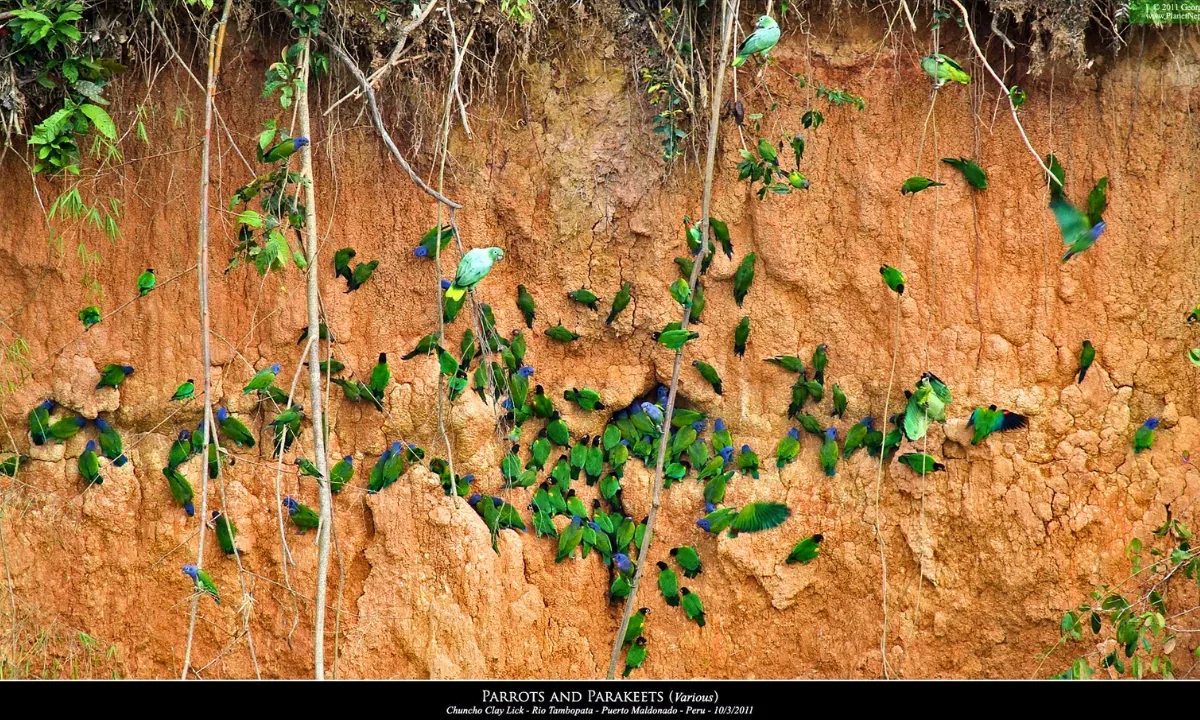
The 5 Best Parrot Clay Licks in Tambopata: Tambopata National Reserve
The Tambopata Reserve is recognized for its impressive parrot and macaw clay licks, cliffs where dozens of these birds descend every day to feed in an extraordinary natural spectacle. Among the most notable places to see parrots in Tambopata are the Chuncho Clay Lick, Colorado Clay Lick, La Cachuela Clay Lick, Hermosa Clay Lick, and Ocho Gallinas Clay Lick. All are located along the banks of the Tambopata or Madre de Dios rivers and offer excellent opportunities for birdwatching and enjoying the abundant wildlife of Puerto Maldonado.
1. Colorado Clay Lick
The Colorado Clay Lick is a remote and world-famous site, considered the largest clay cliff in the Peruvian Amazon and in the world. It is one of the most remote and biologically rich clay licks in the Amazon. Over time, parrots and parakeets have become its main visitors. Some of the species that come to feed on its exposed cliffs include the scarlet macaw, red-and-green macaw, and blue-and-yellow macaw, as well as various species of parrots and parakeets.
On clear mornings, you can see “hundreds of birds from the parrot family,” from scarlet macaws to neon-green parrots and flocks of painted parakeets, feeding on clay. The combination of these birds’ colors against the red cliff makes Colorado a must-visit for nature lovers.
2. Chuncho Clay Lick
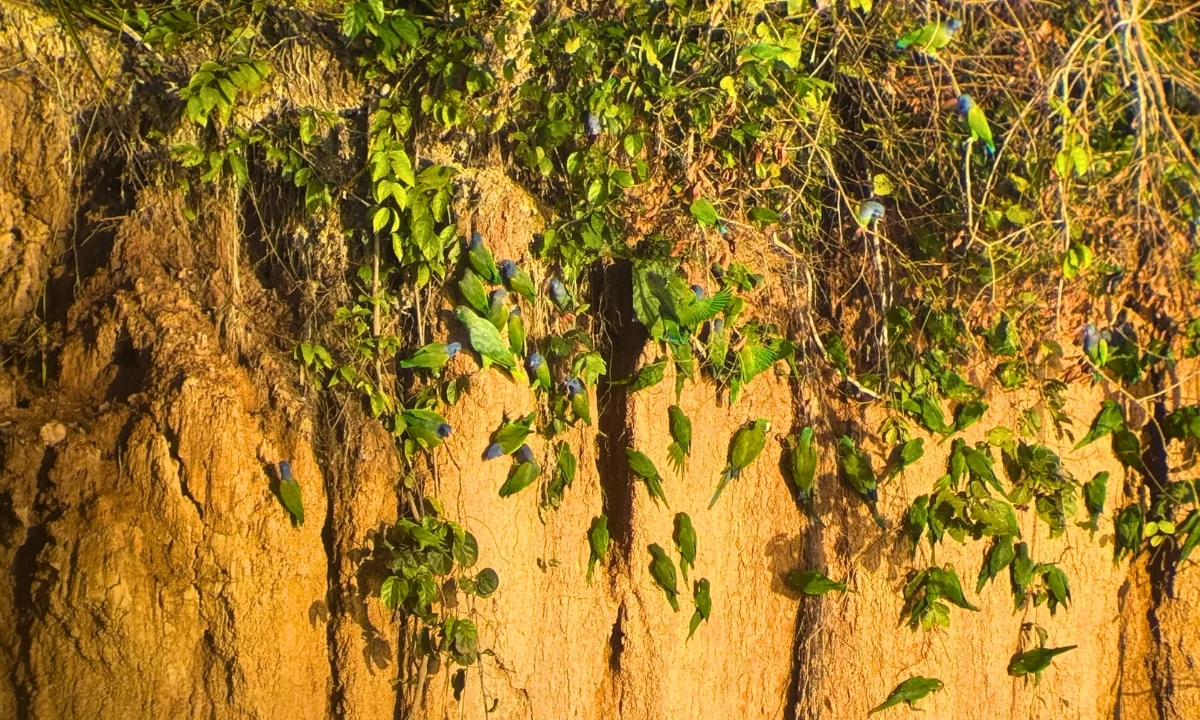
The Chuncho Clay Lick is one of the best-known clay licks in the Tambopata National Reserve. It is the second most important clay lick in the protected area. Here, “dozens of red-and-green and blue-and-yellow macaws” gather at dawn along with playful parrots and parakeets. It is common to see huge flocks descending onto the clay wall. Local operators report that many parakeets, parrots, and macaws arrive at Chuncho every day. Access is by river and usually requires an early departure, but it offers one of the most spectacular bird displays in the Amazon.
3. Ocho Gallinas Clay Lick (or Las Ocho Gallinas)
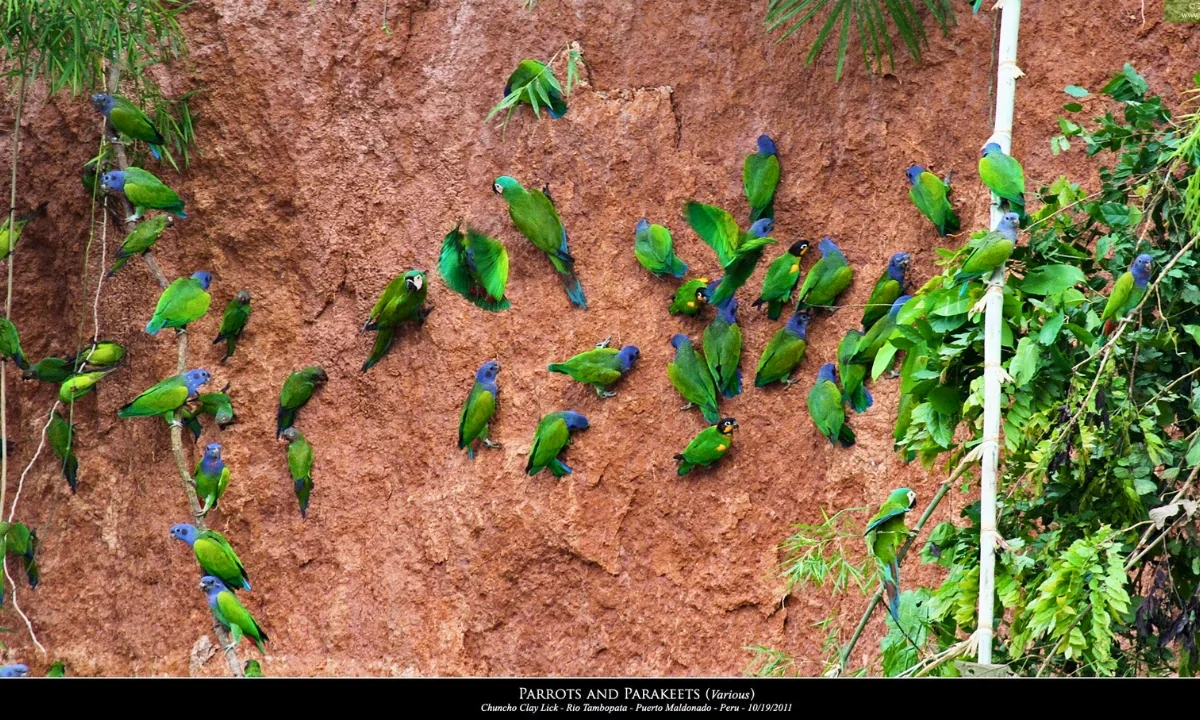
The Ocho Gallinas Clay Lick is a spectacular and important observation point located in the Upper Tambopata sector, about 20 minutes by boat from the mouth of the Malinowski River. Although it was little known among mass tourism for many years, reports from SERNAP currently classify it as one of the most active and busiest clay licks in the region due to the enormous concentrations of parrots that gather along its 700-meter-long cliff. The experience here is unique: because there are no artificial hides, travelers observe the noisy spectacle directly from a white-sand island located opposite the cliff, making it an emerging gem for nature photographers.
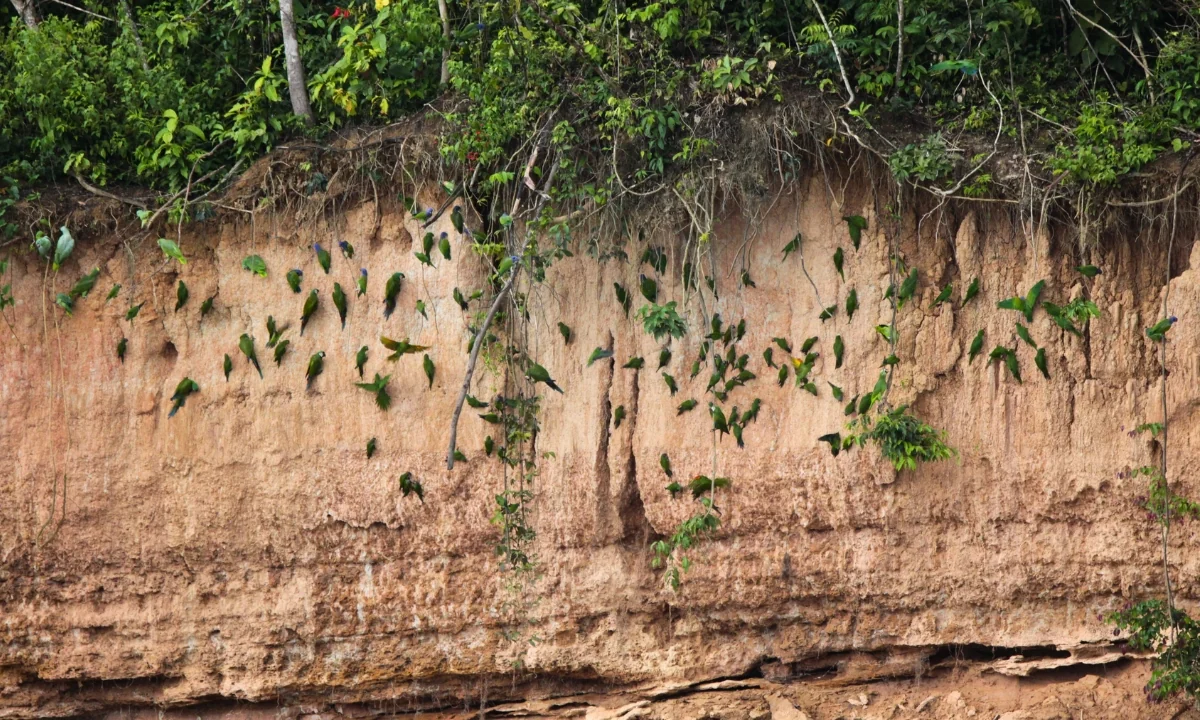
4. La Cachuela Clay Lick
For those who have less time or prefer not to venture so deep into the jungle, the La Cachuela Clay Lick is the ideal alternative. It is strategically located just 10 kilometers from the city of Puerto Maldonado, along the Madre de Dios River. It is a smaller but highly active cliff, where concentrations of medium-sized parrots, parakeets, and small macaws abound as they come to lick the clay at sunrise. Its great advantage is the ease of access, allowing you to take the excursion at dawn and return to the city in the morning. Visits to Cachuela take place early at sunrise, when flocks emerge from the nearby trees to feed on clay.
5. Hermosa Clay Lick
The Hermosa Clay Lick is a small but fascinating refuge located within the territory of the Infierno Native Community, a short walk from Posada Amazonas lodge. As it is located in a protected communal area, it offers a very peaceful birdwatching experience free from tourist crowds.
It has an observation platform hidden a short distance from the clay, allowing you to photograph in great detail mealy parrots, blue-headed parrots, and parakeets, especially during the rainy season (from November to April). By avoiding the long river journeys and extremely early mornings required at other locations, it is the perfect alternative for families and travelers who prioritize comfort and privacy in the jungle.
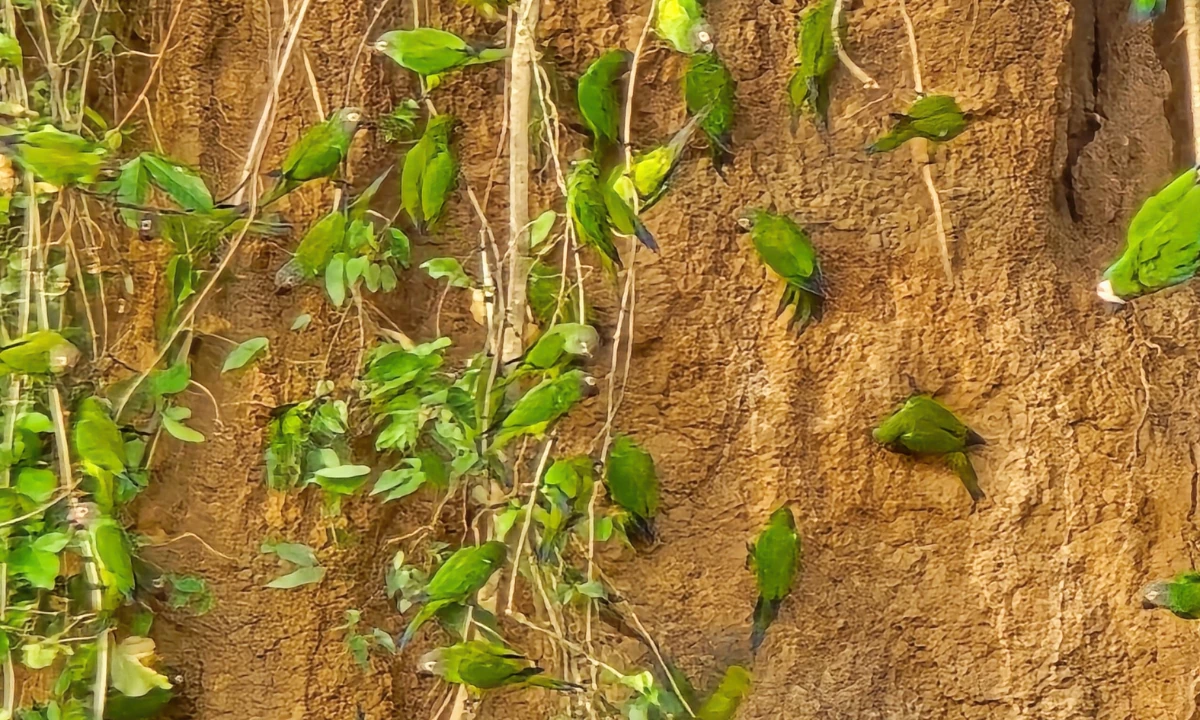
Parrots, Parakeets, and Macaws in Tambopata – Puerto Maldonado
Several types of parrots and parakeets live together in Tambopata. MACAWS (such as the scarlet macaw, blue-and-yellow macaw, among other species) are the largest and most colorful. PARROTS usually refers to medium-sized species such as Amazonian parrots (for example, Amazona farinosa) or the smaller blue-headed parrots and mealy parrots. PARAKEETS are smaller relatives, similar to parakeets.
Every morning, these birds fly from the jungle toward the clay licks to form spectacular flocks of colors. Before you know it, dozens of brightly colored parrots, macaws, and parakeets are flying toward the trees right in front of you. Seeing this combination is typical at the clay licks of Tambopata and makes birdwatching so impressive. In one place, you can observe everything from huge red macaws to small neon-green parakeets.

Tours to Visit the Parrot Clay Licks in Tambopata
Local operators offer early-morning boat excursions with specialized guides to visit the clay licks of Tambopata. For example, Peru Jungle Trips organizes short trips starting from 1.5 hours, using observation platforms to spot seven to ten species of birds consuming nutrient-rich clay. There are also 2- to 4-day combined itineraries to explore multiple areas such as Chuncho, Colorado, Cachuela, and Ocho Gallinas, incorporating night walks and wildlife observation under a respectful approach.
Note: Tours depart from Puerto Maldonado or the lodges along the Tambopata River. It is recommended to book with Peru Jungle Trips in advance due to the high demand for early-morning boats.
The best tours for Parrot and Macaw Watching in Tambopata:
- Macaw Clay Lick Tour (2 Days)
- Chuncho Macaw Clay Lick (3 Days)
- Chuncho Macaw Clay Lick (4 Days)
- Collpa Chuncho Macaw Clay Lick + Sandoval Lake (4 Days)
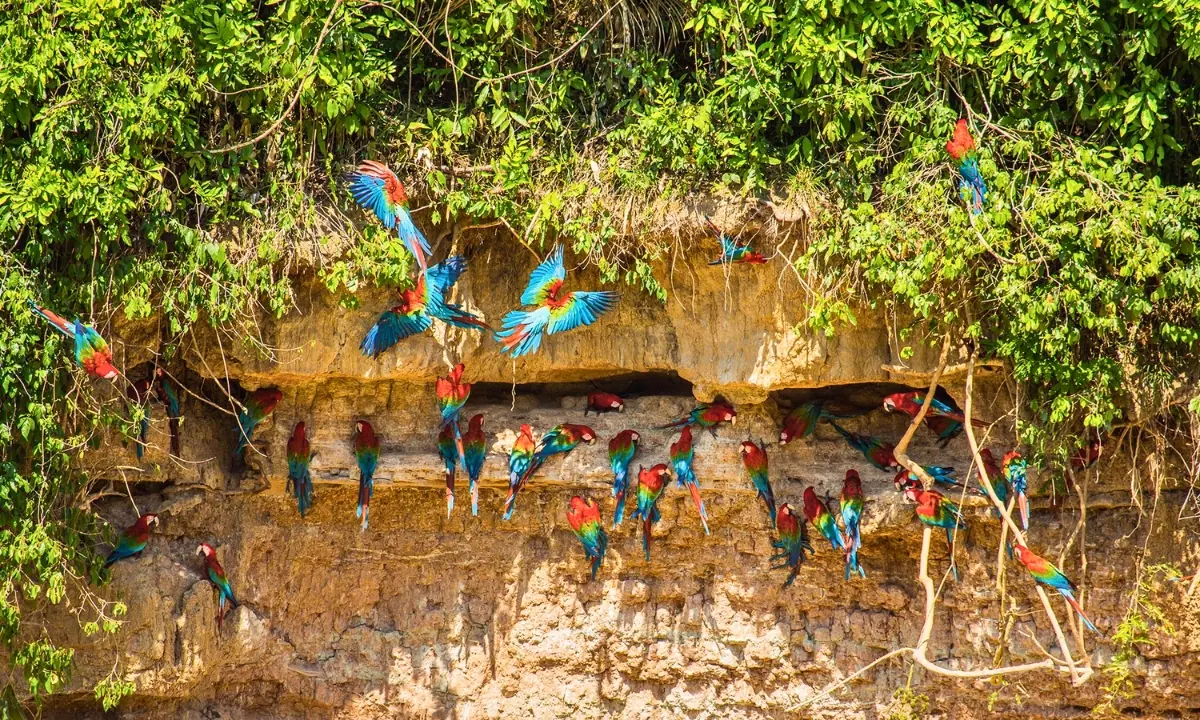
What Is the Best Time to Visit the Clay Licks of Tambopata?
The good news is that the clay licks of Tambopata receive birds all year round. However, the best time of day is early morning: parrots begin arriving from 5:00 a.m., so it is recommended to leave before sunrise. In terms of season, the dry season (May-October) offers clearer mornings, while the rainy season (November-March) usually brings larger flocks of birds together.
In any case, experts agree that peak activity occurs with the first rays of sunlight, after which the presence of birds decreases around midday. Plan your visit between May and October if you prefer clear skies, or between November and March if you want to see even more parrots feeding.
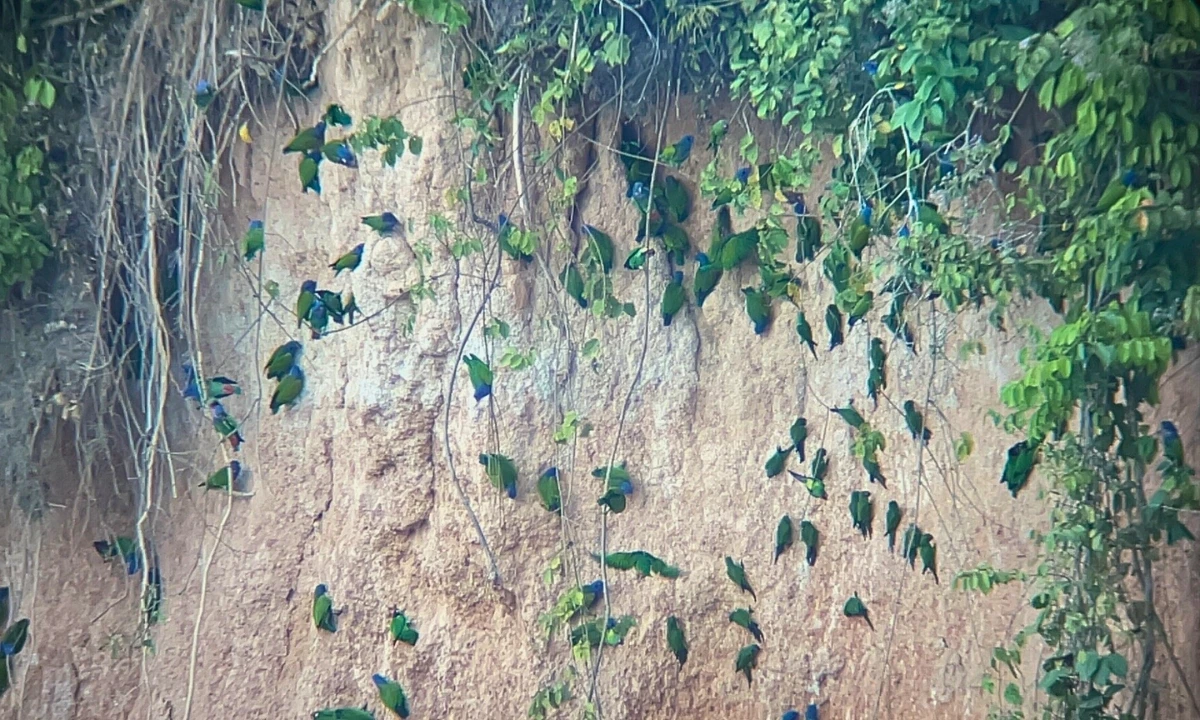
Frequently Asked Questions About the 5 Best Parrot Clay Licks in Tambopata
1. Why Do Parrots Eat Clay at the Clay Licks?
Parrots consume clay from the clay licks to complete their diet. The clay contains minerals (sodium, potassium, etc.) that help neutralize toxins and regulate their metabolism. This supplement is vital in the Amazon rainforest, where ripe fruits are not abundant and nutrients such as salt are scarce.
2. What Is the Best Time of Day and Year to See Parrots in Tambopata?
The clay licks can be visited at any time of the year, but getting up early is key. Parrot activity reaches its peak right at dawn (approximately 5:00–9:00 a.m.). It is recommended to arrive before 5:00 a.m. so you do not miss the arrival of the flocks. In general, the dry season (May-Oct) offers crisp mornings and clear skies, while the rainy season (Nov-Mar) usually attracts more birds. In any case, you will see activity at the clay licks as soon as the sun rises.
3. What Bird Species Can Be Seen at the Parrot Clay Licks in Tambopata?
There are at least 16 species of parrots in Tambopata. At the clay licks, you will see large macaws (such as the scarlet macaw Ara macao, blue-and-yellow macaw Ara ararauna, red-and-green macaw Ara chloropterus, and even the blue-headed macaw), as well as Amazonian parrots (yellow-headed, blue-headed, etc.) and parakeets of many colors. The Colorado Clay Lick attracts 17 species of parrots. You will also see aratingas (“sun parrots”), smaller cockatoos, and flocks of parakeets. In addition to birds, monkeys (howler, capuchin), tapirs, and deer often appear at the clay licks to drink clay.
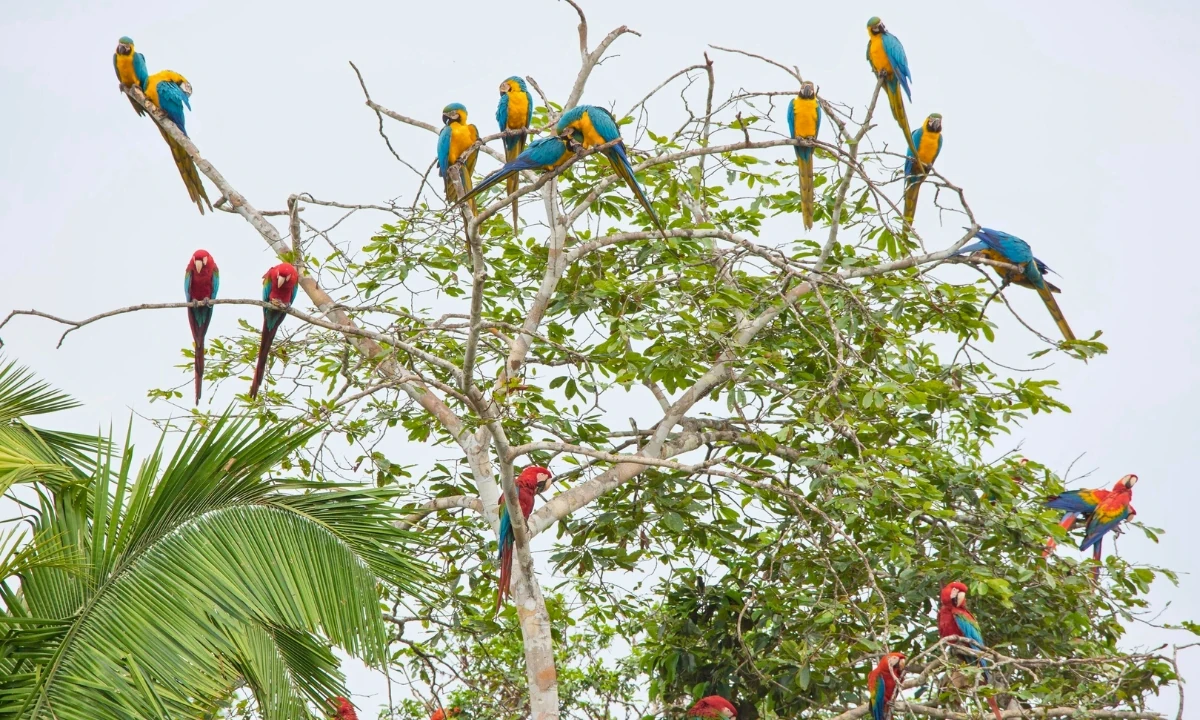
The Tambopata National Reserve offers five must-visit parrot clay licks: Chuncho, Colorado, La Cachuela, Hermosa, and Ocho Gallinas. Each one offers a unique window into the world of Amazonian parrots. Contact us and book our parrot-watching tours in Puerto Maldonado today.