
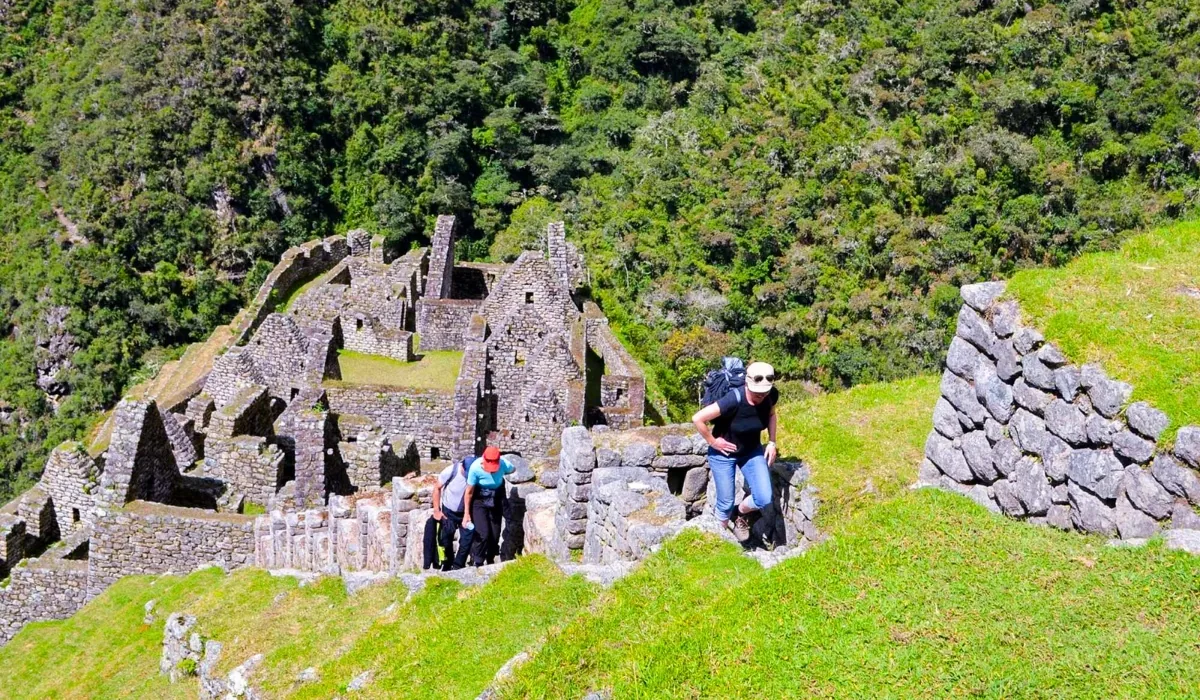
The Inca Trail to Machu Picchu route combines spectacular landscapes with the living history of the Incas. Along the journey, numerous archaeological sites on the Inca Trail to Machu Picchu are discovered, from Inca terraces to ancient temples. Every mile is a walk through the Inca past. At the end of the trek, reaching the sacred citadel rewards you with views of Machu Picchu. To undertake this journey, it is mandatory to hire a tour with an official guide, which includes permits, transportation, luggage handling, and meals.
Inca Trail to Machu Picchu: One of the Best Hikes in the World
The Inca Trail to Machu Picchu is one of the most famous hikes in the world. Along its ~39 km, you cross valleys, suspension bridges, and cloud forest while following ancient Inca paths. The typical itinerary lasts 4 days, each day with 5–7 hours of hiking. Today it can only be done guided and with limited daily permits. Professional 4D tours include transfers to the starting point, tents, meals, cooks, porters, and bilingual guides.
Archaeological Sites Before the Inca Trail
Ollantaytambo
Ollantaytambo is the Inca fortress in the Sacred Valley where the trek begins. It was a military, religious, and agricultural center of great importance. Notable features include its Temple of the Sun, the Hall of the 10 Niches, and the Baths of the Ñusta, all built with enormous Inca stone blocks. Its wide stepped terraces showcase Inca agricultural engineering.
What to See in Ollantaytambo:
- Temple of the Sun: polished stone staircases.
- Hall of the 10 Niches: ceremonial hall with Inca niches.
- Baths of the Ñusta: Inca ceremonial fountains.
- Inca agricultural terraces: large platforms on the mountainside.
- Inca fortress: controlled access to the Urubamba Valley.

Archaeological Sites Along the Inca Trail to Machu Picchu
Llactapata – The First Archaeological Complex on the Route
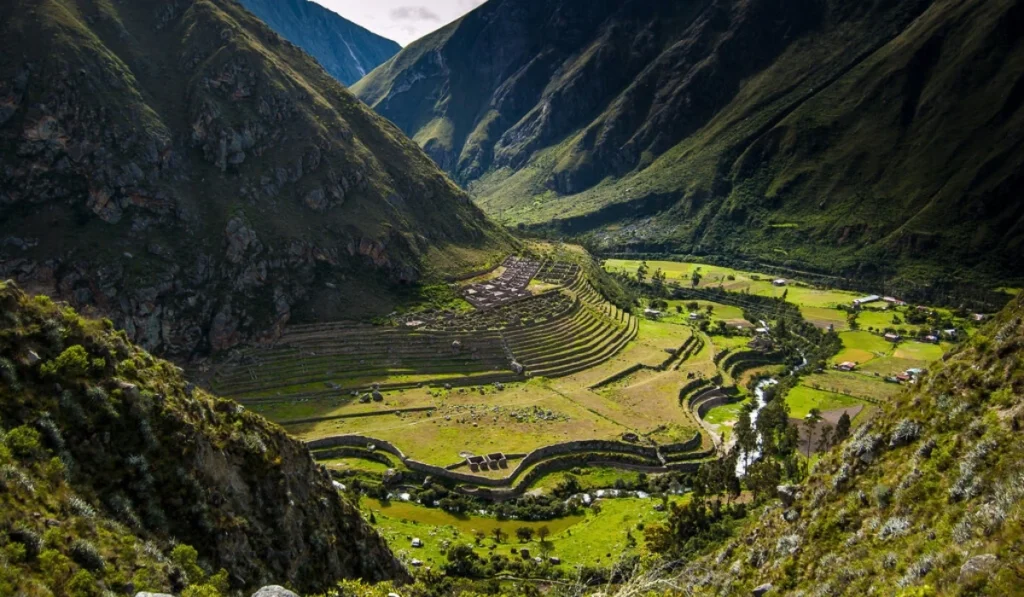
Llactapata is one of the first Archaeological Sites on the Inca Trail to Machu Picchu. It was an urban and agricultural center that monitored the route. Its stepped terraces used to cultivate potatoes, corn, and quinoa stand out. There are also trapezoidal plazas and well-preserved irrigation channels.
What to See in Llactapata:
- Inca agricultural terraces: mountain platforms.
- Plazas and stairways: Inca ceremonial areas.
- Inca irrigation channels: agricultural hydraulic system.
- Pulpituyoc ceremonial complex: main plaza with altar.
Runkurakay – Circular Archaeological Site on the Inca Trail
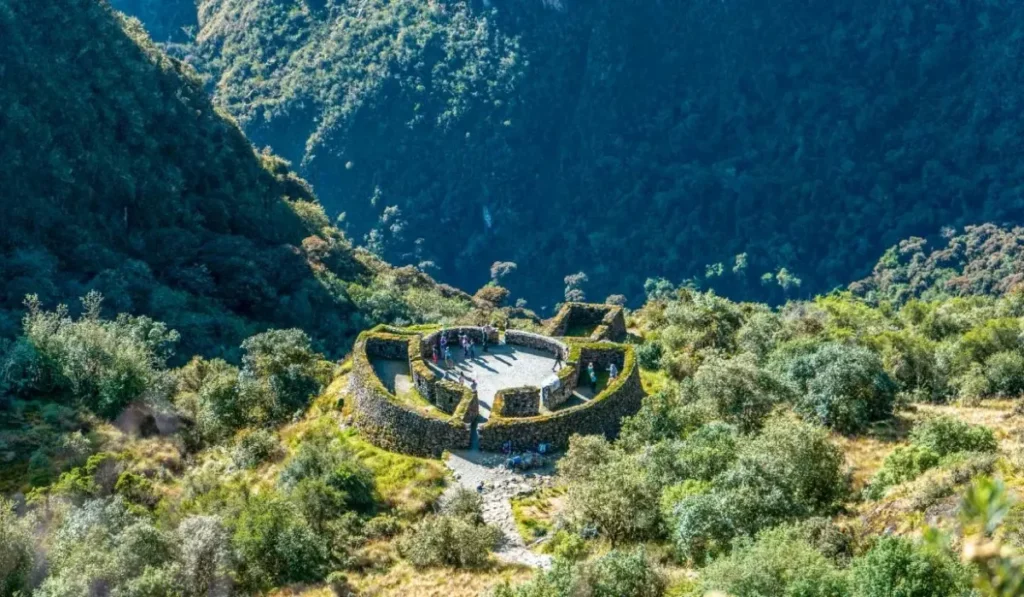
Runkurakay, at 3,760 m, features a unique semicircular design. It functioned as an Inca tambo (inn) for messengers and had religious purposes with views over the valley. Its structure includes six chambers, niches for idols, and typical trapezoidal doorways.
What to See in Runkurakay:
- Semicircular construction: central plaza with Inca rooms.
- Six chambers with niches: ceremonial recesses.
- Trapezoidal doorways: Inca entrance frames.
- Viewpoint at 3,760 m: panoramas over the Urubamba Valley.
- Inca tambo: shelter and worship center along the route.
Sayacmarca – The Inaccessible City in the Mountains
Sayacmarca, Quechua for “inaccessible town,” is an Inca citadel at 3,625 m. It is built on a mountain ridge with steep stairways and plazas. About 200 Inca inhabitants lived here, devoted to the worship of the sun, the moon, and the mountains. Notable features include its walls with niches (recesses) and structures fitted into the cliffside.
What to See in Sayacmarca:
- Steep Inca stairways and terraces.
- Walls with niches: Inca ceremonial recesses.
- Semicircular buildings: temples overlooking the valley.
- Main trapezoidal plaza: Inca administrative center.
Phuyupatamarca – The City Above the Clouds
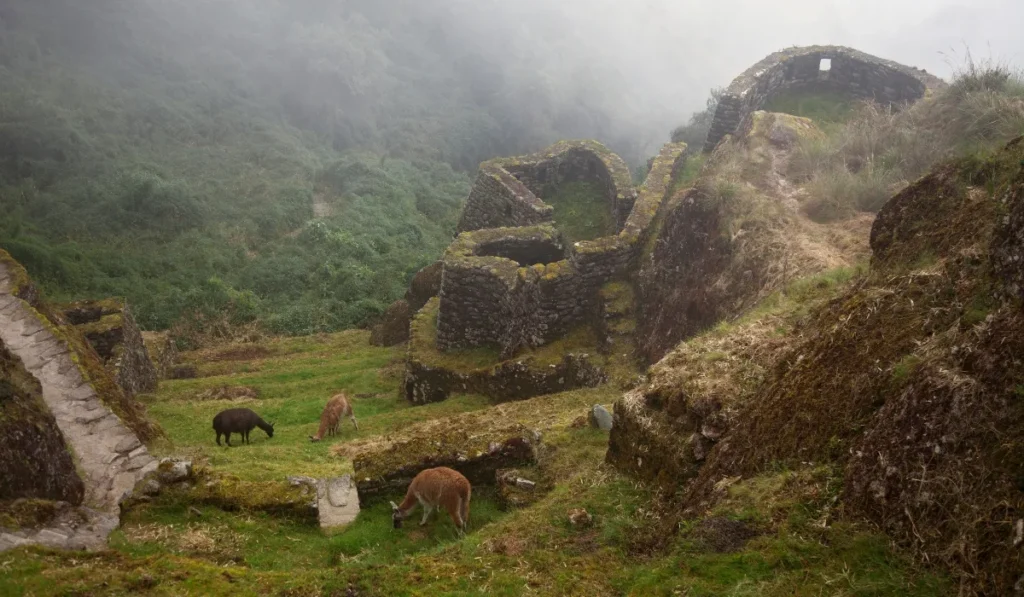
Phuyupatamarca, Quechua for “city above the clouds” (3,580 m), is an Inca complex on the mountain. Built by order of Pachacútec, it was an urban, agricultural, and religious center. It features sun temples at the summit, three ceremonial plazas, and 15 stone enclosures. Its water channels and ceremonial fountains used in purification rituals stand out. It is one of the most impressive Archaeological Sites on the Inca Trail to Machu Picchu. From here, the Urubamba Valley is dominated.
What to See in Phuyupatamarca:
- Aligned Inca plazas and stairways.
- Sun temple at the upper section.
- Ceremonial channels and fountains for Inca rituals.
- Agricultural terraces on the mountainside.
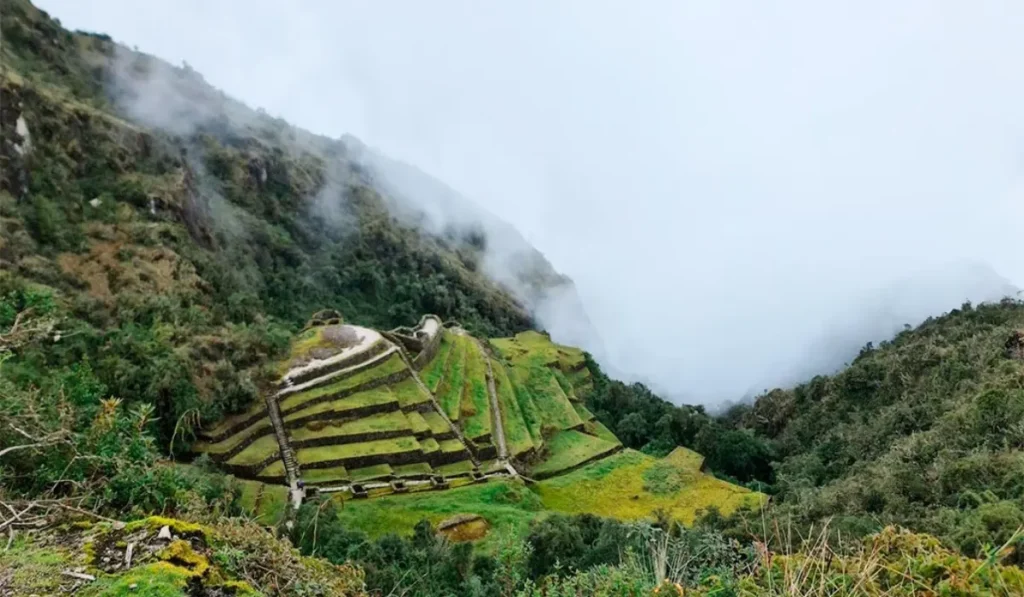
Intipata – Inca Agricultural Terraces
Intipata, “Terrace of the Sun” (2,840 m), was an Inca control post with enormous agricultural terraces. Potatoes, corn, oca, quinoa, and coca were cultivated here. Its terraces exceed 2 m in height, demonstrating the technique used to retain soil and water. Intact irrigation channels and a ceremonial wall with niches have also been found. From Intipata, there is a spectacular view of the Urubamba Valley.
What to See in Intipata:
- Giant Inca agricultural terraces.
- Well-preserved Inca irrigation channels.
- Ceremonial enclosure with a wall of niches.
- Natural viewpoint with panoramic views.
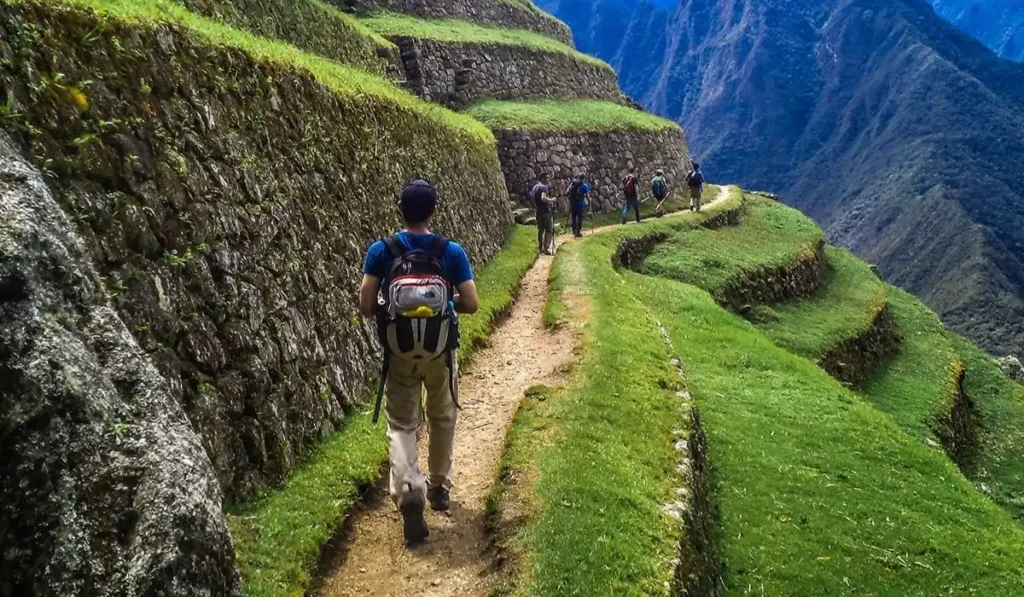
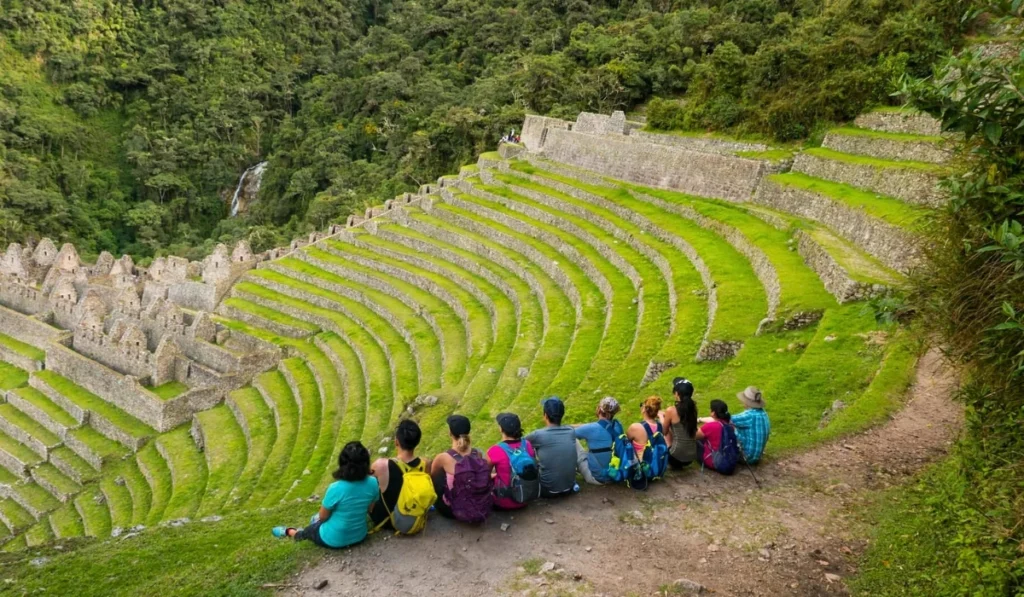
Wiñay Wayna – The Most Impressive Site Before Machu Picchu
It is considered one of the most spectacular Archaeological Sites on the Inca Trail to Machu Picchu. Wiñay Wayna is considered one of the most spectacular Archaeological Sites on the Inca Trail to Machu Picchu. Wiñay Wayna, “Forever Young,” is the last great Inca citadel before Machu Picchu. Built in polished granite, it combines immense agricultural terraces with several levels of Inca constructions. There are enclosures for the nobility, sun temples, and an elaborate system of ceremonial fountains (ritual baths). It served as a royal palace and a food supply center for the empire. From here, the Vilcanota River can be seen.
What to See in Wiñay Wayna:
- Stepped Inca terraces and plazas.
- Inca noble buildings (temples and palaces).
- Ceremonial fountains and Inca baths (purification).
- Agricultural citadel that supplied food to Cusco.
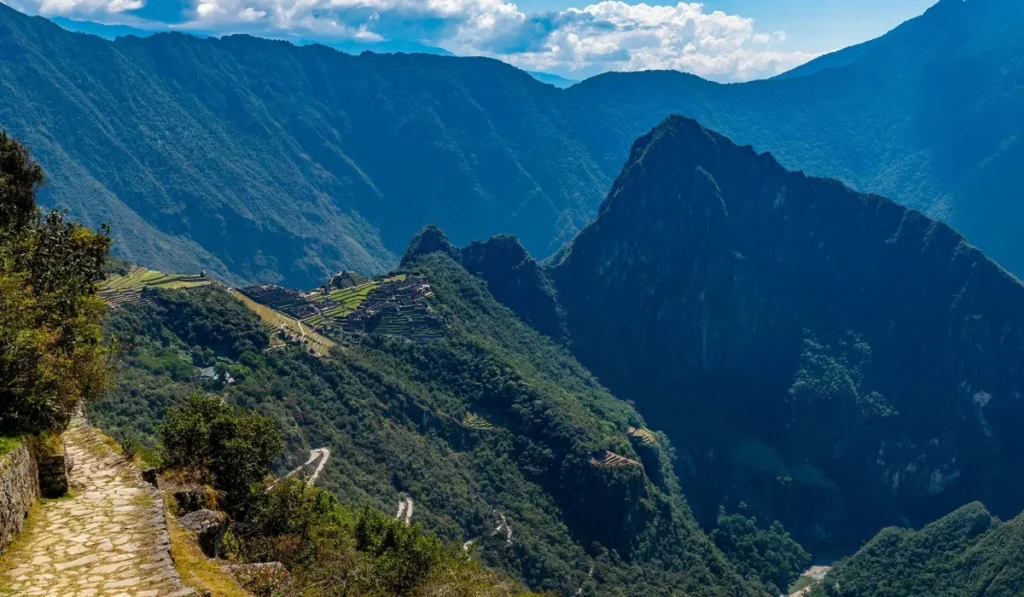
Intipunku – The Sun Gate to Machu Picchu
Intipunku, or the Sun Gate, is the Inca entrance to Machu Picchu. Its name means “Sun Gate,” as the Incas aligned the windows with the solstice. This stone structure connected the Inca Trail with the citadel. It served as the Inca control post to monitor the entry of pilgrims. Upon arrival, the first panoramic view of Machu Picchu is obtained.
What to See in Intipunku:
- Inca access structure with ritual windows.
- Panoramic viewpoint with the first view of Machu Picchu.
- Nearby Inca terraces guiding the final stretch.
- Main Inca control post of the entrance.
Chachabamba – Ceremonial Center Near the Urubamba River
Chachabamba (2,170 m) is an Inca sanctuary dedicated to water. It served as a ceremonial center where pilgrims purified themselves before reaching Machu Picchu. Up to 14 ritual pools and stepped fountains (phaqchas) connected by channels have been discovered, designed for sacred baths. This sacred site includes ceremonial walls and a ritual altar.
What to See in Chachabamba:
- Stone ceremonial baths (Inca pools).
- Network of ritual channels and fountains.
- Sacred stepped fountains (phaqchas).
- Inca purification site before Machu Picchu.
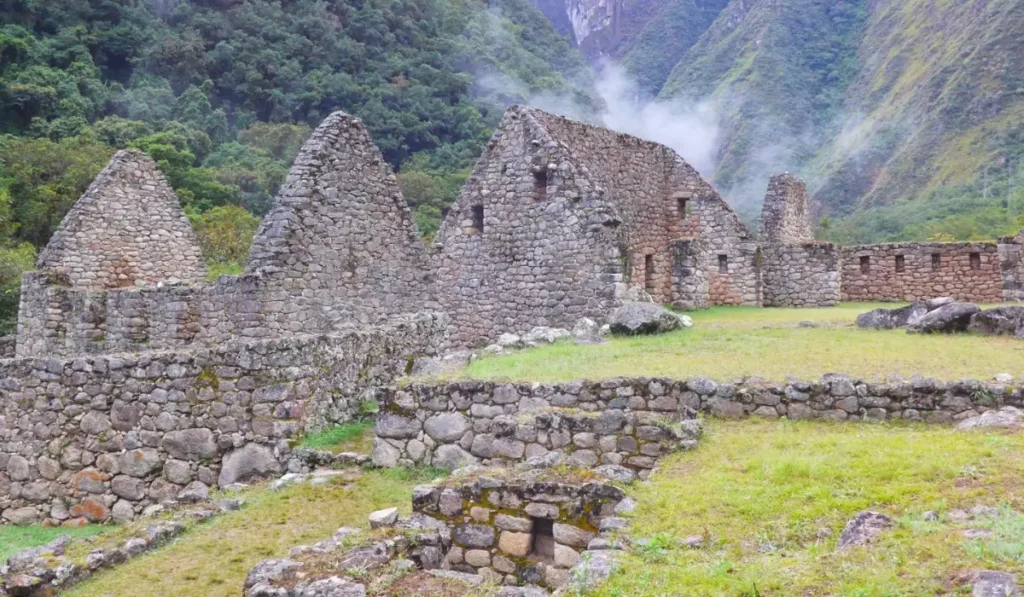
Choquesuysuy – Lesser-Known Archaeological Site
Choquesuysuy is a small Inca complex on the opposite bank of the Vilcanota River, almost hidden among the vegetation. It consists of scattered Inca platforms and terraces. This site likely served as a viewpoint and road surveillance post. Choquesuysuy is one of the Archaeological Sites on the Inca Trail to Machu Picchu least visited, yet very interesting. From the trail, its remains can be seen from afar.
What to See in Choquesuysuy:
- Inca terraces on the opposite riverbank.
- Observation platforms overlooking the valley.
- Small Inca enclosures for transit and control.
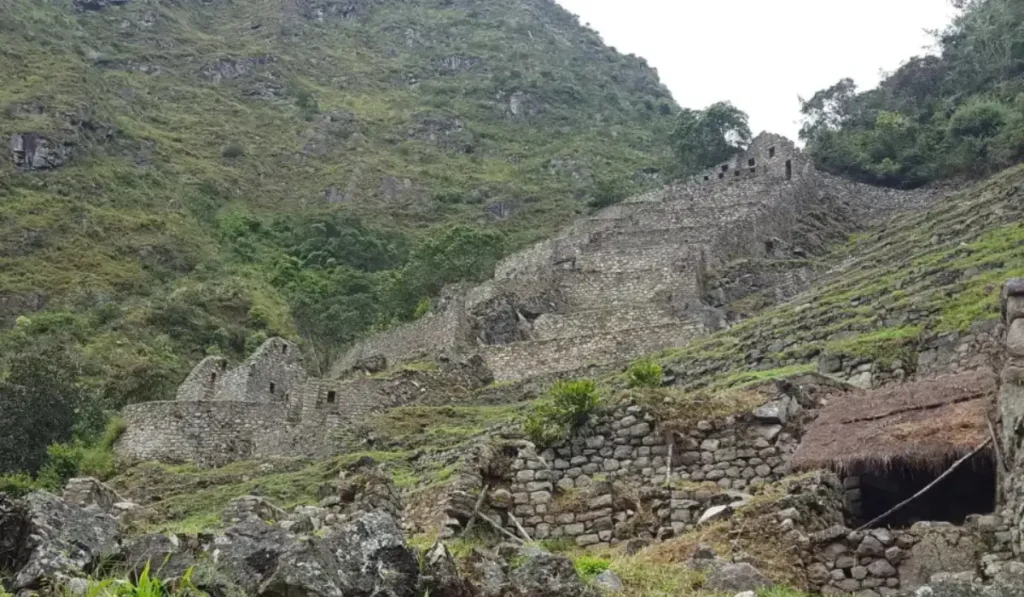
Mountain Passes on the Inca Trail to Machu Picchu
- Warmiwañusqa (Dead Woman’s Pass): At 4,215 m, it is the highest pass on the Inca Trail. They call it “Dead Woman” because of its mountain profile. Reaching it is the greatest physical challenge of the trek. From the summit, hikers enjoy spectacular panoramas of snow-capped peaks such as Salkantay and Veronica.
- Abra Runkuraqhay: Shortly after Warmiwañusqa, this 3,870 m pass is crossed. It is a natural viewpoint from which the snow-capped Salkantay and the cloud forest can be seen. On its slopes, there are remains of Inca tambos, indicating that it served for offerings and road control. This pass is the prelude to the descent toward Sayacmarca and Phuyupatamarca.
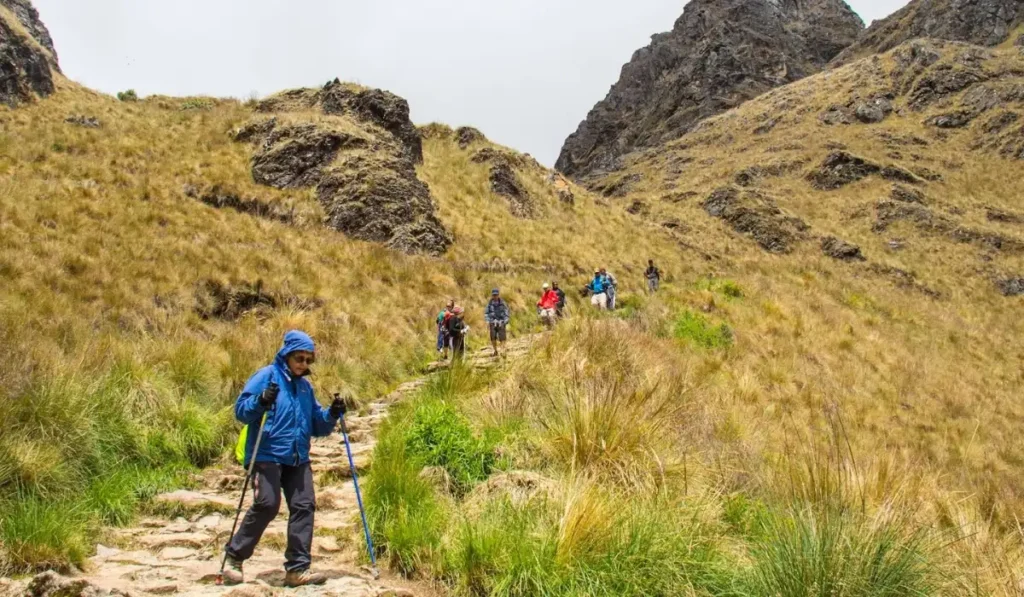
Campsites on the Inca Trail to Machu Picchu
During the hike, you sleep at official campsites, usually next to archaeological sites. The most commonly used campsites are:
- Ayapata Campsite: next to the river, at the foot of Warmiwañusqa.
- Chaquicocha Campsite: near Sayacmarca and Phuyupatamarca.
- Wiñayhuayna Campsite: beside the Wiñay Wayna site, a few km from Machu Picchu.
All campsites include tents, dining tents, and kitchen staff. Each night, porters and cooks set up the camp and prepare the meals. Sleeping at these points allows you to rest before the next stage of the trail.
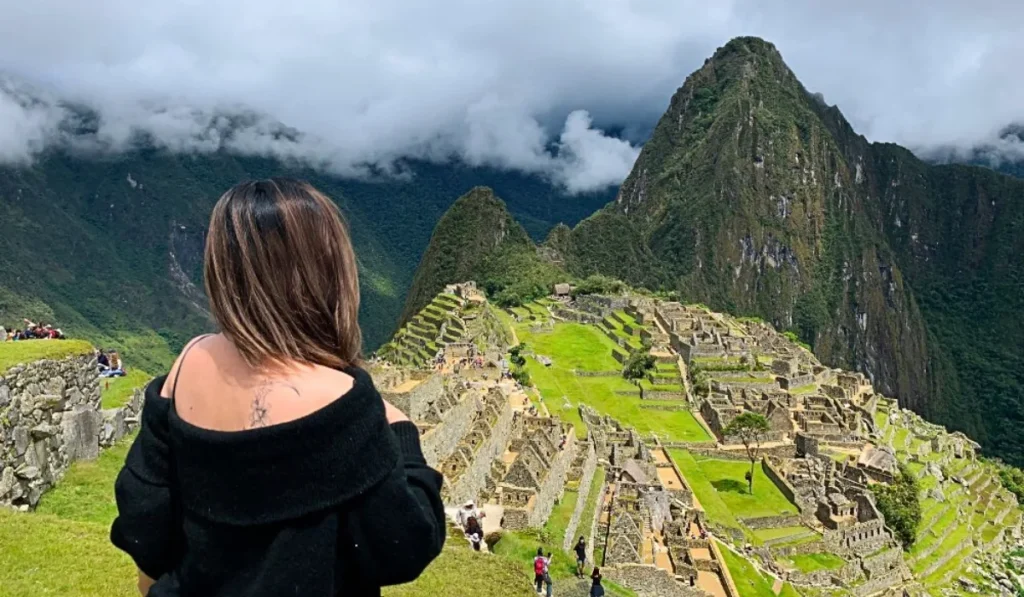
Frequently Asked Questions about the Archaeological Sites on the Inca Trail to Machu Picchu
1. Which archaeological sites are visited on the Inca Trail?
The classic 4-day trek covers all the main archaeological sites on the Inca Trail to Machu Picchu. In addition to Machu Picchu, it includes visits to Llactapata, Runkurakay, Sayacmarca, Phuyupatamarca, Intipata, Wiñay Wayna, Chachabamba, and Choquesuysuy. All of them are part of the ancient road network of the Inca Empire (qhapac ñan).
2. How do I book the Inca Trail tour?
It is only possible to hike the Inca Trail by booking a guided tour. You must reserve with an authorized agency, which manages government permits, transportation, and logistics. The 4D package includes entrance tickets, a Spanish-speaking (or English-speaking) guide, campsite accommodations, meals, and equipment. Due to high demand and limited permits, we recommend booking several months in advance.
Why is it important to do the Inca Trail with a tour guide?
Having an expert guide is mandatory and enriches the experience. The guide explains the history and function of each archaeological site on the Inca Trail to Machu Picchu, pointing out details you would otherwise overlook. It also guarantees safety and compliance with regulations. Hiking with an authorized guide and group is the only legal way to visit these Inca monuments.
Exploring the Archaeological Sites on the Inca Trail to Machu Picchu is living a unique experience in the world. Each structure reveals the incredible Inca engineering and spirituality. If you are looking for an unforgettable adventure, this archaeological journey is the best decision. Booking in advance will allow you to secure your spot on one of the most extraordinary hikes on the planet. Contact us and book your tour with Peru Jungle Trips today.