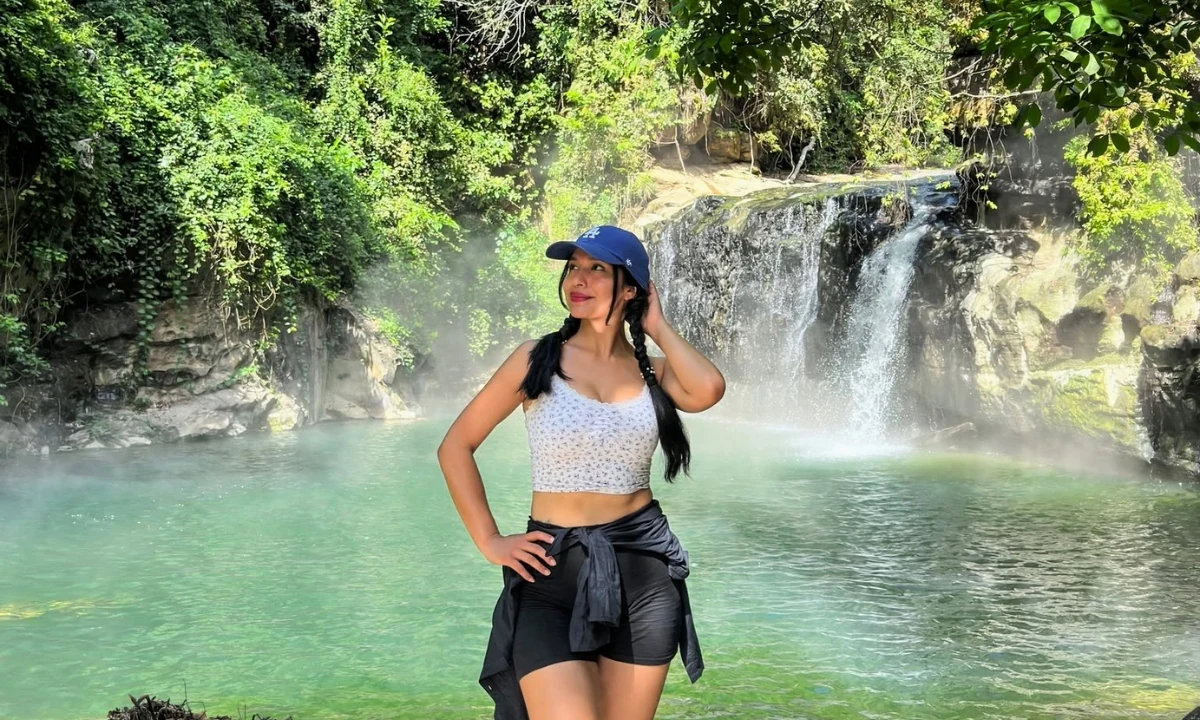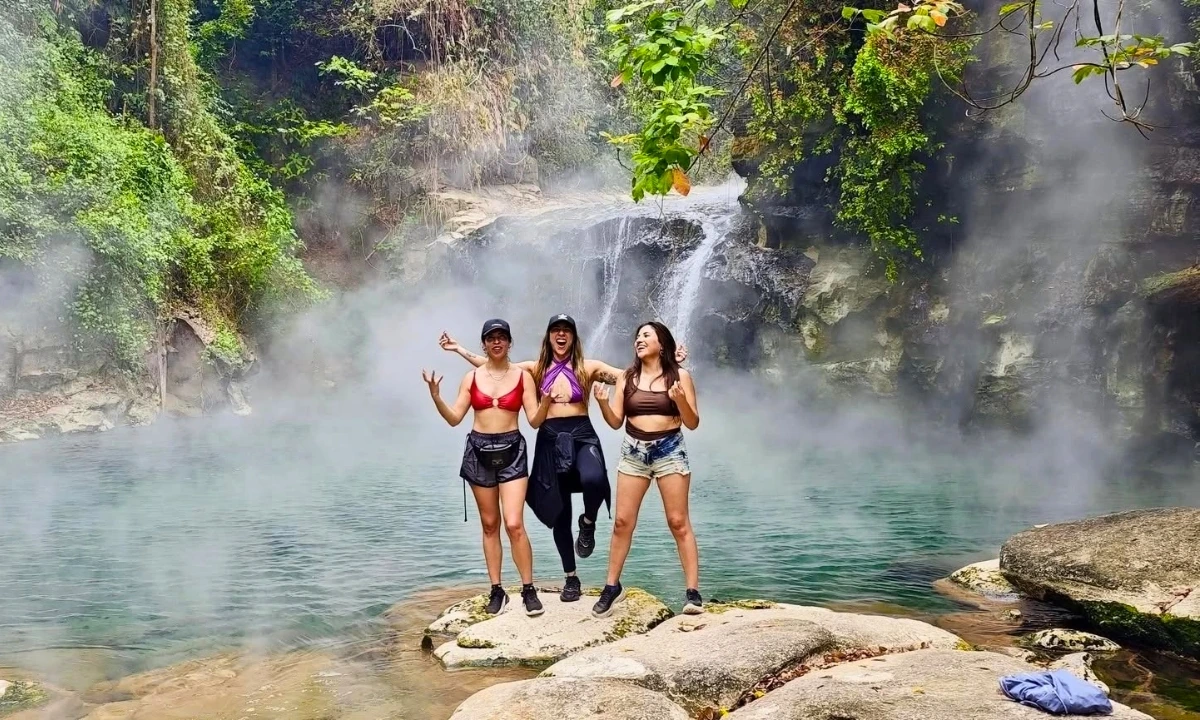
Far from conventional tourist routes, in the heart of the Peruvian Amazon, a unique ecosystem in the world is hidden: the boiling river in Peru, ancestrally known as Shanay Timpishka. For generations, local people have shared myths and legends about a mystical river that boils in Huánuco; however, its exact location in the province of Puerto Inca, its extreme thermal conditions, and its true biological impact remained hidden and a mystery to the vast majority.
Today, the Shanay Timpishka River is internationally recognized as one of the most fascinating and unusual geothermal phenomena on the planet, as its waters reach temperatures of up to 94 °C without the presence of a nearby volcano. Beyond its mysticism and beauty, this stream of deep thermal waters has become a crucial ecosystem for science, showing us how energy from beneath the Earth’s surface connects directly with the rich biodiversity and fragile forests of the high jungle.
At Peru Jungle Trips, we specialize in designing the best adventure tours in the Peruvian jungle. That is why today we invite you to discover the secrets, history, and everything you need to know to explore this astonishing river that defies nature.
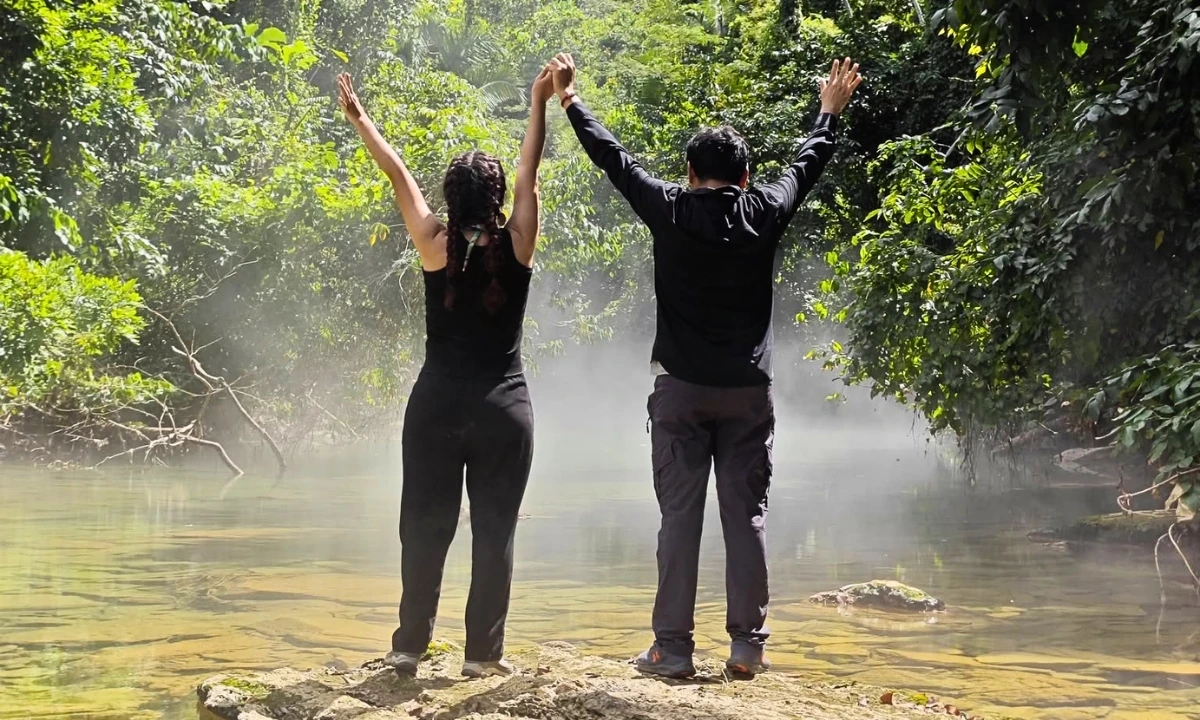
Where is the boiling river in Peru located?
The boiling river or Shanay Timpishka is located in the central part of the Peruvian Amazon, specifically in the district of Honoria, within the department of Huánuco. This impressive ecosystem is located very close to the border with Ucayali, protected within the Mayantuyacu traditional medicine center, and its waters continue until they flow into tributaries of the Amazon River.
The dimensions and power of this place make it a true giant of nature:
- Colossal length: The river is more than 6 kilometers long.
- Great depth: In its widest sections, it reaches 30 meters in width and up to 4.5 meters in depth.
- Extreme heat: Extreme temperatures are recorded that approach the boiling point, reaching up to 95 °C.
Due to these impressive characteristics, Shanay Timpishka is currently considered by scientists to be the largest boiling river in the world.
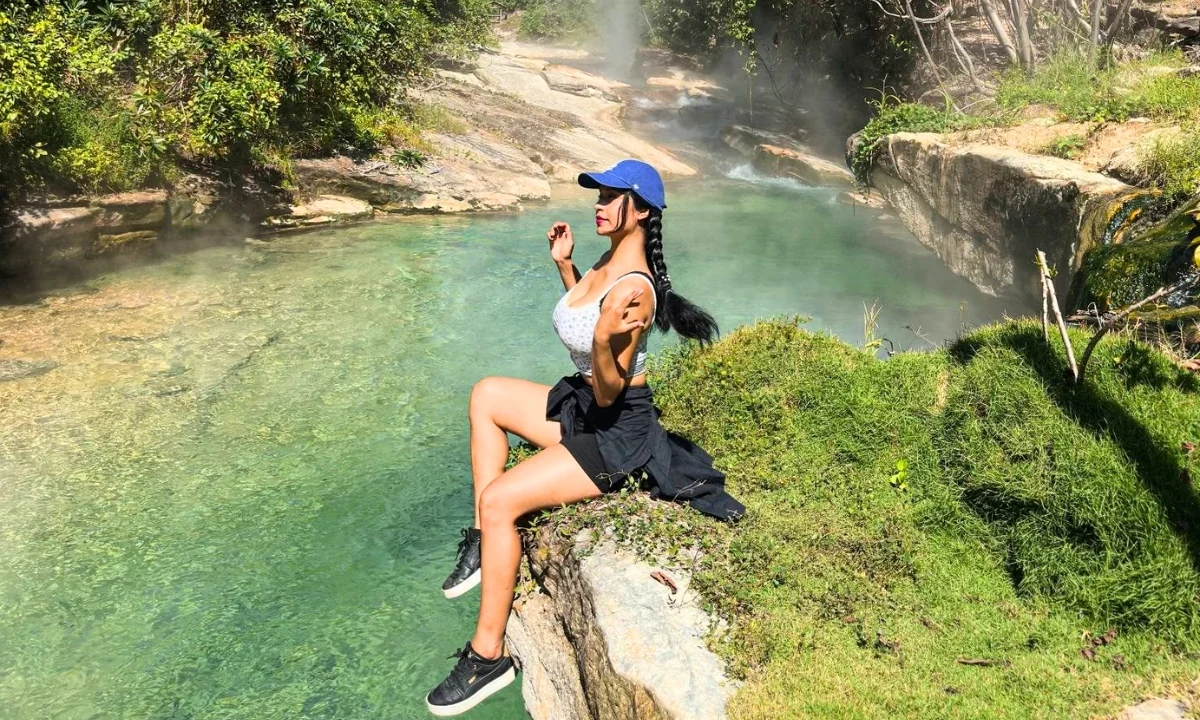
Why does the Shanay Timpishka River boil?
This is a frequently asked question among Latin American, European, and North American researchers. As they investigated, they discovered that there is no nearby volcano, making the river that boils in Peru a unique geological phenomenon. The strongest and most widely accepted theory indicates that rainwater seeps deep underground, heats up with energy from beneath the Earth’s surface, and then rises to the surface through geological faults. According to geologist Andrés Ruzo, it is as if the “arteries of the Earth” were failing or releasing their heat.
Research conducted by Ruzo (2011), Kullberg, and his colleagues (2024–2025) indicates that, over the course of a year, the temperatures of the Shanay Timpishka River developed as follows:
- Colder areas: The annual average temperature is between 24 °C and 25 °C.
- Heating: Groundwater increases its temperature by 25 °C for every kilometer of depth.
- Hottest areas: In the most active sections, temperatures exceed 90 °C.
Despite the research conducted along more than 2 kilometers of the river, the hottest areas have not yet been determined precisely. This is because the river has a total length of more than 6 kilometers, and some of its hottest areas remain hidden in the jungle, where scientists have not been able to access them.
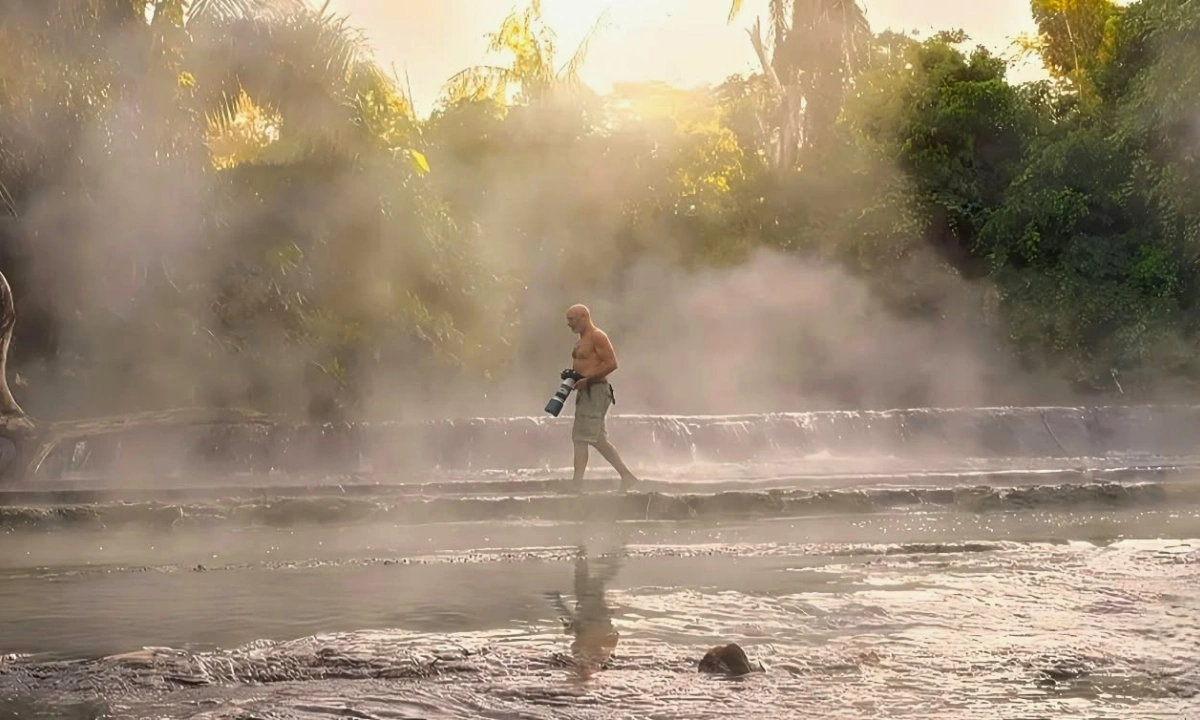
A Sacred Place Beyond a Scientific Phenomenon
The Shanay Timpishka boiling river has made headlines around the world in recent years; nevertheless, its existence was already known to local communities. According to the stories passed down by their ancestors, this river is actually a divine creation.
According to the Amazonian worldview, Yacumama (the “Mother of Water,” a powerful being in the form of a giant snake) is said to have “given birth” in this place. As a testament to this legend, near a small waterfall called “Las Tres Sirenas”, there is an enormous rock that has the exact shape of a snake’s head.
Local residents such as Ever Impicciatori are aware of the river’s sacred importance. For this reason, Ever decided to move and live near the river to protect it. He himself says that he often talks to native forest trees such as shihuacos, ishpingos, mahogany trees, and cedars, expressing his deep desire for them to remain standing, especially because trees that are more than five centuries old are being illegally logged in the surrounding area.
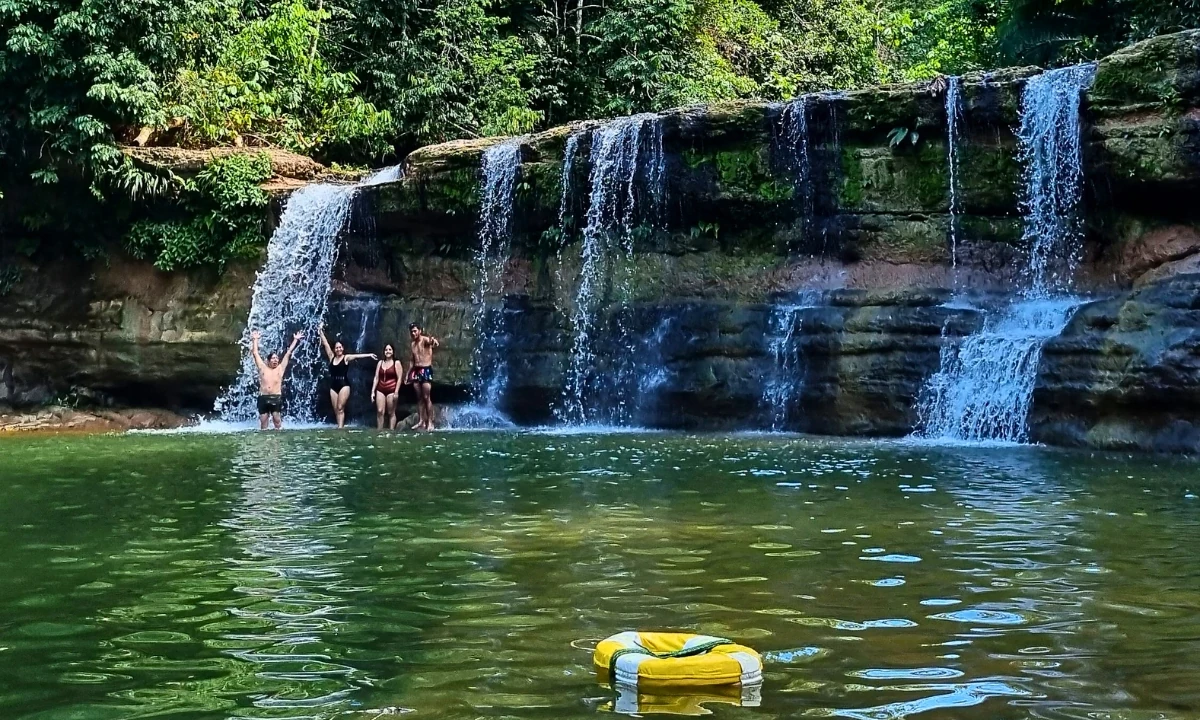
Animal Species in the Shanay Timpishka Boiling River
The existence of diverse ecosystems and microclimates is one of the most significant characteristics of the Peruvian Amazon. The findings of the team led by scientist Alyssa Kullberg also serve as a warning about the consequences that the Amazon rainforest could experience due to the arrival of climate change.
Around the hottest areas of the Shanay Timpishka River, they found less dense areas, trees such as guarea grandifolia (a tree that can reach more than 50 m in height), and other vegetation in the area showing difficulties in growth or completely dried out. The research team determined that as the river became hotter, the vegetation became less dense or absent. Consequently, due to the steam, there were also no insect or animal species in the hottest areas.
However, life finds a way in the sections where the water cools down. The Peruvian Amazon Research Institute (IIAP) conducted detailed studies on temperature distribution patterns and their biological impact. Its preliminary inventories revealed a surprisingly vibrant ecosystem in the habitable areas of the river, recording:
- 9 species of fish.
- 23 types of amphibians.
- 11 classes of reptiles.
- 28 families of insects.
These findings complement the first observations made by geologist Andrés Ruzo, who discovered that the small native fish living directly in the river’s thermal waters, whose average size does not exceed that of a little finger and which have managed to adapt to living in temperatures of up to 40 °C, mark an astonishing limit for aquatic life in the jungle.
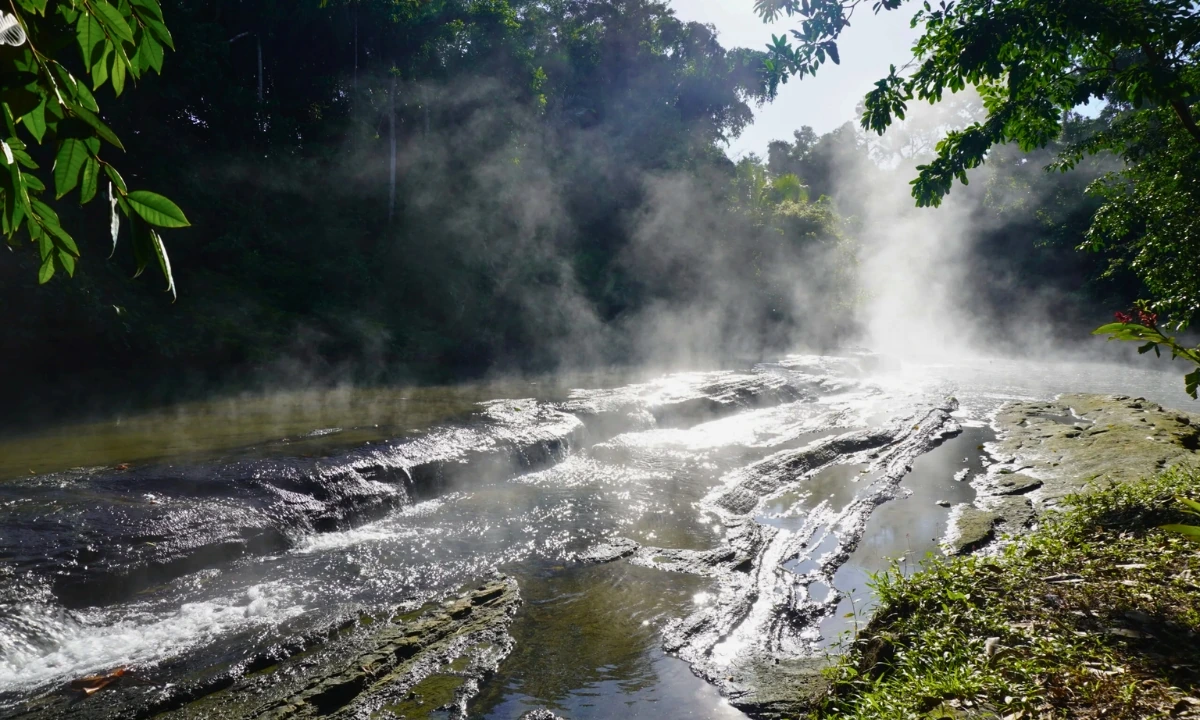
Warning About the Boiling River in Peru (Shanay Timpishka)
Despite being an extremely important area for research into the microclimates of the Amazon, the boiling river faces different dangers resulting from deforestation, illegal logging, cattle ranching, agriculture, land trafficking, among others. These problems mean that we are losing an important natural laboratory for research.
Now that you know about the Shanay Timpishka River, are you ready to discover the wonders of Peru? Contact us and discover the best of Peru.
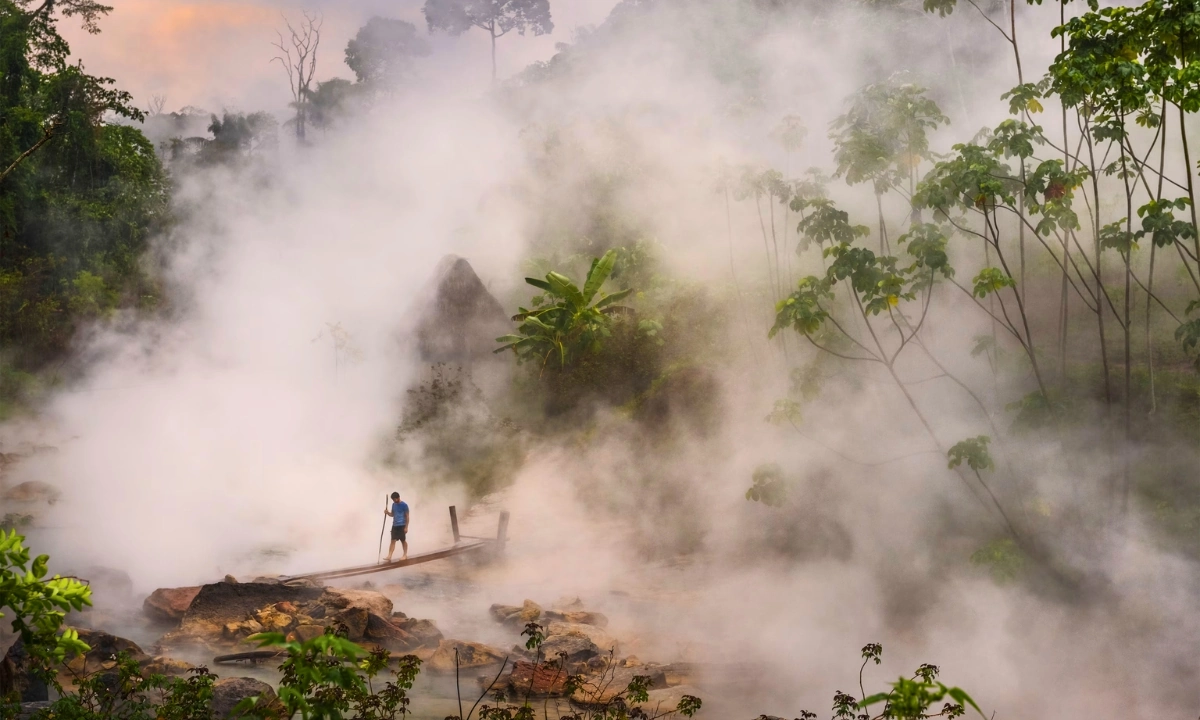
FAQs About the Boiling River in the Amazon – Shanay Timpishka
1 What is the temperature of the boiling river in Peru?
There are different temperatures along the river; its waters range from 45 °C to almost 100 °C depending on the section. This characteristic makes it one of the hottest thermal rivers documented in the world.
2 Is it safe to visit the boiling river in Peru?
Yes, it is safe as long as the visit is carried out with a specialized guide or a local resident who knows the safe areas. It is important to remember that the boiling river in Peru has extremely hot sections where a fall can be dangerous.
3 Is the Boiling River in the Amazon near Cusco, Tambopata, or Manu?
No. This boiling river is the only one found in Peru and is located in the central jungle, near Pucallpa (Huánuco/Ucayali), a region different from Cusco, Tambopata, or Manu. However, if you want to relax in thermal waters, Cusco has a wide variety of thermal waters such as those in Cocalmayo, Lares, and more; you can visit them on the various trekking routes to Machu Picchu. In the case of the Peruvian Amazon, you can visit the Shintuya thermal waters in Manu.
4 Why does the water boil if there is no volcano nearby?
That is one of the questions that researchers are seeking to answer. In the most recent research, the most widely accepted scientific theory indicates that it is a non-volcanic hydrothermal system. This means that the water is heated deep underground by the Earth’s natural heat and emerges through geological faults.
5 How much time is needed to visit the Shanay Timpishka River?
To visit the boiling river in the Amazon, the amount of time depends on the experience you want to have; most tours include at least one full day, including transportation from Pucallpa.
– The full-day tour starts in Pucallpa, from there a vehicle will take you to Campo Verde.
– From Campo Verde, you will travel along the Pachitea River, a journey that takes less than 1 hour.
– After getting off the boat, you will begin a hike until you reach the first section of the Shanay Timpishka River.
– Throughout the day, you can participate in various activities such as relaxing in designated thermal pools, visiting eco-lodges and natural medicine centers, as well as learning about Asháninka culture.
– At the end of the activities, the same route back is followed.