
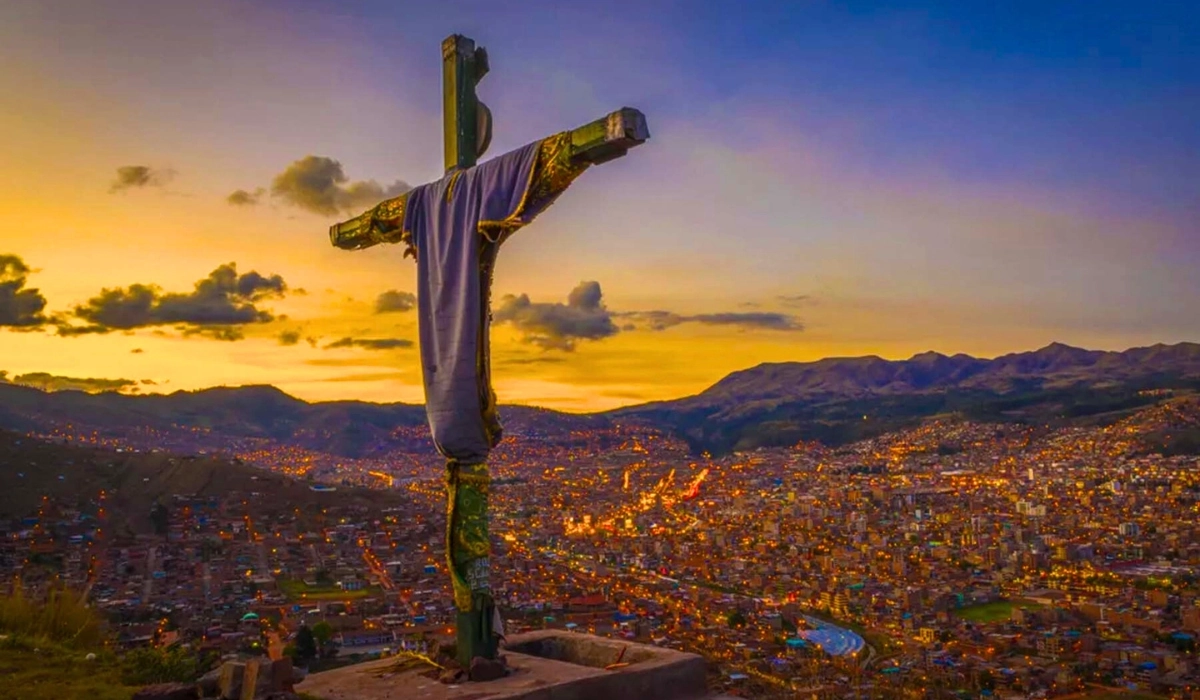
In the early decades of the 18th century, the Spanish colony sought new ways to eliminate the sacred sites of the Incas and evangelize. With this objective, they ordered the placement of crosses in various locations and sacred Inca sites (huacas), resulting in the traditional and customary festivity called “The Feast of the Cross” or “Cruz Velacuy”.
What is the origin of Cruz Velacuy?
The worship of crosses emerged as a result of the Lima Councils of the 16th century. The Lima Council was a provincial assembly in which important evangelizing regulations were established; these regulations were aimed at correcting the shortcomings that had hindered the effective Christianization of the indigenous world.
At that time (and even today), mountains were considered Apus, sacred entities, just as various sites such as huacas held spiritual significance; with the objective of fully evangelizing the Incas and their descendants, it was imposed upon them to place crosses in locations considered to be the dwellings of the Andean gods. Over time, the rural population continued the belief that the cross placed at the summit of a hill or sacred place would protect the population from harsh weather conditions and natural phenomena.
In 1950, the city of Cusco experienced a strong earthquake that destroyed several homes, especially in the Historic Center; in this context, the cross began to increase its popularity in the urban sector.
In 2014, the Ministry of Culture declared the Cruz Velacuy Festival as National Cultural Heritage. Currently, this festivity is celebrated every May 3rd.
How is Cruz Velacuy experienced in Cusco?
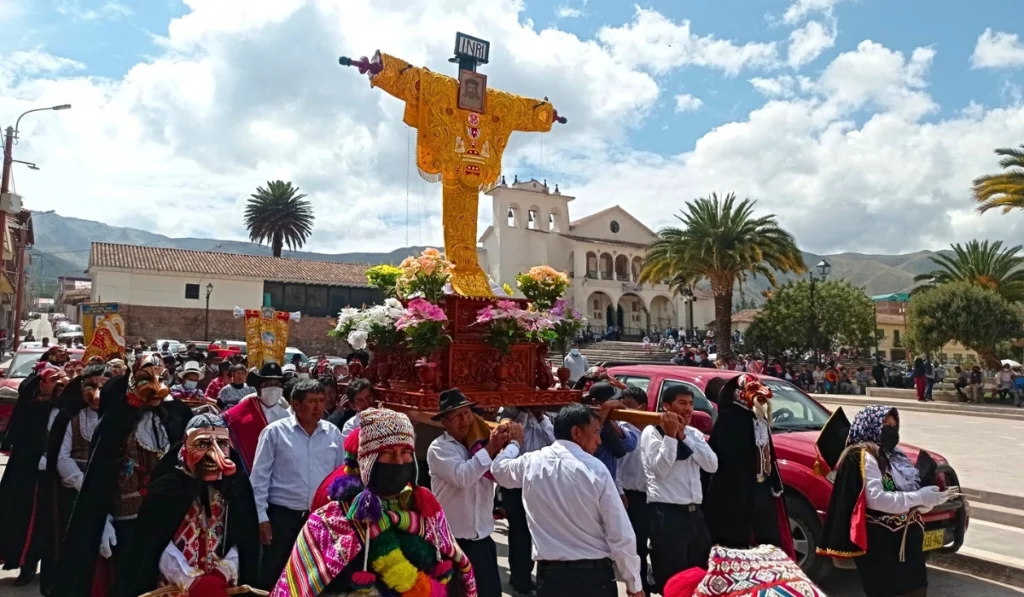
The central day of Cruz Velacuy is May 3rd; however, everything begins on May 2nd with the “Day of the Descent”, when the cross is carried from the sanctuary where it is located to the house of the carguyoq (the person responsible for organizing the festivity). The cross is accompanied throughout the journey by its faithful followers and is welcomed with dances, music, and fireworks.
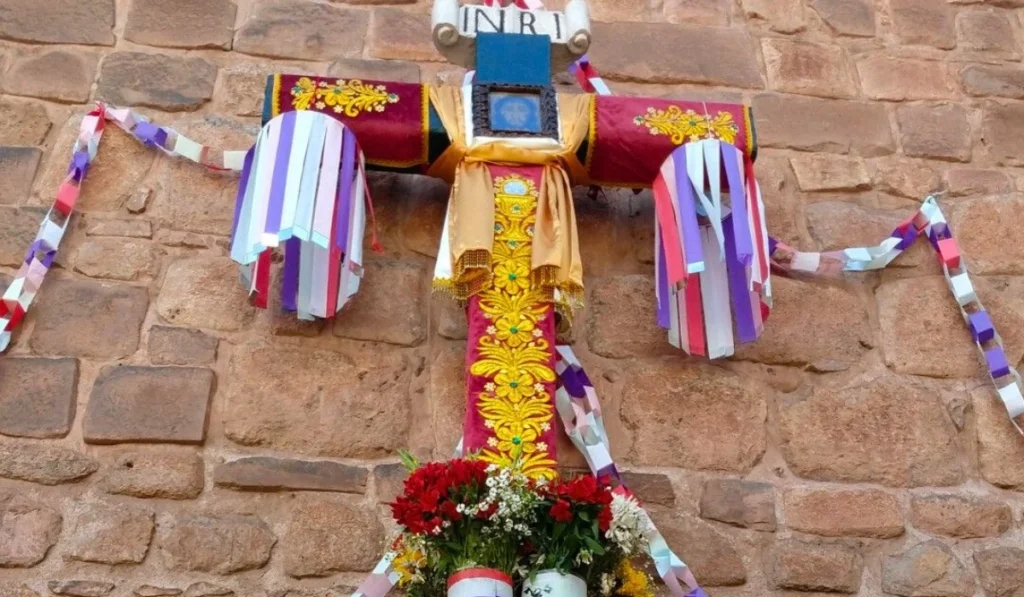
At night, devotion continues beside the cross, where faithful believers light candles and accompany it throughout the night, awaiting the central day. On May 3rd (the main day), the cross is decorated with new elements donated by the mayordomo carguyoq or by a devoted believer; a mass is celebrated, and afterward, in a procession full of music and dances, it is taken back to its place of origin. On May 4th, a Farewell Mass and a general celebration take place, bidding farewell to the cross until the following year.
Important facts about Cruz Velacuy
- Some crosses cannot be moved due to their location and size, so believers make a pilgrimage to the place where the cross is located.
- The crosses are surrounded by candles, and throughout the night, believers share drinks such as fava bean punch due to the cold nights in Cusco.
- Processions are usually accompanied by music and religious expressions.
- Some altars are decorated with flowers, colored candles, and even the traditional Mirror Altar.
- In provinces such as Paruro, this festivity takes on special meaning because it coincides with the harvest of local crops such as corn.
From Andean mysticism to the magic of the Amazon
The month of May marks the beginning of the dry season in Cusco. During this time, many travelers take the opportunity to connect their trip to Cusco with an adventure in the heart of the Peruvian Amazon. At Peru Jungle Trips, we understand that it is important to visit a place and immerse yourself in its culture; that is why all our packages include cultural experiences that will allow you to connect with the identity, energy, and local culture. Book your next adventure with us, contact us now.