
Exploring the wildlife of Tambopata allows you to discover one of the most biodiverse ecosystems on the planet. Its rivers, lakes, and jungles are home to a great variety of Amazonian animals that can be observed in their natural environment throughout the year. Tambopata National Reserve is home to amazing species such as giant river otters, harpy eagles, anacondas, and jaguars. All of this makes a wildlife watching trip in Tambopata an unforgettable adventure.
Reasons to Take Tours in Tambopata
- Exceptional biodiversity: Tambopata is one of the most biodiverse and accessible forests in the Peruvian Amazon. It is home to hundreds of species, including more than 600 birds and nearly 170 mammals: Here it is possible to find unique animals: jaguars, giant otters, and capybaras live alongside monkeys and sloths, all on the same trip.
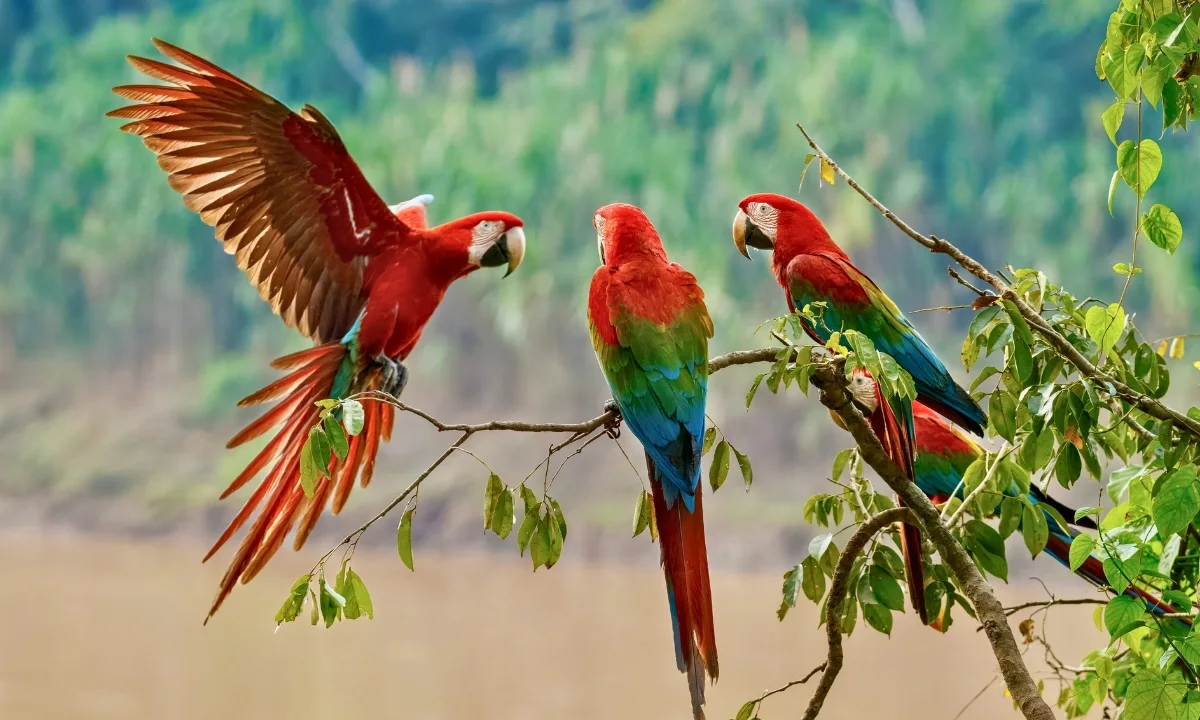
- Iconic species: The reserve protects jaguars, otters, tapirs, as well as birds such as macaws and harpy eagles. The clay licks (Chuncho, Colorado) are famous because they attract hundreds of red-and-green macaws at dawn, creating a unique spectacle.
- High probability of sightings: In Tambopata, animals are protected and accustomed to seeing people on boats. For example, at the Tambopata Research Center, it is possible to see a jaguar from a boat on almost 1 out of every 3 outings. Many animals (capybaras, monkeys, etc.). Visitors have greater opportunities to appreciate the wildlife of Tambopata in its natural environment.
- Guided tours: The excursions are led by certified local guides. The excursions combine boat rides, hikes, and visits to birdwatching viewpoints, all planned to showcase Tambopata wildlife during the day and at night.

Tambopata Wildlife: Amazing Animals of the Peruvian Amazon
Tambopata wildlife is so rich that more than 1,000 species of butterflies, 169 mammals, 600 birds, as well as dozens of reptiles and amphibians have been documented. Tambopata wildlife is made up of a great variety of mammals, birds, reptiles, and amphibians that inhabit the reserve’s different ecosystems, such as:
Mammals of Tambopata
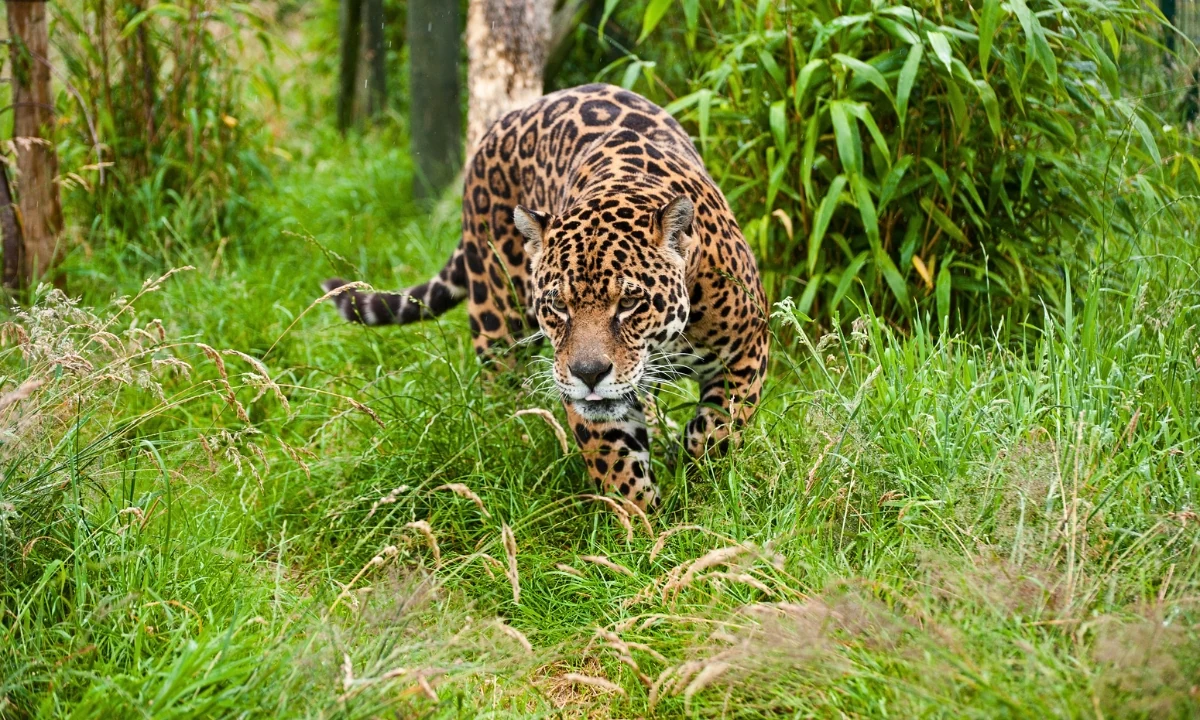
- Jaguar (Panthera onca): The jaguar is the largest cat in the Americas and the king of the Amazon jungle. In Tambopata, it is possible to see it resting or crossing the river. During a boat tour along the Tambopata River, the chances of seeing a jaguar are very high, almost 35% of the time. They are solitary and powerful animals: their spotted coat (rosettes) helps them camouflage themselves in the undergrowth.
- Giant otter or river otter (Pteronura brasiliensis): This aquatic mammal, which is almost 2 meters long, inhabits the oxbow lakes and lakes of Tambopata.
- Amazonian tapir or sachavaca (Tapirus terrestris): The tapir is the largest land herbivore in the Amazon. It can swim well, using its snout as a snorkel. It helps disperse seeds by eating fruits and defecating them far away, which contributes to forest regeneration.
- Capybara or ronsoco (Hydrochoerus hydrochaeris): The capybara is the largest rodent in the world. It measures up to 1.3 m and lives near water in groups of up to 30 individuals. It is common to see them in the lakes and rivers of Tambopata.
- Hoffmann’s two-toed sloth (Choloepus hoffmanni): This friendly arboreal mammal lives hanging from branches, moving very slowly. It feeds on leaves and almost always remains upside down in the trees.
- White-lipped peccary (Tayassu pecari): The peccary, a wild relative of the pig, forms enormous herds (from 50 to 300 individuals). It has a white stripe around its neck that gives it its name
Birds of Tambopata
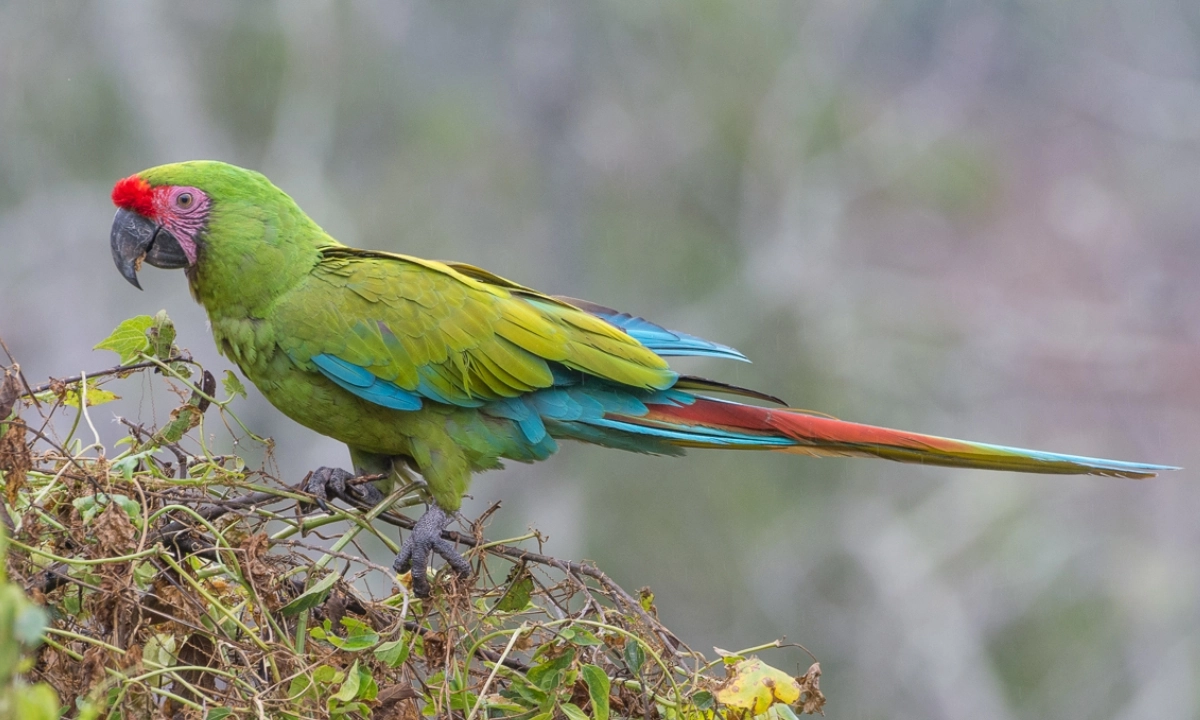
- Red-and-green Macaw (Ara chloropterus): This species is a giant of the Amazonian canopy. Red-and-green macaws form lifelong pairs and nest in cavities in old trees.
- Blue-and-yellow Macaw (Ara ararauna): With a blue head and back and an intense yellow belly, this macaw is very photogenic. It mainly inhabits palm groves and wetlands of Tambopata. It nests in dead palm trunks. It is a trusting bird and easy to see, so 4 out of every 5 guests observe it during their stay.
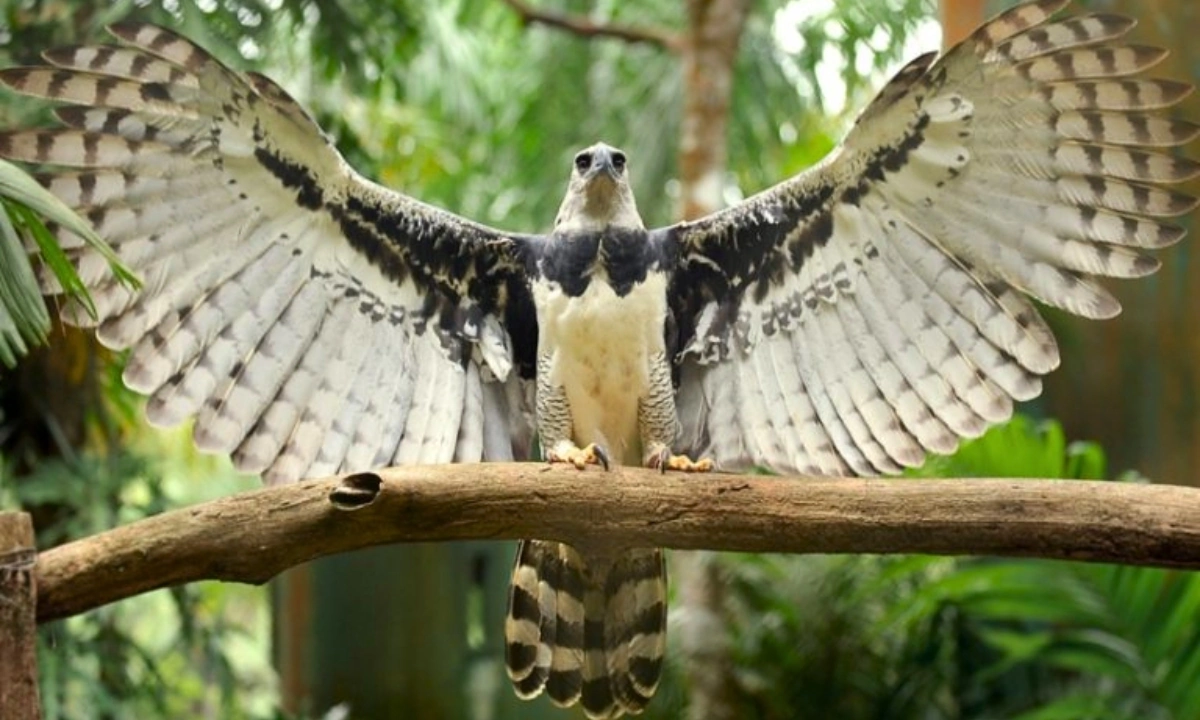
- Harpy Eagle (Harpia harpyja): It is considered the queen of the Amazon’s birds of prey. It is the largest eagle in the Western Hemisphere (females have a wingspan of up to 2 m). Its enormous talons (up to 13 cm) help it hunt monkeys and sloths in the canopy.
- Crested Eagle or Guianan Crested Eagle (Morphnus guianensis): Another impressive bird of prey. It is recognized by the crest it raises on its head. It lives in tall forests and mainly hunts monkeys and sloths, just like the harpy eagle. Its presence indicates an intact ecosystem.
- Hoatzin or Shansho (Opisthocomus hoazin): Its rough appearance (like a crested pheasant) earned it the nickname of “prehistoric bird”. Interestingly, 9 out of 10 visitors to Tambopata lodges get to see it.
- Spix’s Guan (Mitu tuberosum): The male has shiny black plumage with a white belly and a crest. It feeds on fruits, seeds, and insects on the ground. Its distinctive calls can be heard at dawn.
- Other notable birds: Tambopata has an enormous bird diversity. In addition to macaws, it is possible to see toucans, tanagers, kingfishers, hummingbirds, and many species of parrots and parakeets. In total, the Reserve is home to more than 600 species of birds.
Reptiles of Tambopata
- Black Caiman (Melanosuchus niger): The largest reptile in the Amazon. It reaches more than 4 m in length and 300 kg. It is the dominant aquatic predator, capable of hunting capybaras, turtles, and even otters. In Tambopata, it can be seen sunbathing on the banks or swimming stealthily. A curious fact: at night, its eyes shine red.
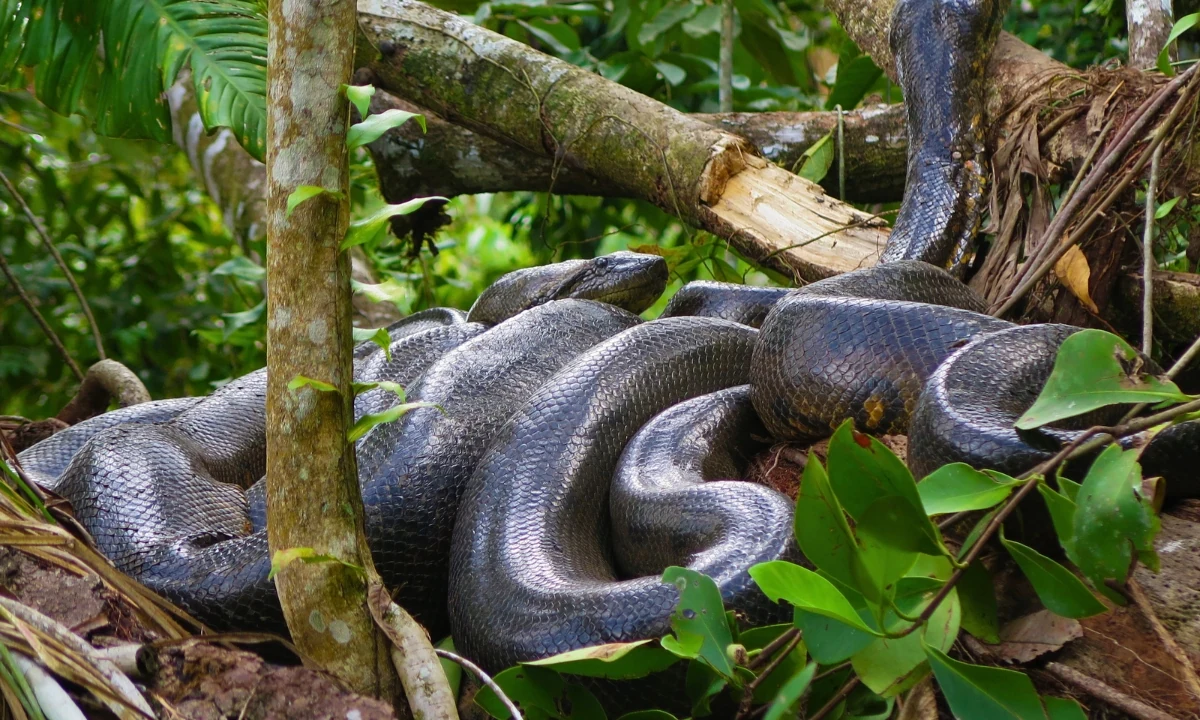
- Green Anaconda (Eunectes murinus): The largest boa in the world can exceed 6 meters in length. It prefers slow-moving waters and swamps. It is a powerful constrictor that catches capybaras, deer, or aquatic birds.
- Yellow-spotted River Turtle or Taricaya (Podocnemis unifilis): It is distinguished by its broad shell and webbed feet. In Tambopata, taricayas can be seen on sandy beaches and lake shores, sunbathing or searching for aquatic food. At the Taricaya Ecological Reserve, thousands of hatchlings are raised and released to repopulate the species.
- Boa Constrictor: It lives in shrubs and sometimes comes down to the ground. It is nonvenomous: it kills by constriction, wrapping around small mammals. Its earth-toned camouflage allows it to blend in with the leaf litter.
- Shushupe or Bushmaster (Lachesis muta): This venomous terrestrial viper is the largest snake in the Americas (up to 3 m). Its venom is very potent and is used among Indigenous people to counteract bites.
Amphibians of Tambopata
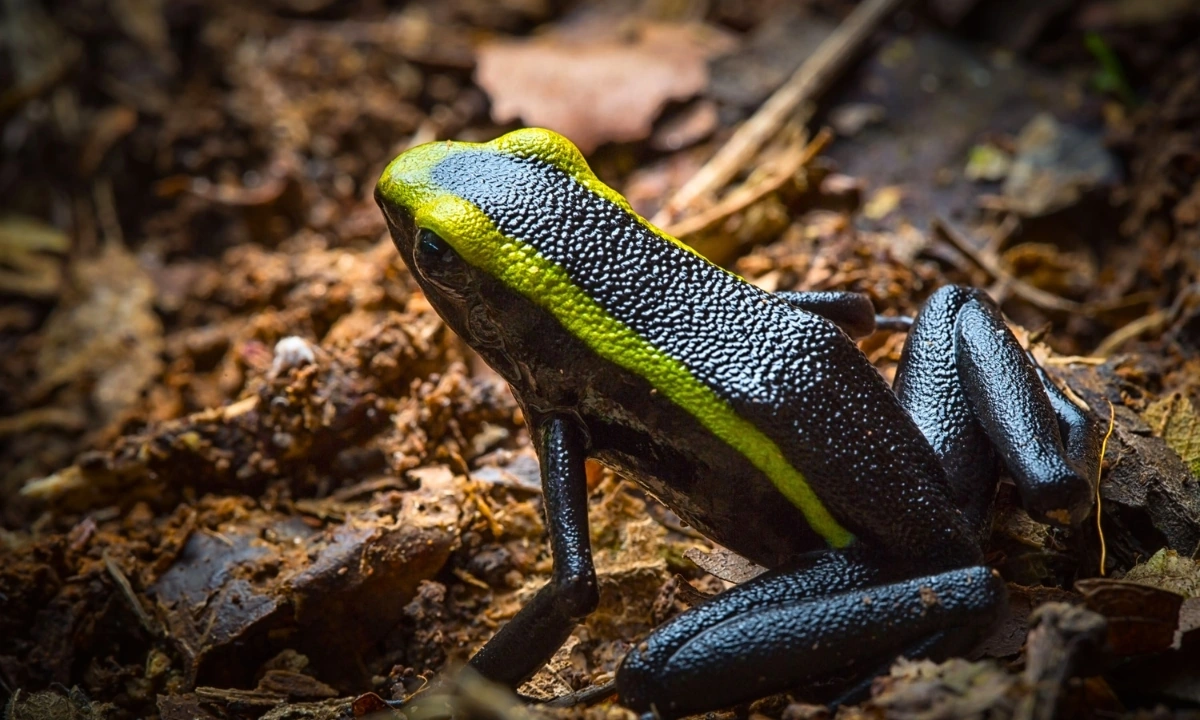
- Three-striped Poison Frog (Ameerega trivittata): Small diurnal frog with bright colors (red legs and dorsal stripes). It inhabits the ground near streams. Its skin produces defensive toxins.
- Giant Toad or Cane Toad (Rhinella marina): It is a large toad that moves through the leaf litter.
- Glass Frogs (family Centrolenidae): They are tiny frogs with semitransparent skin. They inhabit shrubs above water. They show their translucent belly, hence their name.
- Lemur Frog or Leaf Frog (Phyllomedusa vaillantii): Medium-sized and green, this tree frog usually hides among the leaves.
- Other frogs and toads: Tambopata has dozens of amphibian species, from pepper frogs to tree frogs, especially near bodies of water. At night, guided walks can reveal colorful poison frogs along the trail.
Best Places to See Tambopata Wildlife
- Tambopata National Reserve: The entire protected area is a habitat for the wildlife described above. The reserve has areas accessible for hiking and boating. Especially the Sandoval sector (near Puerto Maldonado) has expert guides and trails leading to Sandoval Lake.
- Sandoval Lake: This lake is very popular. Many tours include this lake because of its high concentration of wildlife. It is one of the best places to observe Tambopata wildlife.
- Macaw clay licks (Chuncho, Colorado, Chuncho Napo…): These are natural clay licks where dozens or hundreds of macaws and parrots often arrive at dawn to feed on minerals. Visiting the Chuncho Clay Lick or the Colorado Clay Lick in Puerto Maldonado is almost mandatory: watching hundreds of red-and-green macaws flying around is a spectacle that illustrates why Tambopata is famous.
- Sachavacayoc Lake: This remote lake on the Tambopata River gets its name from the almost constant presence of sachavacas (Amazonian tapirs). It is also home to a stable family of giant river otters and enormous anacondas.
- Other places: The Taricaya Ecological Reserve (not a national reserve) is also nearby and is famous for its rescue center: there you can see capybaras, spectacled caimans, and protected taricaya turtles. Walking along the canopy swings (suspension bridges) in Taricaya allows you to observe wildlife from the canopy.
Best Time for Wildlife Watching in Tambopata
The dry season (from May to October) is ideal for visiting Tambopata. During these months, the trails are dry and animals concentrate around rivers and lakes in search of water, making them easier to observe.
During the rainy season (December to March), the jungle becomes more swampy, but it also comes alive with intense greenery and new growth. In addition, during the dry season, boat excursions tend to be longer (due to lower water levels), increasing the chances of spotting wildlife along the riverbanks. In short, most agencies recommend traveling from May to October for better wildlife watching.
Frequently Asked Questions About Tambopata Wildlife
1. What animals can be seen in Tambopata?
Tambopata is home to a rich variety of species. Among the mammals are jaguars, tapirs, sloths, capybaras, giant otters, and monkeys (capuchins, howler monkeys, etc.). Among the birds are blue-and-yellow macaws, red-and-green macaws, harpy eagles, hoatzins, kingfishers, toucans, and more. Black caimans, anacondas, boas, as well as many poison frogs and toads can also be found.
2. Where can you see macaws in Tambopata?
One of the best places is the clay licks, especially the Chuncho Clay Lick and Colorado Clay Lick, near Puerto Maldonado. Every morning, dozens of macaws descend together from the treetops to feed on mineral-rich clay. Guided excursions usually include these places to ensure the experience.
3. Is it common to see jaguars during tours in Tambopata?
Jaguars are not easy to see because of their elusive nature, but in Tambopata the chances are real with the right strategy. Many nighttime boat tours on rivers such as the Tambopata or Madre de Dios record sightings of jaguars resting or even crossing rivers. It is said that approximately 35% of ecotourism boats manage to spot a jaguar. With luck and the right guide, the jaguar can be part of the Amazon experience.
To experience wildlife watching in Tambopata, there is no better option than booking with experts. At Peru Jungle Trips, we organize your wildlife watching trip in Tambopata with flexible itineraries and professional guides. Contact us and book your tour to the Peruvian Amazon.
