

Navigating the Amazon is undoubtedly a unique experience, and it’s even better when you enjoy Amazon River fishing! The Peruvian Amazon is home to approximately 1,200 fish species, including the iconic arapaima and the formidable piranha. Without a doubt, fishing in the Amazon is an adventure like no other!
If you are planning an expedition to Iquitos, Pacaya Samiria, Tambopata, or Manu, you already know that navigating the waters of the Amazon is not an easy task. That is why you need to travel with a specialized team, first-class transportation, and expert local guides. At Peru Jungle Trips, we want you to experience the ultimate adventure and make the catch of a lifetime. That is why we have prepared this guide with expert tips and private expeditions.
Key Tips for Fishing in the Amazon River
- Fish along the riverbanks. Unlike many other places in the world, the largest fish in the Amazon River are often found near the riverbanks.
- Bring quality bait. Traditionally, people in the Amazon used worms or fish meat as bait. However, there are now artificial lures that are easy to transport. Choose the best bait and fish patiently!
- Choose the best fishing season. The dry season (July – November) is the best time for fishing in the Amazon. Since water levels in lakes, ponds, and rivers drop during the dry season, fish gather in the main channels. This makes fishing much easier!
- Use high-quality fishing rods. This may seem like obvious advice, but many travelers forget that Amazon fish are far from ordinary. Remember that fish such as piranhas can easily cut conventional fluorocarbon or monofilament fishing lines.
- Use medium-heavy action fishing rods.
Also, remember that fishing in the Amazon River, like any other type of fishing, requires patience to achieve the perfect catch!

Private Excursions to the Peruvian Amazon
Manu National Park Tour + Fishing
Our travelers say that visiting Manu National Park is a life-changing experience because it is one of the most biodiverse places in Peru. And they are absolutely right! At Peru Jungle Trips, we have guided hundreds of travelers through the Peruvian Amazon, which is why we have created the ideal private tour. On our private tour, you will be able to:
- Visit the ancient Chullpas of Ninamarca, which witnessed the rise of more than one civilization.
- Discover the picturesque town of Paucartambo.
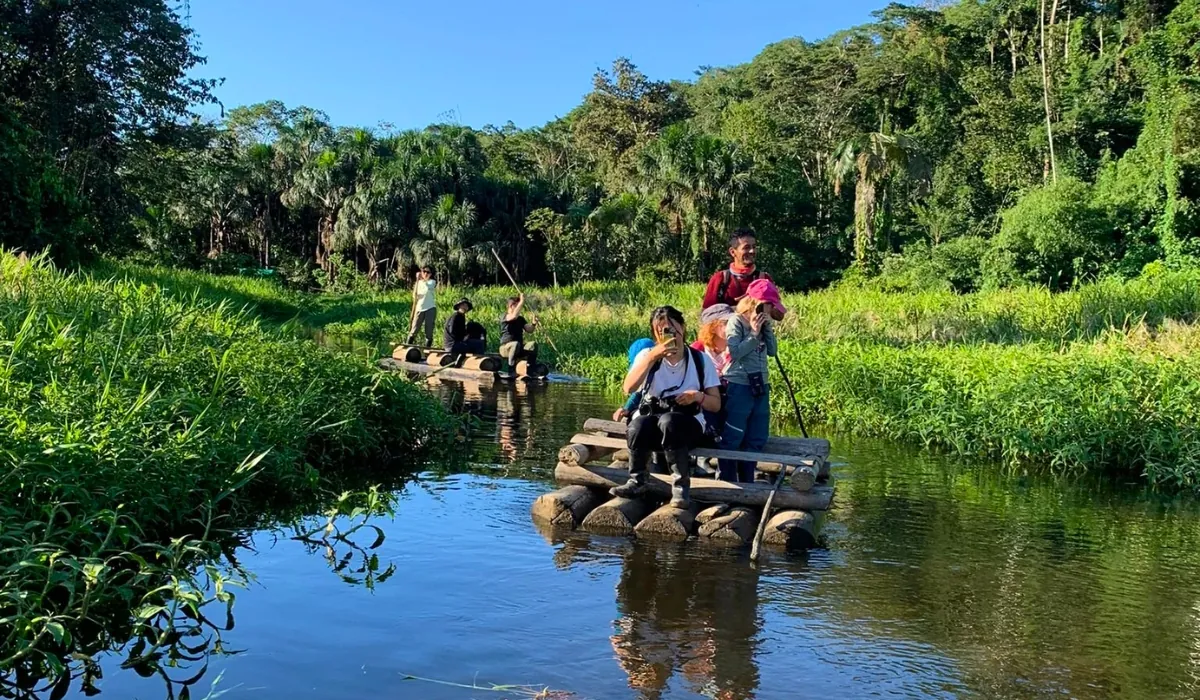
- Navigate the rivers of the Amazon.
- Visit the clay lick of parrots and parakeets.
- Enjoy traditional fishing in the Amazon River.
- Explore the cloud forest and observe impressive birds such as toucans, as well as visit giant ceiba and lupuna trees.
Does this itinerary not meet your expectations? Contact our travel advisor and plan your ideal expedition!
What Fish Can I Find in the Peruvian Amazon?
It is currently estimated that there are between 2,500 and 3,000 fish species throughout the Amazon, with more than 1,200 found in the Peruvian Amazon. Below, we will share some fascinating facts about a few of the fish species you can encounter.
Fish Species in the Peruvian Amazon
Among the hundreds of fish species, some stand out because of their fame. Below, we will tell you about some of them.
Arapaima (Arapaima gigas)
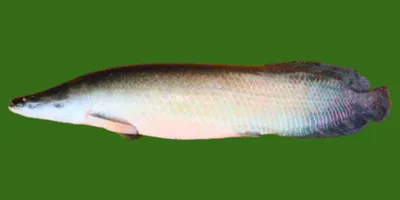
Known as pirarucu (Brazil), bodeco (Colombia), pirarucú (Bolivia), or arapaima (Guyana), the arapaima is one of the largest fish species in the Peruvian Amazon.
- It can grow to more than 3 meters in length.
- It can weigh up to 250 kg.
- It is characterized by its flattened, relatively small head compared to its body.
- Its distinctive feature is its body covered with large, thick scales. In most populations, the scales have a red edge along the abdominal area.
- In the Loreto region (Peru), you can find several arapaima breeding centers, such as Fundo Pedrito.
- This fish has two lateral bony plates and a palatine plate that function as true teeth. They hold onto their prey before swallowing it!
If you want to see the arapaima up close, don’t wait any longer and book one of our tours to Iquitos. Its enormous size will undoubtedly amaze you!
Arowana (Osteoglossum bicirrhosum)
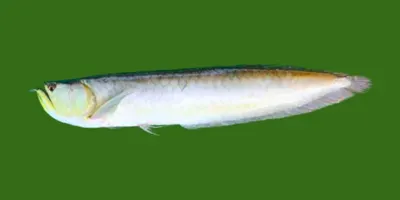
The arowana is found in Peru, Brazil, Colombia, Ecuador, Guyana, and French Guiana.
- It can grow to over one meter in length and weigh more than 5 kg.
- Unlike the arapaima, its body has a uniform silver color.
- It is a carnivorous fish that mainly feeds on other fish, invertebrates, and spiders. It may also feed on amphibians, reptiles, birds, and small mammals.
- You can find this fish in lakes, channels, and streams.
- In the past, this fish was widely consumed in regions such as Loreto. However, over the years, its consumption declined from 187 tons (in 1996) to 22 tons in 2016.
Chinese Herring, Cod, or Asnañahui (Pellona castelnaeana)
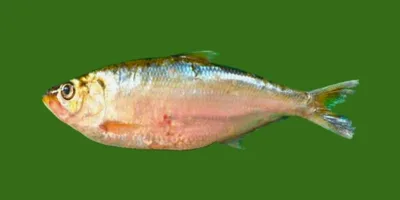
A fish slightly smaller than the arowana but heavier. You can find this species in Peru, Bolivia, Colombia, Ecuador, Venezuela, and Brazil.
- It can grow up to 70 cm in length; however, it can weigh as much as 7 kg.
- Its body is yellow with a dark stripe running along the entire dorsal surface and extending into the caudal rays of the upper lobe.
- This fish is piscivorous, feeding mainly on smaller fish such as sardines and yulilla.
- You can find this fish in the Loreto region.
Gilded Catfish (Brachyplatystoma filamentosum)
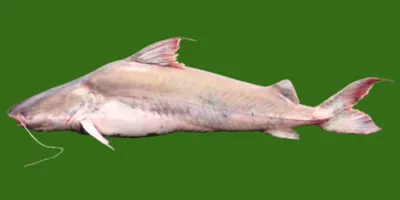
Did you think the arapaima was the only giant fish in the Peruvian Amazon? Think again!
- The gilded catfish can reach a length of up to 3.6 meters.
- Its body is grayish in color.
- One of its most distinctive features is its extremely long maxillary barbels, which can reach up to twice the total body length in juveniles and two-thirds of the total length in adults.
- Its diet mainly consists of other fish.
Fish Considered Dangerous
The rivers of the Peruvian Amazon are home to hundreds of fish species, but some of them are surrounded by myths that have become the nightmares of many people! Here, we will tell you about two fish that frighten more than a few visitors.
Red-bellied Piranha (Pygocentrus nattereri)
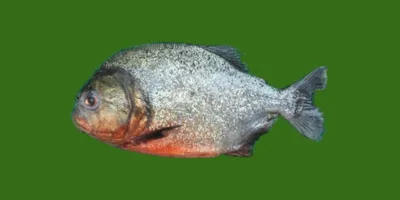
This fish is also known as palometa (Bolivia), piranha (Colombia), red or caju piranha (Brazil), and piranha or palometa (Uruguay).
- Its most distinctive features are its large head and powerful jaws.
- Its body is dark-colored from the back to the lateral line.
- In the Peruvian Amazon, it can be found in many locations, including Loreto and the Amazon, Puinahua, Marañón, Pastaza, Morona, Huallaga, Putumayo, Napo, Ucayali, Tapiche, Tigre, Curaray, Nanay, Yavarí, Tahuayo, Mazán, and Itaya rivers. In the Ucayali region, it inhabits the Ucayali, Purús, and Yuruá rivers, as well as Lake Imiría. In the Madre de Dios region, it is found in the Manu, Madre de Dios, and Tambopata rivers. As a result, you may spot one during some of our Tambopata tours!
- This fish is also known for its unique hunting behavior. It tears apart its prey before feeding, making it an aggressive piscivorous species.
- This species is considered migratory because it reproduces by attaching its eggs to the roots of flowering plants.
- Although this species rarely attacks healthy people who are swimming, it may bite if it detects blood in the water or feels trapped.
Candiru Fish (Vandellia cirrhosa)
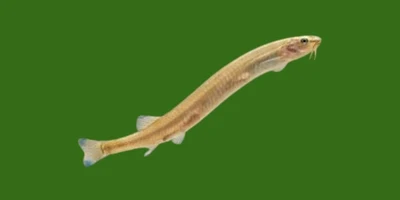
Also known as the “vampire fish,” it is undoubtedly one of the most feared fish in the Amazon River. It is the nightmare of many fishermen, swimmers, and explorers.
- This fish is parasitic. It lodges in the gills of a larger fish and feeds on its blood, reducing the host fish’s lifespan.
- It can grow up to 15 centimeters in length.
However, because of its unusual size, this fish is surrounded by mystery and myths. Here are some of the most well-known stories.
- It is said that this fish exists solely to “cause harm.” According to the myths, it can inflict immense pain by entering the genitals of people while they are swimming in the Amazon.
- After entering the body, it supposedly lays its eggs in the bladder, where they hatch and reproduce.
- Another myth claims that the only way to stop the fish from spreading is to amputate the affected body part while the fish is still inside. Without a doubt, this is a fish that terrifies many people!
However, despite the many myths surrounding the candiru, there are no scientifically documented and verified cases of this fish attacking humans. Therefore, it remains unclear whether these stories are simply myths or based on reality.
Why Go Fishing in the Peruvian Amazon?
Some travelers wonder why they should go fishing in the Peruvian Amazon when they can fish along the Peruvian coast. There isn’t just one answer—there are many!
- The Peruvian Amazon is the largest geographical region in Peru, covering 60.9% of the country’s territory. As you fish, you’ll be surrounded by breathtaking flora and fauna throughout the region.
- Fishing has been practiced for countless generations. The ancestors of Indigenous communities used bows, arrows, and harpoons to catch fish. Today, through our cultural and immersive experiences, you can learn more about their traditions and fishing techniques in the Peruvian Amazon.
- In past decades, fish played an important role in the barter economy. For example, salted fish was exchanged for goods such as axes, clothing, and other essential items. As a result, unique fish-based dishes such as patarashca and river fish juane became an important part of Amazonian cuisine.
Now that you know more about fishing in the Amazon River, don’t wait any longer! Book your trip today!
Frequently Asked Questions
1. Do I need previous experience to fish in the Amazon?
Not at all! Our expeditions are tailored to your skill level. Our expert local guides will provide hands-on instruction, helping you cast, reel in your line, and handle fish safely. However, catching a fish is entirely your own achievement!
2. Is it safe to fish for piranhas in the Amazon River?
Absolutely. Although piranhas are famous for their sharp teeth, aggressive feeding habits, and the Hollywood horror movies made about them, in the real world, fishing for them is completely safe. Our guides will carefully remove the hooks using specialized tools to ensure both your safety and the well-being of the fish.
3. Do I need to bring my own fishing equipment to Peru?
That is entirely up to you. At Peru Jungle Trips, we provide high-quality heavy-duty rods, reels, steel leaders, and local bait needed to handle the Amazon’s powerful predators. However, if you are a passionate angler, you are more than welcome to bring your own favorite topwater lures and travel rods.
4. Are special fishing licenses required in the Peruvian Amazon?
For recreational and sport fishing during our guided tours, you do not need to worry about complicated paperwork. All navigation permits and entrance fees to protected areas (such as Pacaya Samiria National Reserve or Tambopata) are fully managed by our logistics team and included in your private tour package.
5. Can we eat the fish we catch during the expedition?
Since red-bellied piranhas are very abundant, our guides sometimes keep a few catches to prepare a delicious traditional riverside lunch, allowing you to experience the local cuisine. Of course, it all depends on whether you, as a traveler, are adventurous enough to try eating a piranha.