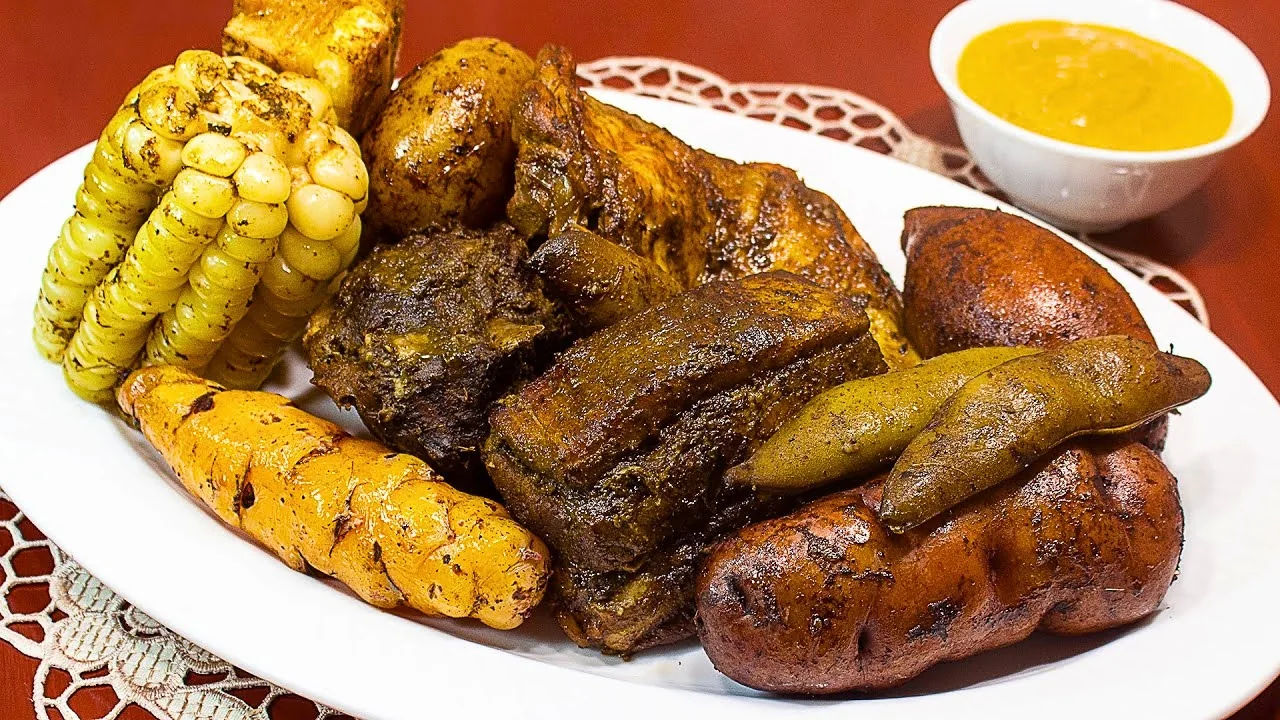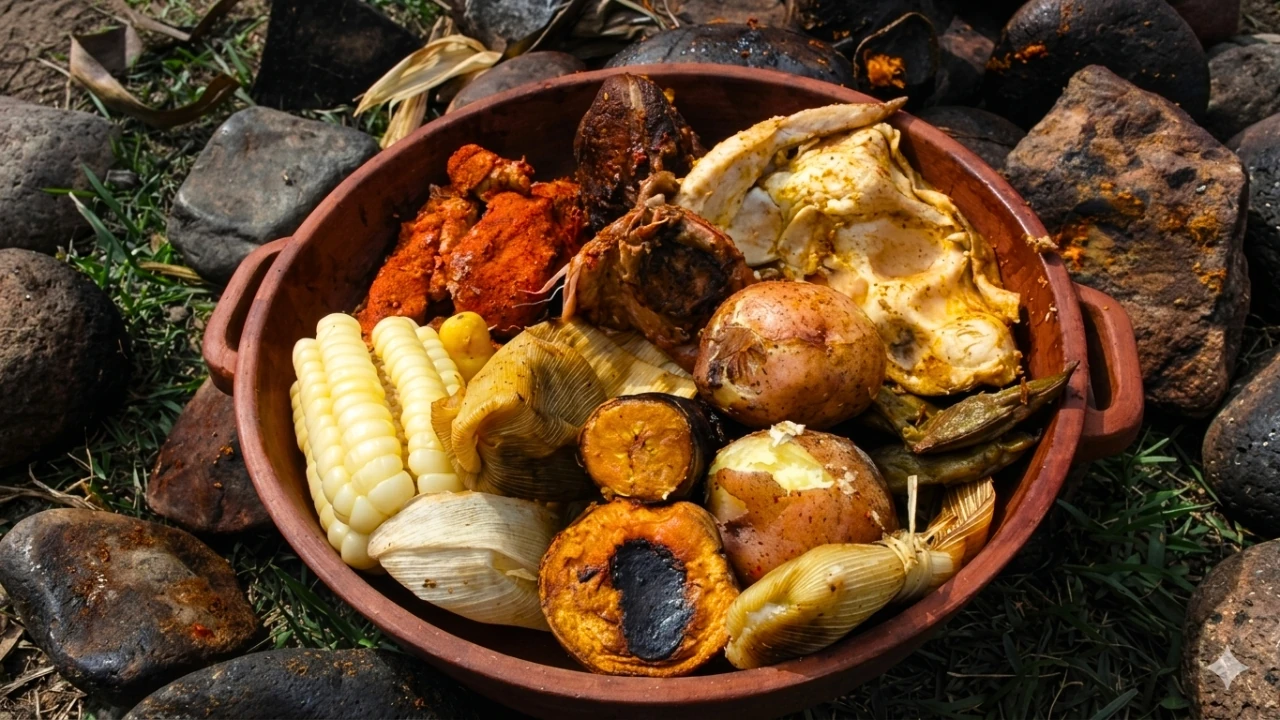
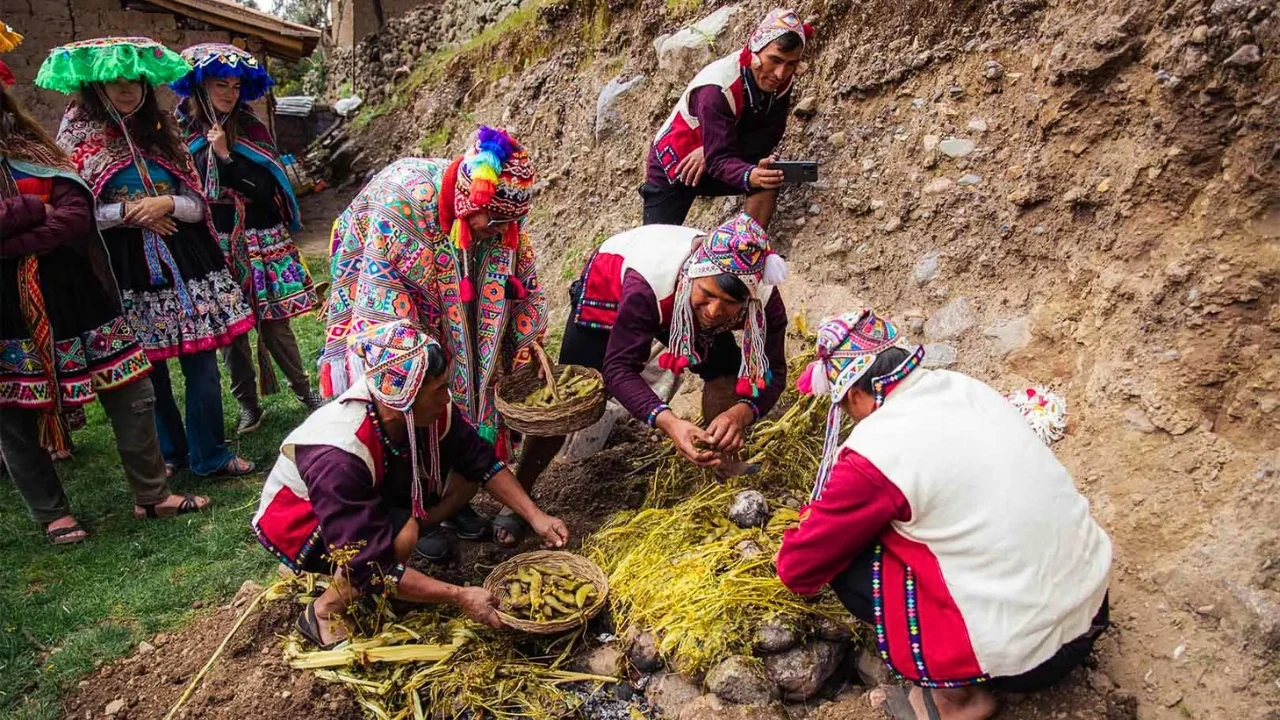
Surrounded by the mountains, the fresh air blends with the aroma of Andean herbs such as muña. In the middle of the Andes, in front of you, there is no modern kitchen but rather a stone-built oven directly connected to the earth, decorated with branches of local plants and flowers. That is when you realize that the food you are about to taste is undoubtedly something far from ordinary: Pachamanca.
Travelers from all over the world come to Cusco to delight in its unique gastronomy, from a humble and aromatic muña tea to more complex dishes such as chiriuchu, chairo soup, or pachamanca. Every dish is a way to connect with the living culture and history of the Andes.
The origin of Pachamanca
The gastronomy of the highlands tells many stories, and every story begins with its name. The word “pachamanca” comes from Quechua, where “pacha” means earth and “manka” means pot, translated into English as “earth pot”. This emblematic dish of the highlands represents the spiritual connection between Mother Earth and people, which is why it is a dish prepared only for special events, gatherings, or when you want to welcome a special guest. In this way, Pachamanca represents:
- The spiritual connection with Mother Earth: the ingredients that predominate in Pachamanca are local and vary depending on the province where it is prepared.
- Ancient heritage: the history of Pachamanca dates back to the pre-Inca Wari culture.
- Community: this dish traditionally has a godfather and a godmother, and the entire family or community becomes involved in its preparation.
- Cultural identity: it is currently considered Cultural Heritage of the Nation.
The ritual of gratitude to Mother Earth
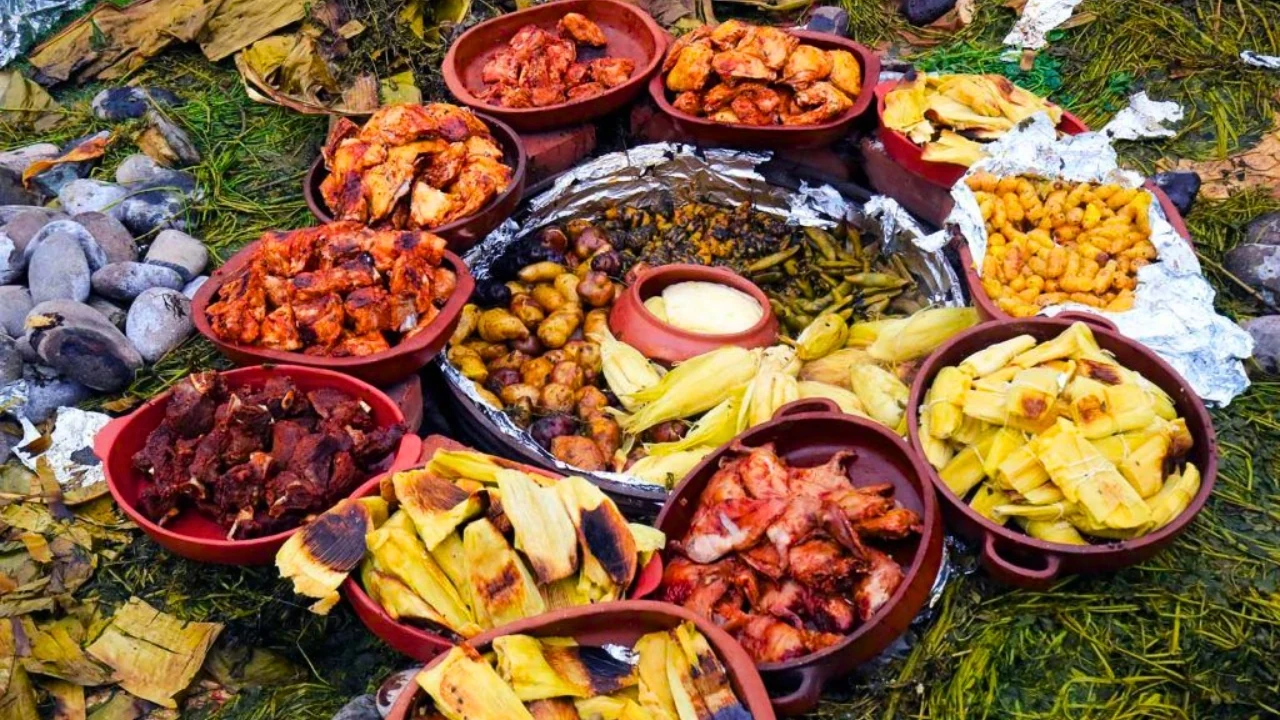
Pachamanca was traditionally prepared at the beginning of the harvest season because this is the time when the freshest ingredients are consumed. At that moment, thanks are given to the Pachamama (Mother Earth) for the food provided, and an offering is made to the earth by pouring a glass of chicha onto the ground, expressing gratitude with words (along with prayers in some cases), and tying flowers together with a small crucifix.
In communities such as Huilloc, recognized as the last heirs of the Incas, Pachamanca is prepared alongside the traditional ceremonies of payment to the earth and harvest. In addition, every ingredient has been cultivated by them using ancient techniques such as the use of the chaquitaclla.
How is Pachamanca prepared and what ingredients does it contain?
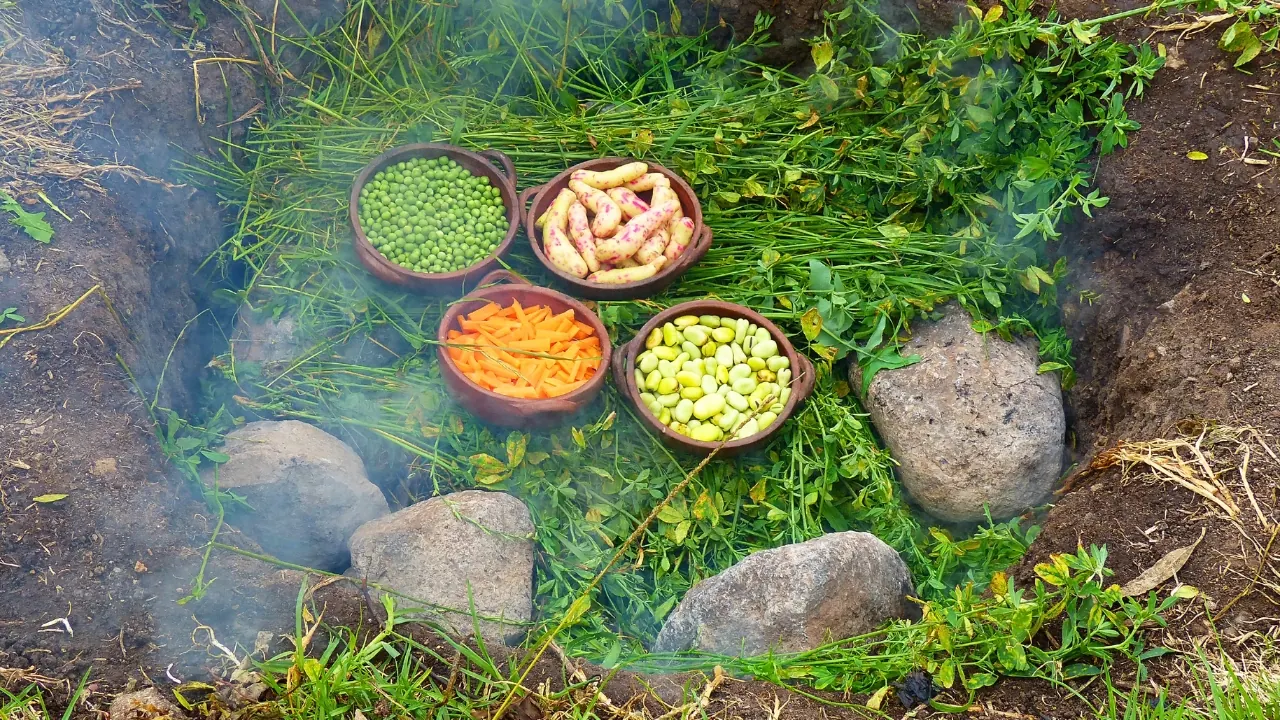
To prepare Pachamanca, it is necessary to dig a hole in the ground large enough to place the ingredients. Afterwards, the preheated stones are placed inside, and on top of them the various seasoned ingredients are arranged, such as the marinated meats, seasoned together with the vegetables and tubers. Once this is done, it is covered with another layer of stones and leaves, and on top of them it is covered with earth, creating a small stone oven which is heated for a precise period of time in order to guarantee the even cooking of the ingredients. Pachamanca is prepared throughout the Peruvian highlands and in some coastal areas with slight variations.
- Junín: includes meats such as guinea pig, chicken, alpaca, pork, lamb, and beef, along with the traditional vegetables, seasonings, and is accompanied by sweet and savory humitas.
- Cusco: the main meats are lamb, pork, alpaca, and in some cases trout; it is accompanied by potatoes, corn, oca, cheese, local seasonings such as huacatay, and fresh salads.
- Ayacucho: contains beef, pork, and chicken, accompanied by vegetables and tubers such as sweet potato; it is also served with a special sauce, cheese, rocoto, and huacatay.
Places such as Huánuco, La Libertad, Ancash, and Ica have their own varieties, with Ica standing out the most due to its seasonings that give the meats a reddish color.
Do you feel like trying this ancient dish? Delight yourself with Pachamanca on our experiential tour in Huilloc.
Why is Pachamanca representative and nutritious in Peruvian gastronomy?
Pachamanca is one of the most representative traditional dishes of Peruvian gastronomy due to the complexity of its preparation, the variation of seasonings, and primarily the use of fresh and local ingredients. Therefore, the Pachamanca you taste in Cusco will be different from the one you try in Huancayo (Junín) or Chincha (Ica). The pleasant flavor and aroma of Pachamanca captivate your senses from the very first bite. In addition, due to its unique cooking method, Pachamanca preserves all of its nutritional benefits. Authors such as Chávez-Núñez et al. (2021) point out that pachamanca combines pressure and oven cooking methods, which are forms of cooking that avoid the intervention of oxidizing factors such as air, light, humidity, among others, that affect the biological and nutritional components of food. Therefore, Pachamanca is highly nutritious.

Transform flavor into a complete experiential adventure
There is no better place in Cusco to try Pachamanca than in Huilloc (Ollantaytambo). We know that food is a crucial part of your gastronomic adventure, which is why with our experiential tour in Huilloc you will be able to:
- Feel a private connection with the Andes.
- Learn from the authentic heirs of the Incas.
- Enjoy a traditional dish with the confidence that your food is local, fresh, and free of preservatives.
- Boost the local economy and contribute to the preservation of ancestral culinary techniques.
Don’t wait any longer! Reserve your place at the Inca table here.